Loading...
Done
Cordwood Construction - Natural Building

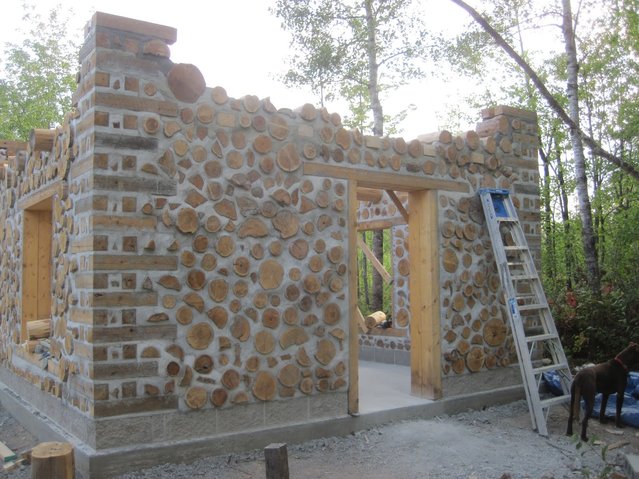
Cordwood construction is a method of natural building that originated roughly one thousand years ago in Greece and Siberia. This method involves using pieces of wood that slightly protrude from the mortar, giving the walls an attractive appearance. Usually, the walls are made 12 to 24 inches thick. However, in some parts of Canada, the walls can be as thick as 36 inches. This method appeals to many people due to its ease of construction economy of resources. Cordwood Construction can be separated into two main types: mortar-insulation-mortar (M-I-M) and Throughwall. M-I-M is a more preferable and widely used choice as it allows for better insulating properties.
Details
27 Nov 2014 15:10:00
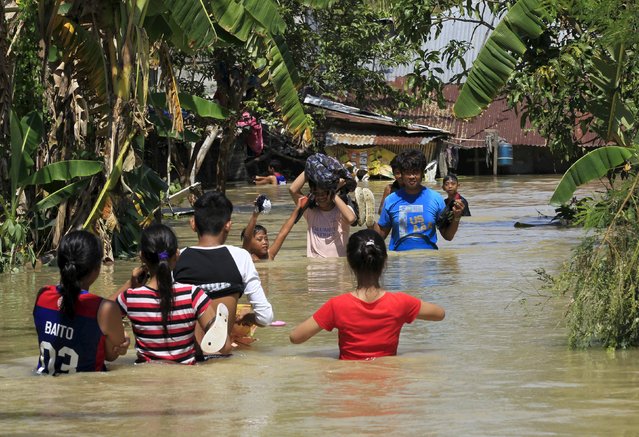
Residents wade across floodwaters after a week typhoon Koppu battered Calumpit town, Bulacan province, north of Manila October 24, 2015. Typhoon Koppu, that dumped heavy rains on the northern Philippines, killing 58 people as it flattened houses and destroyed crops, was petering out on Wednesday, weather officials said. (Photo by Romeo Ranoco/Reuters)

Residents wade across floodwaters after a week typhoon Koppu battered Calumpit town, Bulacan province, north of Manila October 24, 2015. Typhoon Koppu, that dumped heavy rains on the northern Philippines, killing 58 people as it flattened houses and destroyed crops, was petering out on Wednesday, weather officials said. (Photo by Romeo Ranoco/Reuters)
Details
27 Oct 2015 08:02:00
A passenger inter-island ferry Shuttle RoRo 5 is pictured after it was swept ashore at the height of Typhoon Nock-Ten in Mabini, Batangas in the Philippines December 26, 2016. (Photo by Erik De Castro/Reuters)

A passenger inter-island ferry Shuttle RoRo 5 is pictured after it was swept ashore at the height of Typhoon Nock-Ten in Mabini, Batangas in the Philippines December 26, 2016. (Photo by Erik De Castro/Reuters)
Details
27 Dec 2016 07:35:00
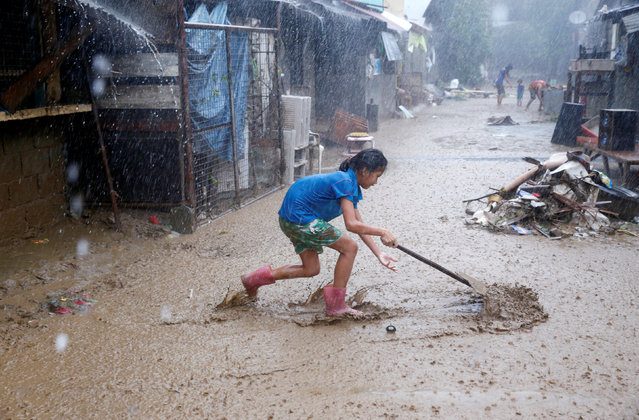
A resident removes mud on a street brought by monsoon rains in San Mateo, Rizal, Philippines, August 14, 2016. (Photo by Erik De Castro/Reuters)

A resident removes mud on a street brought by monsoon rains in San Mateo, Rizal, Philippines, August 14, 2016. (Photo by Erik De Castro/Reuters)
Details
16 Aug 2016 09:58:00
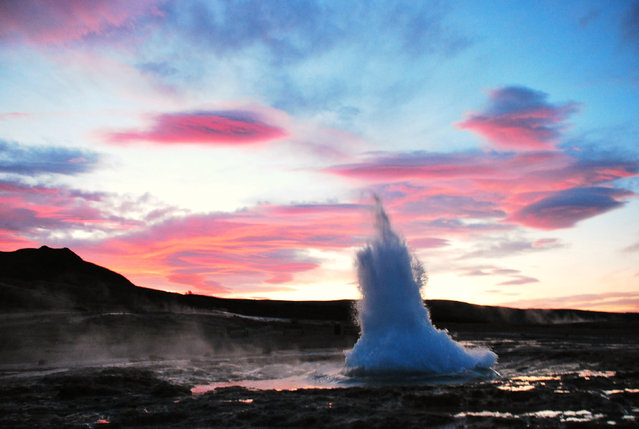
Strokkur geyser against cloudy sky at sunset. Strokkur is a fountain geyser located in a geothermal area beside the Hvítá River in Iceland in the southwest part of the country, east of Reykjavík. It is one of Iceland's most famous geysers, erupting once every 6–10 minutes. Its usual height is 15–20 m, although it can sometimes erupt up to 40 m high. (Photo by Teatsche Dijkhuis/Getty Images/EyeEm)

Strokkur geyser against cloudy sky at sunset. Strokkur is a fountain geyser located in a geothermal area beside the Hvítá River in Iceland in the southwest part of the country, east of Reykjavík. It is one of Iceland's most famous geysers, erupting once every 6–10 minutes. Its usual height is 15–20 m, although it can sometimes erupt up to 40 m high. (Photo by Teatsche Dijkhuis/Getty Images/EyeEm)
Details
18 Oct 2016 12:43:00
Youth category winner: Symphony No 5 by Giacomo Redaelli (Italy). (Photo by Giacomo Redaelli/2019 Nature Photographer of the Year)

Youth category winner: Symphony No 5 by Giacomo Redaelli (Italy). (Photo by Giacomo Redaelli/2019 Nature Photographer of the Year)
Details
16 Nov 2019 00:01:00
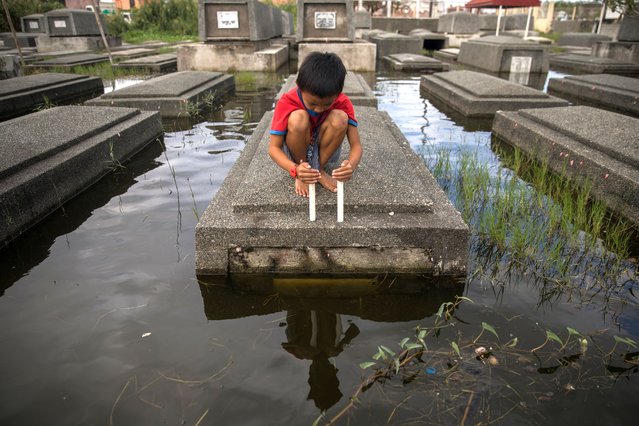
A boy attempts to keep a candle lit in a flooded cemetery following Typhoon Molave, in Masantol, Pampanga, Philippines, October 27, 2020. (Photo by Eloisa Lopez/Reuters)

A boy attempts to keep a candle lit in a flooded cemetery following Typhoon Molave, in Masantol, Pampanga, Philippines, October 27, 2020. (Photo by Eloisa Lopez/Reuters)
Details
04 Nov 2020 00:03:00
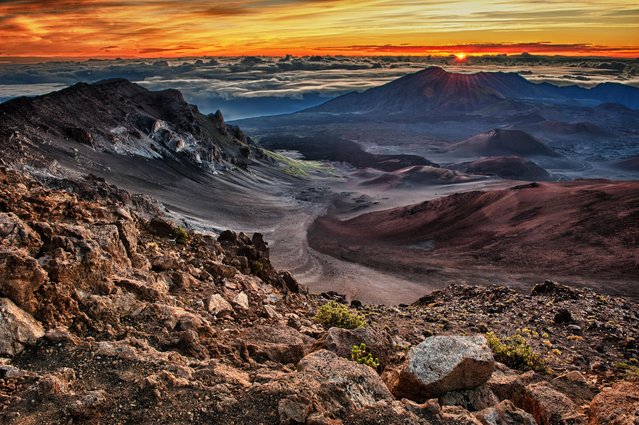
Sunrise over Haleakala Crater, Haleakala National Park, Maui, Hawaii on April 26th, 2011. (Photo by Robert Bush/Alamy Stock Photo)

Sunrise over Haleakala Crater, Haleakala National Park, Maui, Hawaii on April 26th, 2011. (Photo by Robert Bush/Alamy Stock Photo)
Details
20 Apr 2017 09:06:00