Loading...
Done


Sushi chef Mitsuru Tamura uses a radiation detector on seafood before it is prepared in Manhattan's Sushi Yasuda restaurant April 8, 2011 in New York City. The restaurant has begun using the detector as a precautionary measure due to consumer concerns over possible radiation contamination in seafood from the nuclear emergency in Japan. Health officials believe contamination is unlikely to threaten the food supply chain and none has been found in this restaurant. (Photo by Mario Tama/Getty Images)
Details
09 Apr 2011 08:52:00
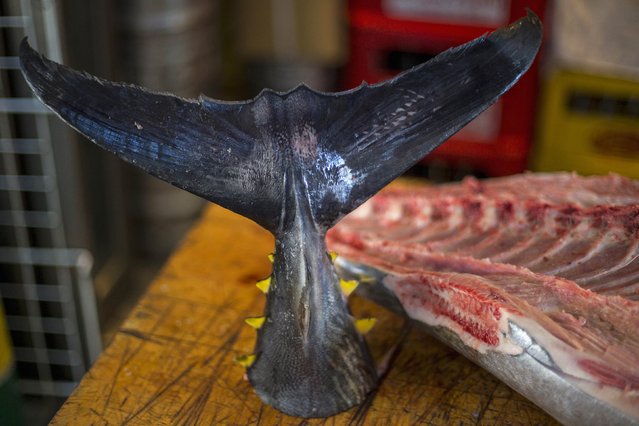
The fin of a tuna is seen on display in the outer part of the Tsukiji fish market, the Jogai Shijo, in Tokyo January 4, 2015. The famous Tsukiji wholesale fish and seafood market, is scheduled to leave its fabled 80-year-old halls to move into bigger, more modern facilities next year ahead of the 2020 Tokyo Olympics. (Photo by Thomas Peter/Reuters)

The fin of a tuna is seen on display in the outer part of the Tsukiji fish market, the Jogai Shijo, in Tokyo January 4, 2015. The famous Tsukiji wholesale fish and seafood market, is scheduled to leave its fabled 80-year-old halls to move into bigger, more modern facilities next year ahead of the 2020 Tokyo Olympics. The outer part of the market, the Jogai Shijo, that caters to the public will stay in its old place, but critics wonder about its chances for survival without the world's biggest fish trading place at its doorsteps. (Photo by Thomas Peter/Reuters)
Details
08 Jan 2015 14:50:00
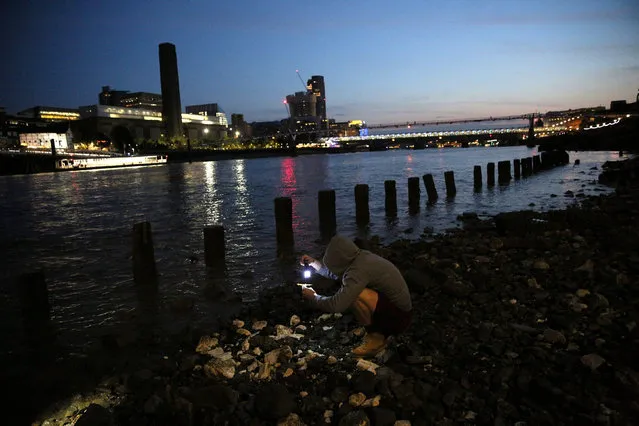
A mudlark uses a torch to look for items on the bank of the River Thames in London, Britain June 06, 2016. Mudlarking is believed to trace its origins to the 18th and 19th century, when scavengers searched the Thames' shores for items to sell. These days, history and archaeology fans are the ones hoping to find old relics such as coins, ceramics, artifacts or everyday items from across centuries. They wait for the low tide and then scour specific areas of exposed shores. "If you're in a field you could be out all day long, with the river you're restricted to about two or three hours," mudlark Nick Stevens said. While many just use the naked eye for their searches, others rely on metal detectors for which a permit from the Port of London Authority is needed. Digging also requires consent. (Photo by Neil Hall/Reuters)

A mudlark uses a torch to look for items on the bank of the River Thames in London, Britain June 06, 2016. Mudlarking is believed to trace its origins to the 18th and 19th century, when scavengers searched the Thames' shores for items to sell. These days, history and archaeology fans are the ones hoping to find old relics such as coins, ceramics, artifacts or everyday items from across centuries. their finds with the Portable Antiquities Scheme. Any item over 300 years old must be recorded. (Photo by Neil Hall/Reuters)
Details
27 Aug 2016 10:43:00


In case you missed the game, this is what happened explained in a short clip. Germany crush hosts Brazil 7-1 to reach the World Cup Final.
Details
09 Jul 2014 12:40:00
Natasha Cloud #0 and Diana Taurasi #3 of the Phoenix Mercury gather their team before the game against the Seattle Storm at Climate Pledge Arena on June 04, 2024 in Seattle, Washington. (Photo by Steph Chambers/Getty Images)

Natasha Cloud #0 and Diana Taurasi #3 of the Phoenix Mercury gather their team before the game against the Seattle Storm at Climate Pledge Arena on June 04, 2024 in Seattle, Washington. (Photo by Steph Chambers/Getty Images)
Details
15 Jun 2024 03:23:00
A woman rolls a marijuana cigarette during the first “Expo Cannabis” fair  in Montevideo December 14, 2014. Expo Cannabis offers conferences about different topics such as the medicinal use of cannabis and cultivation techniques as well as displaying hemp goods, cannabis cultivation items and seeds. (Photo by Andres Stapff/Reuters)

A woman rolls a marijuana cigarette during the first “Expo Cannabis” fair in Montevideo December 14, 2014. Expo Cannabis offers conferences about different topics such as the medicinal use of cannabis and cultivation techniques as well as displaying hemp goods, cannabis cultivation items and seeds. (Photo by Andres Stapff/Reuters)
Details
16 Dec 2014 12:30:00
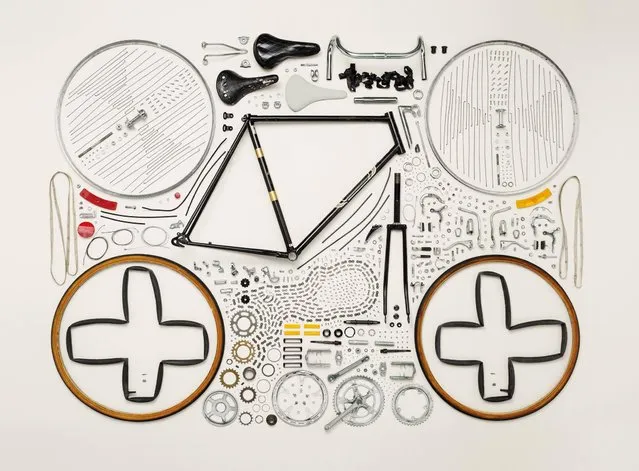
Deconstructed Objects By Todd McLellan

It is simply staggering how complicated some items really are. We never think about it, but some items that we use every day consist of hundreds of parts meticulously put together and working perfectly. Todd McLellan is a photographer who based his newest book “Things Come Apart” on the complexity of various old and new tech. By carefully taking apart various items and arranging all of the parts in perfect order, Todd has allowed us not only to look inside various appliances, but also to appreciate the astounding complexity of these items. Just like the human mind, we are so used to seeing and talking with people that we forget just how complicated their minds really are. It would be great if we could “take apart” the human mind in order to gain some insight into the person’s thoughts and desires. However, very few people are capable of doing it, while the rest will remain blind to the obvious. (Photo by Todd McLellan)
Details
15 Nov 2014 12:30:00
A girl carries a bag of recyclable items she collected from a landfill on the outskirts of Sanaa, Yemen November 16, 2016. (Photo by Mohamed al-Sayaghi/Reuters)

A girl carries a bag of recyclable items she collected from a landfill on the outskirts of Sanaa, Yemen November 16, 2016. (Photo by Mohamed al-Sayaghi/Reuters)
Details
16 Dec 2016 10:26:00