Loading...
Done
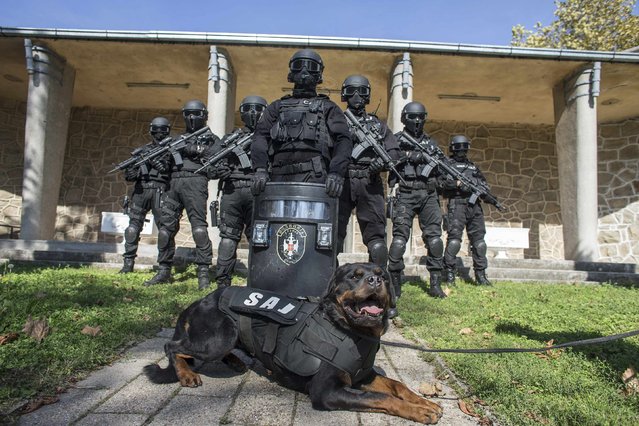
Serbian police officers of the Special Anti-Terrorist Unit pose for a picture in their base outside Belgrade October 8, 2014. (Photo by Marko Djurica/Reuters)

Serbian police officers of the Special Anti-Terrorist Unit pose for a picture in their base outside Belgrade October 8, 2014. When the killing of an unarmed black teenager by a white policeman in Ferguson, Missouri, in August sparked sometimes violent protests, the response of police in camouflage gear and armoured vehicles wielding stun grenades and assault rifles seemed more like a combat operation than a public order measure. Some U.S. police departments have recently acquired U.S. military-surplus hardware from wars abroad, but there are many law enforcers around the world whose rules of engagement also allow the use of lethal force with relatively few restrictions. But for every regulation that gives police wide scope to use firearms, there is another code that sharply limits their use. In Serbia, police may use measures ranging from batons to special vehicles, water cannon and tear gas on groups of people who have gathered illegally and are behaving in a way that is violent or could cause violence, but they may use firearms only when life is endangered. (Photo by Marko Djurica/Reuters)
Details
27 Nov 2014 14:53:00
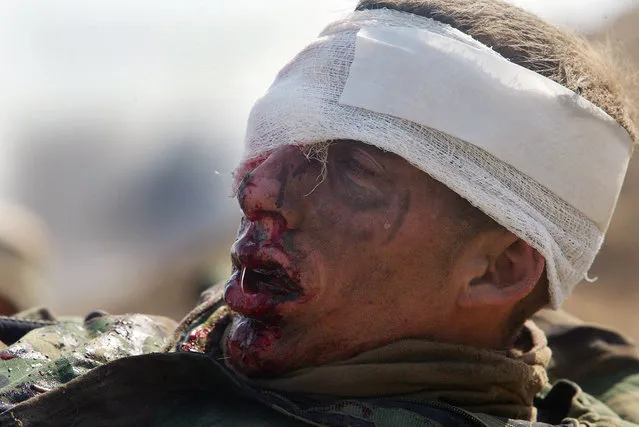
U.S. Marine Lt. Ben Reid from 1/2 Charlie Company of Task Force Tarawa waits to be medivaced after being hit with shrapnel and a machine gun round, in the southern Iraqi city of Nasiriyah, on March 23, 2003. The Marines suffered a number of deaths and casualties during gun battles throughout the city. (Photo by Joe Raedle/The Atlantic)

U.S. Marine Lt. Ben Reid from 1/2 Charlie Company of Task Force Tarawa waits to be medivaced after being hit with shrapnel and a machine gun round, in the southern Iraqi city of Nasiriyah, on March 23, 2003. The Marines suffered a number of deaths and casualties during gun battles throughout the city. (Photo by Joe Raedle via The Atlantic)
Details
20 Mar 2013 08:50:00
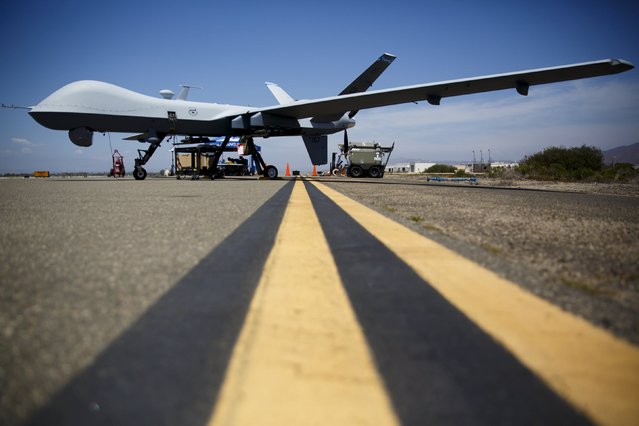
A General Atomics MQ-9 Reaper stands on the runway during “Black Dart”, a live-fly, live fire demonstration of 55 unmanned aerial vehicles, or drones, at Naval Base Ventura County Sea Range, Point Mugu, near Oxnard, California July 31, 2015. (Photo by Patrick T. Fallon/Reuters)

A General Atomics MQ-9 Reaper stands on the runway during “Black Dart”, a live-fly, live fire demonstration of 55 unmanned aerial vehicles, or drones, at Naval Base Ventura County Sea Range, Point Mugu, near Oxnard, California July 31, 2015. (Photo by Patrick T. Fallon/Reuters)
Details
02 Aug 2015 13:02:00
Afghanistan: Dogs of War Part 2

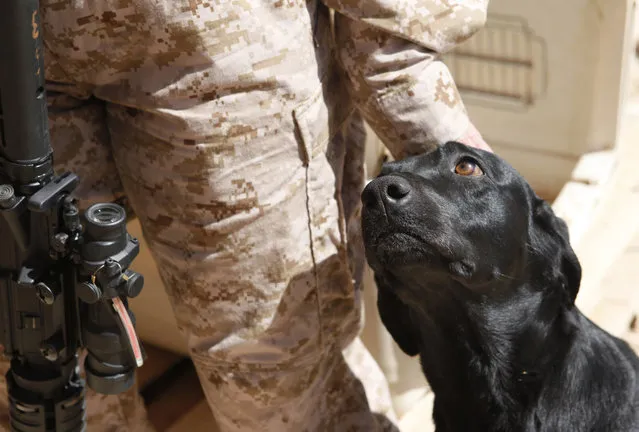
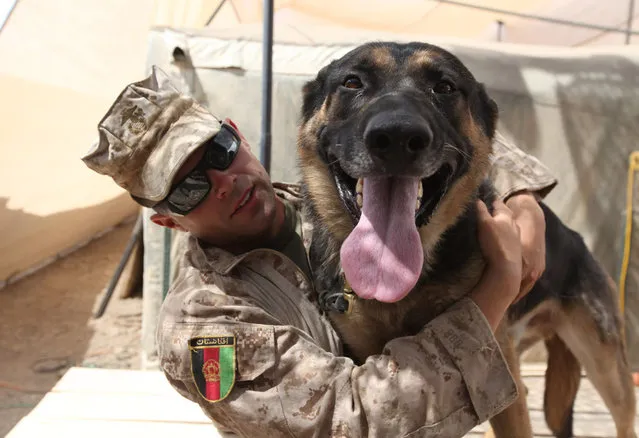
Throughout the course of the long war in Afghanistan, Coalition troops have relied on thousands of military working dogs to help keep them safe, and make their jobs easier. The dogs are trained to detect explosives, to find illegal drugs, to search for missing comrades, or target enemy combatants. Not only are they active on the front lines, but behind the lines they serve as therapy dogs, service dogs, and loyal companions. They also share the same risks as the ground troops, suffering injuries and sometimes death on the battlefields. Gathered here are images of these dogs and their handlers in Afghanistan and back home, from over the past several years, part of the ongoing series here on Afghanistan.
Details
05 Jun 2014 21:10:00
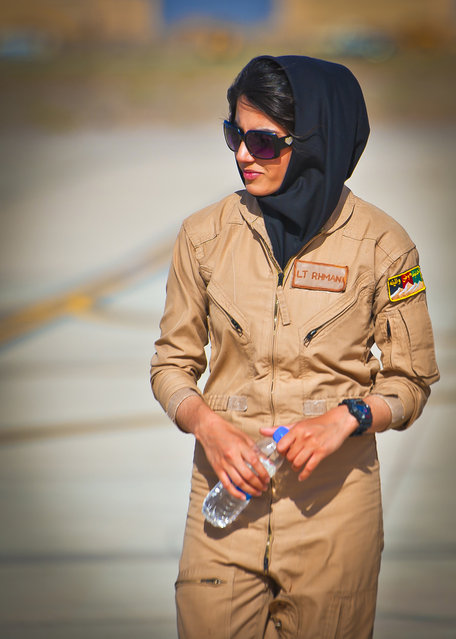
Afghan air force 2nd Lt. Niloofar Rhmani walks the flight line at Shindand Air Base, Afghanistan, prior to her graduation from undergraduate pilot training, on May 13, 2013. Rhmani made history on May 14, when she became the first female to successfully complete undergraduate pilot training and earn the status of pilot in more than 30 years. She will continue her service as she joins the Kabul Air Wing as a Cessna 208 pilot. (Photo by Senior Airman Scott Saldukas/USAF)

Afghan air force 2nd Lt. Niloofar Rhmani walks the flight line at Shindand Air Base, Afghanistan, prior to her graduation from undergraduate pilot training, on May 13, 2013. Rhmani made history on May 14, when she became the first female to successfully complete undergraduate pilot training and earn the status of pilot in more than 30 years. She will continue her service as she joins the Kabul Air Wing as a Cessna 208 pilot. (Photo by Senior Airman Scott Saldukas/USAF)
Details
04 Jun 2013 08:33:00


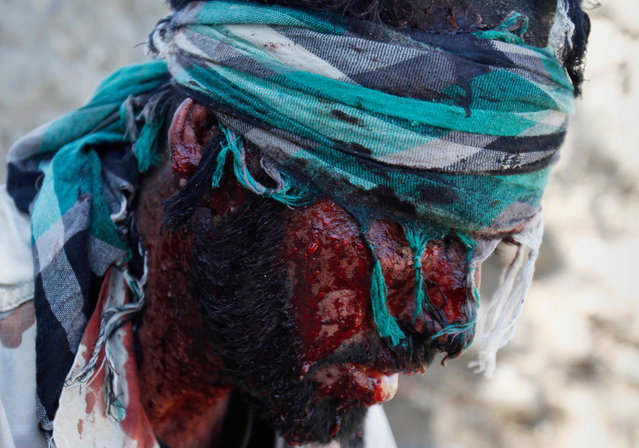
A wounded member of the Afghan police reaction force waits for treatment in Alingar, Laghman province, on April 30, 2012. A bomb exploded next to opium poppy fields during a poppy eradication campaign in, wounding two Afghan policemen, police officials said. (AP Photo/Rahmat Gul)
Details
06 May 2012 12:10:00
Afghanistan: Dogs of War Part 1

Throughout the course of the long war in Afghanistan, Coalition troops have relied on thousands of military working dogs to help keep them safe, and make their jobs easier. The dogs are trained to detect explosives, to find illegal drugs, to search for missing comrades, or target enemy combatants. Not only are they active on the front lines, but behind the lines they serve as therapy dogs, service dogs, and loyal companions. They also share the same risks as the ground troops, suffering injuries and sometimes death on the battlefields. Gathered here are images of these dogs and their handlers in Afghanistan and back home, from over the past several years, part of the ongoing series here on Afghanistan.
Details
03 Jun 2014 21:02:00


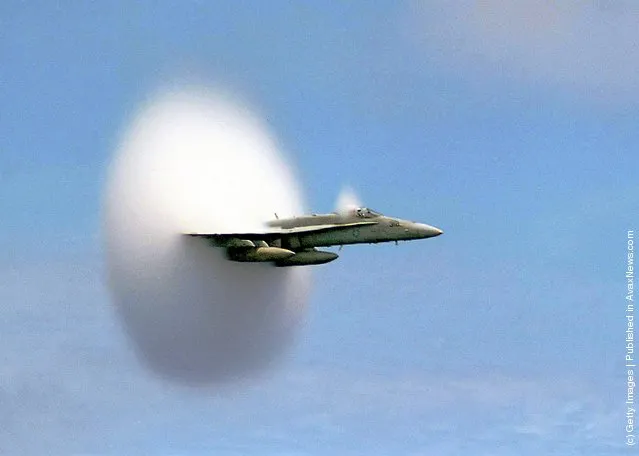
An F/A-18 Hornet assigned to Strike Fighter Squadron One Five One (VFA-151) emerges from a cloud created when it broke the sound barrier in the skies over the Pacific Ocean, July 7, 1999. (Photo by John Gay/US Navy)
Details
25 May 2011 10:33:00