Loading...
Done
Crime Tatoo  Part 1

Tattoos are commonly used among criminals to show gang membership and record the wearer's personal history—such as his or her skills, specialties, accomplishments and convictions. They are also used as a means of personal expression. Certain designs have developed recognized coded meanings. The code systems can be quite complex and because of the nature of what they encode, the tattoo designs are not widely recognized.
Details
23 Apr 2013 10:29:00
Crime Tatoo  Part 2

Tattoos are commonly used among criminals to show gang membership and record the wearer's personal history—such as his or her skills, specialties, accomplishments and convictions. They are also used as a means of personal expression. Certain designs have developed recognized coded meanings. The code systems can be quite complex and because of the nature of what they encode, the tattoo designs are not widely recognized.
Details
24 Apr 2013 09:49:00
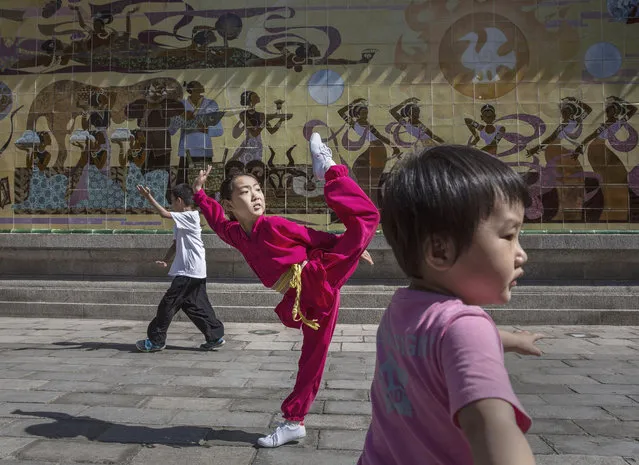
A young Chinese girl kicks during a kung-fu class at Ritan Park on June 11, 2016 in Beijing, China. Ritan, meaning “sun altar”, is among the oldest parks in Beijing, built in the early 1500s during the Ming dynasty for the emperor to make sacrifices to the sun. Less than half a kilometer square, Ritan these days is considered an oasis of green space in a sprawling city of skyscrapers, notorious air pollution, and a population of over 20 million people. Most Chinese live in small apartments with no access to gardens, leaving parks as a welcome haven for people, especially the elderly, to exercise, socialize, or enjoy a degree of privacy. (Photo by Kevin Frayer/Getty Images)

A young Chinese girl kicks during a kung-fu class at Ritan Park on June 11, 2016 in Beijing, China. Ritan, meaning “sun altar”, is among the oldest parks in Beijing, built in the early 1500s during the Ming dynasty for the emperor to make sacrifices to the sun. (Photo by Kevin Frayer/Getty Images)
Details
14 Jun 2016 13:01:00
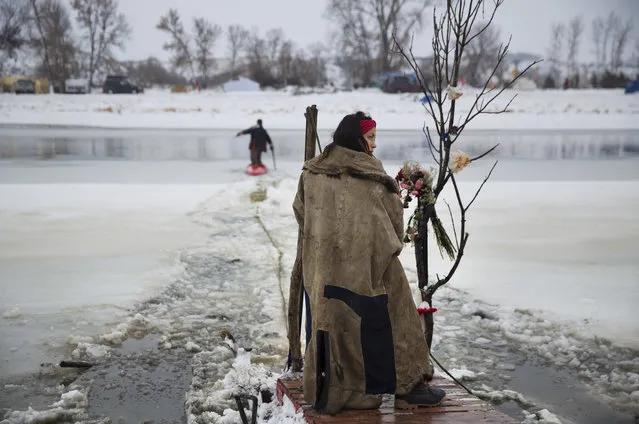
In this Thursday, December 1, 2016 photo, Cat Bigney, part of the Oglala Native American tribe, waits on the shore of the Cannonball river for travelers to arrive by canoe at the Oceti Sakowin camp where people have gathered to protest the Dakota Access oil pipeline in Cannon Ball, N.D. So far, those at the camp have shrugged off the heavy snow, icy winds and frigid temperatures. But if they defy next week's government deadline to abandon the camp, demonstrators know the real deep freeze lies ahead. Life-threatening wind chills and towering snow drifts could mean the greatest challenge is simple survival. (Photo by David Goldman/AP Photo)

In this Thursday, December 1, 2016 photo, Cat Bigney, part of the Oglala Native American tribe, waits on the shore of the Cannonball river for travelers to arrive by canoe at the Oceti Sakowin camp where people have gathered to protest the Dakota Access oil pipeline in Cannon Ball, N.D. So far, those at the camp have shrugged off the heavy snow, icy winds and frigid temperatures. But if they defy next week's government deadline to abandon the camp, demonstrators know the real deep freeze lies ahead. Life-threatening wind chills and towering snow drifts could mean the greatest challenge is simple survival. (Photo by David Goldman/AP Photo)
Details
06 Dec 2016 10:22:00
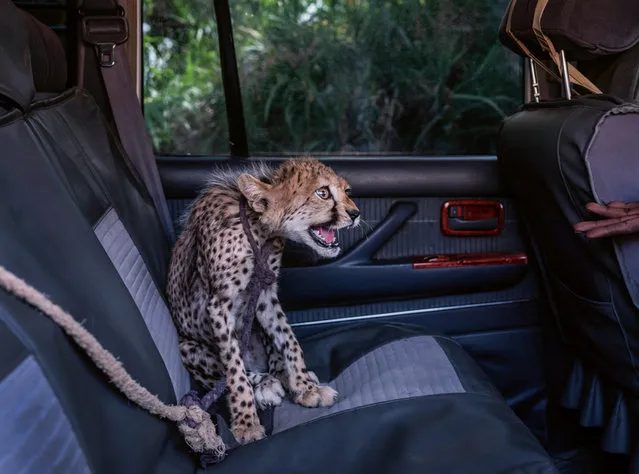
A five-month-old cheetah seated in the back of a Land Cruiser growls at an outstretched hand after being taken from traffickers in Ethiopia and driven to Harirad, Somaliland, in 2020. This photo is part of the work of more than 100 artists in Why We Photograph Animals, a new collection of wildlife photography that aims to help understand why people have photographed animals at different points in history and what it means in the present. (Photo by Nichole Sobecki/Thames & Hudson)

A five-month-old cheetah seated in the back of a Land Cruiser growls at an outstretched hand after being taken from traffickers in Ethiopia and driven to Harirad, Somaliland, in 2020. This photo is part of the work of more than 100 artists in Why We Photograph Animals, a new collection of wildlife photography that aims to help understand why people have photographed animals at different points in history and what it means in the present. (Photo by Nichole Sobecki/Thames & Hudson)
Details
28 Apr 2024 03:15:00
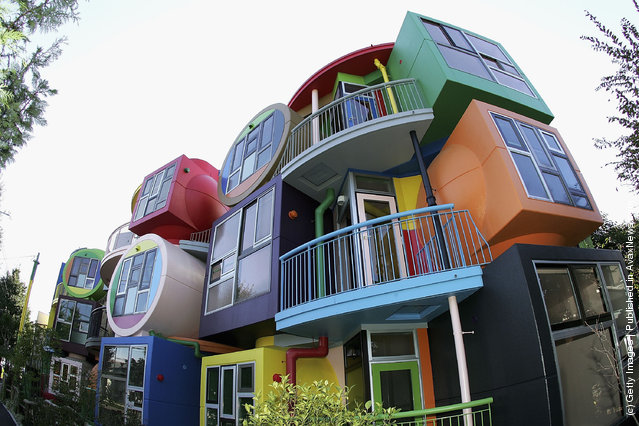
Concept Design Home Reversible Destiny Lofts MITAKA: In Memory Of Helen Keller By Reversible Destiny Foundation and Shusaku Arakawa

“The Reversible Destiny Lofts – Mitaka (In Memory of Helen Keller) is a nine-unit multiple dwelling. It was first completed example of procedural architecture put to residential use. These lofts reflexively articulate the residents’ operative tendencies and coordinating skills essential to and determinative of human thought and behavior; which means to say, the lofts manage, by virtue of how they are constructed, to reveal to their residents the ins and outs of what makes a person, in this case the resident. This is the same set of tendencies and skills to which Arakawa and Madeline Gins gave diagrammatic form in their decades-long research project The Mechanism of Meaning”. – Wikipedia

Photo: The exterior of the concept design home “Reversible Destiny Lofts MITAKA: In Memory of Helen Keller” is seen on October 27, 2005 in Tokyo, Japan. (Photo by Koichi Kamoshida/Getty Images)
Details
30 Nov 2011 11:58:00
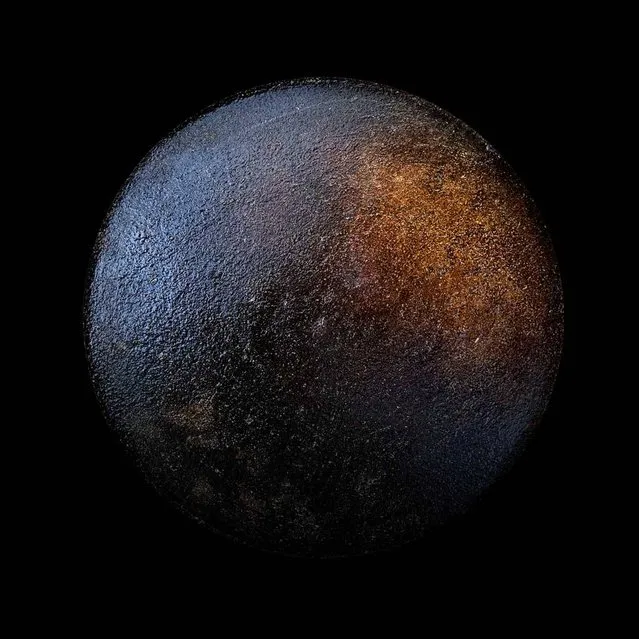
Christopher Jonassen’s Alien Landscapes

Is it the surface of the Mars or Venus or an undiscovered planet? Not at all. These pictures aren’t what you think they are. Christopher Jonassen, a Norwegian photographer shot these beautiful and otherworldly series called ‘Devour of frying pan bottoms’, which are visually similar to craters and scars on a planet’s surface. In his series Jonassen refers to a quote of Jean-Paul Satre who said: ‘To eat is to appropriate destruction’ and the meaning of the word ‘devour’, which stands for eating up greedily, destroying, consuming, and wasting.
Details
30 Aug 2013 08:18:00
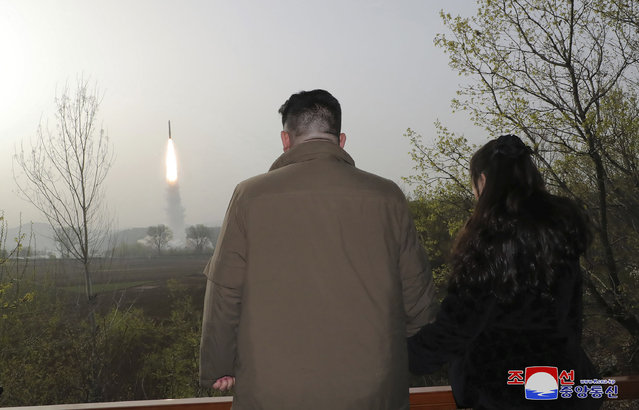
This photo provided April 14, 2023, by the North Korean government, shows North Korean leader Kim Jong Un, center, inspects what it says is the test-launch of Hwasong-18 intercontinental ballistic missile Thursday, April 13, 2023 at an undisclosed location, North Korea. Independent journalists were not given access to cover the event depicted in this image distributed by the North Korean government. The content of this image is as provided and cannot be independently verified. Korean language watermark on image as provided by source reads: “KCNA” which is the abbreviation for Korean Central News Agency. (Photo by Korean Central News Agency/Korea News Service via AP Photo)

This photo provided April 14, 2023, by the North Korean government, shows North Korean leader Kim Jong Un, center, inspects what it says is the test-launch of Hwasong-18 intercontinental ballistic missile Thursday, April 13, 2023 at an undisclosed location, North Korea. Independent journalists were not given access to cover the event depicted in this image distributed by the North Korean government. The content of this image is as provided and cannot be independently verified. Korean language watermark on image as provided by source reads: “KCNA” which is the abbreviation for Korean Central News Agency. (Photo by Korean Central News Agency/Korea News Service via AP Photo)
Details
31 Jul 2024 06:24:00