Loading...
Done
“Blow Job”: Gale-force Wind Portraits by Tadao Cern

“In spring of 2010 I wanted to try something new and stopped being an architect. That 'something new' turned out to be photography. Wedding photography – to be exact. Today I travel around the world with my personal projects and commissions knowing that there is a lot more exiting stuff to be tried out. Don't be afraid to change something in your life, because for me that was one of the best decisions”. – Tadao Cern (Photo by Tadao Cern)
Details
19 May 2012 12:48:00
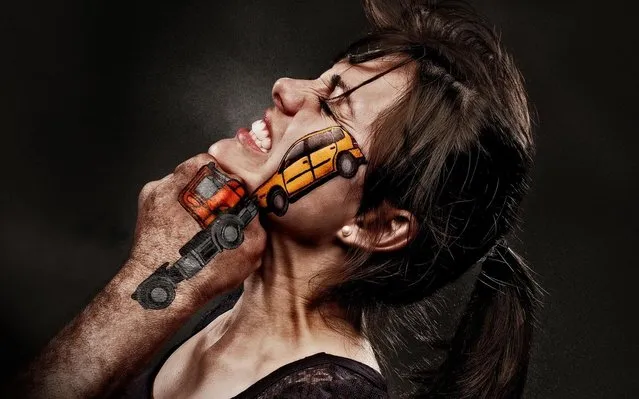
Stop the Violence, Don’t Speed Ad Campaign

The ‘Stop the Violence’ advertising campaign by Brazilian agency Terremoto Propaganda aims to reduce the risk of accidents on the road. The visually grabbing print campaign shows a vehicle painted on the face of one person and the fist of another, drawing the comparison between what is widely known to be intentional violence, such as punching someone in the face, with what many incorrectly consider unintentional, like speeding or unsafe lane changes. Let us know what you think about this campaign in the comments below.
Details
01 Apr 2014 12:29:00
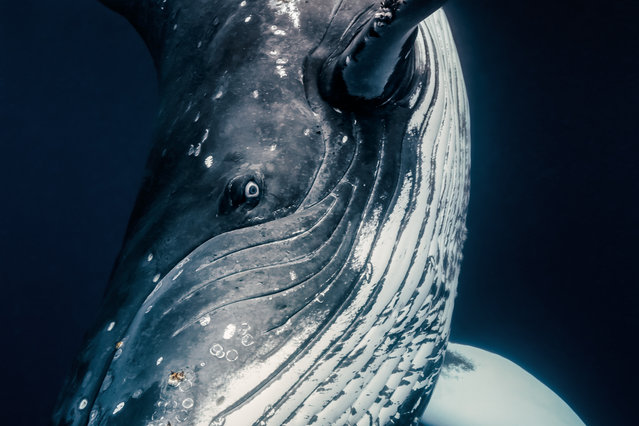
“To look into a whale’s eye is life-changing and humbling. Well, it’s the same with dolphins but they are mostly very fast in the water. A whale’s eye is unexpectedly looking, just like a human eye, kinda checking you out”. (Photo by Rita Kluge/The Guardian)

With the humpback calving season drawing to a close, here’s a look at some of Rita Kluge’s distinctive marine photos from the south Pacific. The Sydney-based photographer fell in love with whales after witnessing southern rights from the New South Wales coastline as they travelled to and from their feeding grounds in the Antarctic. She has since been to Tonga, where humpbacks breed and calf in winter months, to photograph them in the water. (Photo by Rita Kluge/The Guardian)
Details
26 Oct 2016 11:09:00
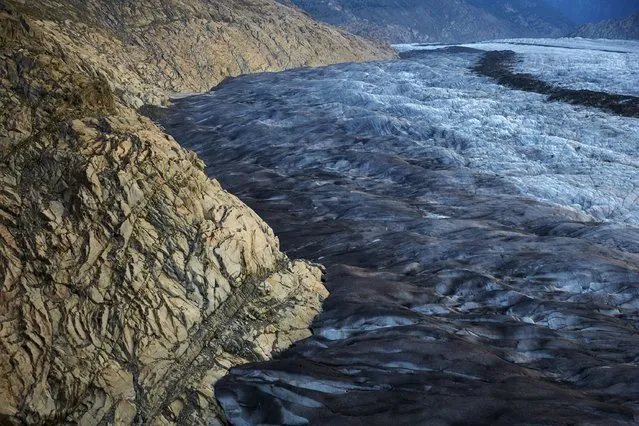
The Aletsch Glacier is pictured at dusk in Fiesch, Switzerland, August 11, 2015. (Photo by Denis Balibouse/Reuters)

The Aletsch Glacier is pictured at dusk in Fiesch, Switzerland, August 11, 2015. One of Europe's biggest glaciers, the Great Aletsch coils 23 km (14 miles) through the Swiss Alps – and yet this mighty river of ice could almost vanish in the lifetimes of people born today because of climate change. The glacier, 900 metres (2,950 feet) thick at one point, has retreated about 3 km (1.9 miles) since 1870 and that pace is quickening. (Photo by Denis Balibouse/Reuters)
Details
18 Oct 2015 08:05:00
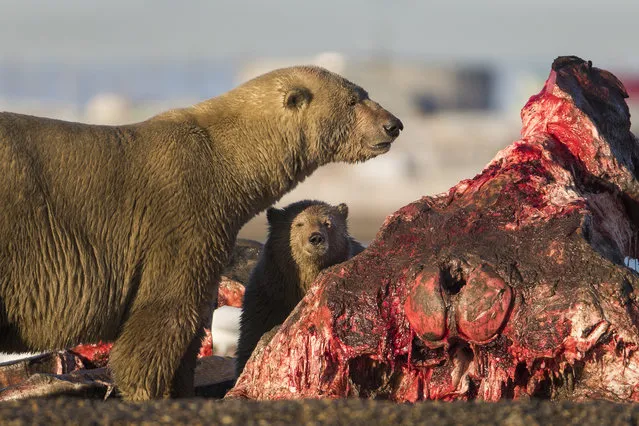
Polar bears prepare to feast on the remains of a bowhead whale, harvested legally by whalers during their annual subsistence hunt, just outside the Inupiat village of Kaktovik, Alaska, USA, 10 September 2017. (Photo by Jim Lo Scalzo/EPA/EFE)

Polar bears prepare to feast on the remains of a bowhead whale, harvested legally by whalers during their annual subsistence hunt, just outside the Inupiat village of Kaktovik, Alaska, USA, 10 September 2017. As climate change shrinks their natural habitat, polar bears are turning Kaktovik into their very own sanctuary city. (Photo by Jim Lo Scalzo/EPA/EFE)
Details
28 Sep 2017 07:33:00
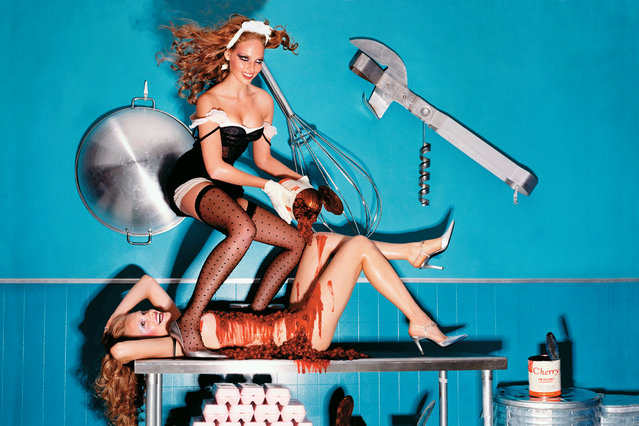
Issues tackled in the show include gender, wealth, consumerism, the environment, protest and identity building. Here: David LaChapelle – October 2004. (Photo by David LaChapelle/The Guardian)

Vogue Italia is hosting a series of shows in Milan exploring how the magazine seeks to engage with hot social and political issues and provoke debate through images by top photographers. The Photo Vogue festival in Milan is hosting three exhibitions. The first, Fashion and Politics in Vogue Italia, looks at the magazine’s ambition to be a catalyst for change – in subtle and playful ways. Here: David LaChapelle – October 2004. (Photo by David LaChapelle/The Guardian)
Details
22 Nov 2017 06:10:00
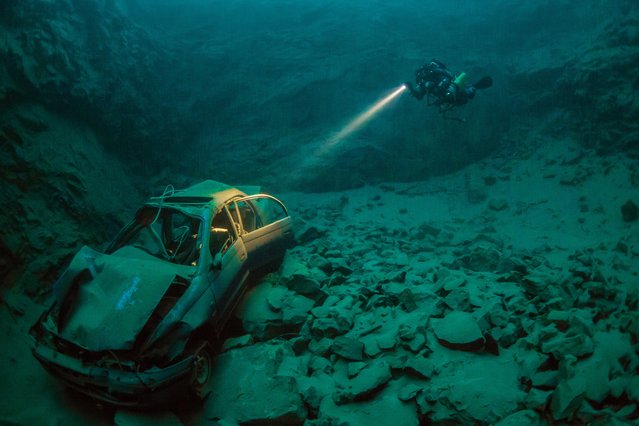
Wide-angle category winner. Part of the Illusion by Marcus Blatchford (UK). Location: National Dive & Activity Centre, Chepstow, Wales. “This is the deepest inland dive centre in the UK. The dive plan was to explore the deep end, but this time I dived ‘unplugged’ (without my strobes). With the exception of this change to my camera technique, there were no planned shots I wanted to achieve – just a fun dive with ad-hoc photos along the way. Shortly after this photo was captured, in 6C water and two hours of decompression ahead of us, we turned and started the long ascent back to the surface”. (Photo by Marcus Blatchford/Underwater Photographer of the Year 2016)

Wide-angle category winner. Part of the Illusion by Marcus Blatchford (UK). Location: National Dive & Activity Centre, Chepstow, Wales. “This is the deepest inland dive centre in the UK. The dive plan was to explore the deep end, but this time I dived ‘unplugged’ (without my strobes). With the exception of this change to my camera technique, there were no planned shots I wanted to achieve – just a fun dive with ad-hoc photos along the way. Shortly after this photo was captured, in 6C water and two hours of decompression ahead of us, we turned and started the long ascent back to the surface”. (Photo by Marcus Blatchford/Underwater Photographer of the Year 2016)
Details
18 Feb 2016 13:44:00
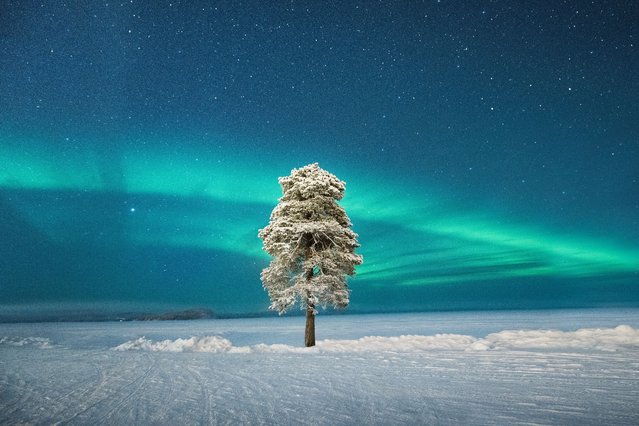
Aurorae category runner-up: Lone Tree under a Scandinavian Aurora by Tom Archer (UK). The photographer decided to explore the area around the hotel on a very crisp -35C evening in Finnish Lapland. When he found this tree, he decided to wait for the misty conditions to change and could not believe his luck when the sky cleared and the aurora came out in the perfect spot. Archer spent about an hour photographing it before his camera started to lock up because of the harsh conditions, but by then he was happy to call it a night. (Photo by Tom Archer/2020 Astronomy Photographer of the Year)

Aurorae category runner-up: Lone Tree under a Scandinavian Aurora by Tom Archer (UK). The photographer decided to explore the area around the hotel on a very crisp -35C evening in Finnish Lapland. When he found this tree, he decided to wait for the misty conditions to change and could not believe his luck when the sky cleared and the aurora came out in the perfect spot. Archer spent about an hour photographing it before his camera started to lock up because of the harsh conditions, but by then he was happy to call it a night. (Photo by Tom Archer/2020 Astronomy Photographer of the Year)
Details
17 Sep 2020 00:03:00