Loading...
Done
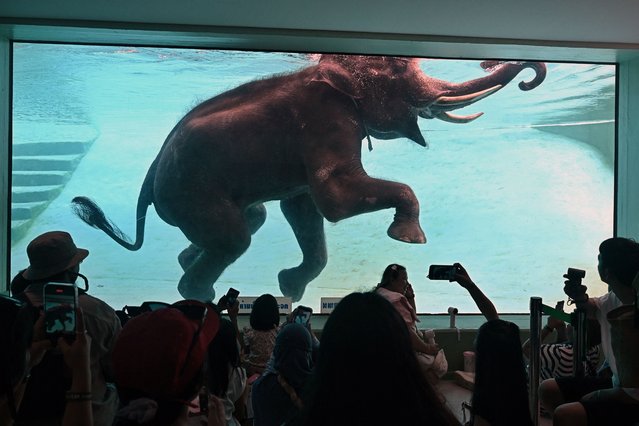
A captive elephant is made to swim for visitors at Khao Kheow Open Zoo in Chonburi province, Thailand on September 15, 2024. (Photo by Lillian Suwanrumpha/AFP Photo)

A captive elephant is made to swim for visitors at Khao Kheow Open Zoo in Chonburi province, Thailand on September 15, 2024. (Photo by Lillian Suwanrumpha/AFP Photo)
Details
22 Sep 2024 03:35:00
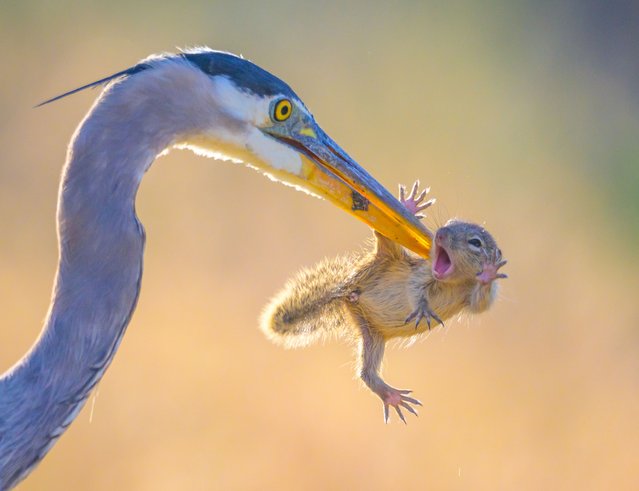
A squirrel fights for its life in the bill of a great blue heron at the Mission Trails Regional Park in California in the second decade of April 2025. (Phoot by Decker Nomura/Solent News & Photo Agency)

A squirrel fights for its life in the bill of a great blue heron at the Mission Trails Regional Park in California in the second decade of April 2025. (Phoot by Decker Nomura/Solent News & Photo Agency)
Details
27 Apr 2025 03:55:00
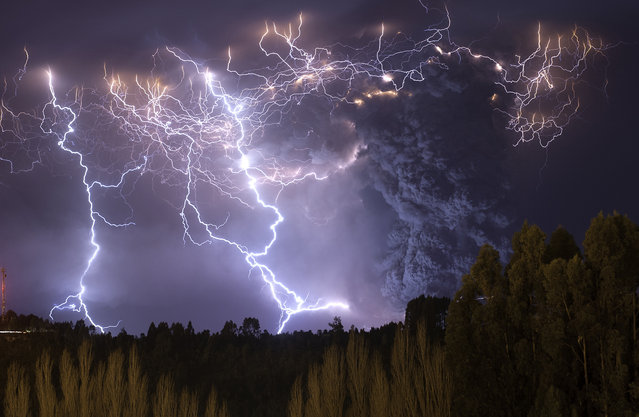
The eruption of Cordon Caulle began on June 4, 2011, located in the Region of Los Rios in Chile. For about 12 months, people and animals became accustomed to living with the daily fall of ash, which also caused problems in the air traffic in South America. The explosions and lightning during first days of the eruption could be seen from hundreds of miles around. This photograph was taken on the second night of eruption from the town of Lago Ranco. (Photo and caption by Francisco Negroni/National Geographic Traveler Photo Contest)

The eruption of Cordon Caulle began on June 4, 2011, located in the Region of Los Rios in Chile. For about 12 months, people and animals became accustomed to living with the daily fall of ash, which also caused problems in the air traffic in South America. The explosions and lightning during first days of the eruption could be seen from hundreds of miles around. This photograph was taken on the second night of eruption from the town of Lago Ranco. (Photo and caption by Francisco Negroni/National Geographic Traveler Photo Contest)

ATTENTION! All pictures are presented in high resolution. To see Hi-Res images – just TWICE click on any picture. In other words, click small picture – opens the BIG picture. Click BIG picture – opens VERY BIG picture.
Details
23 Jun 2013 11:24:00
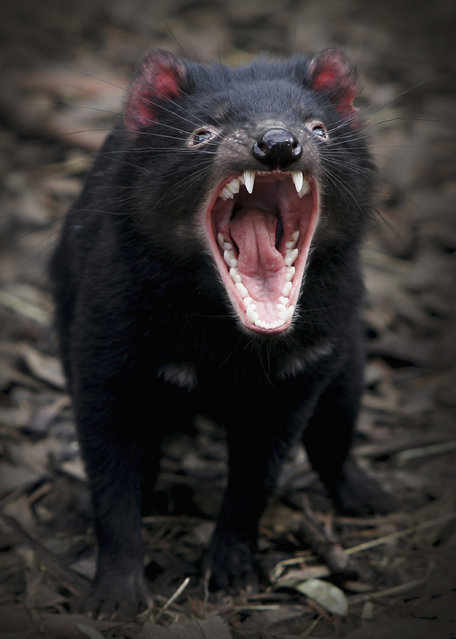
A Tasmanian Devil bears it's teeth at a quarantine facility August 31, 2005 in Hobart, Australia. The Devil, a native marsupial unique to Tasmania, is under threat from Devil Facial Tumor Disease (DFTD) which is decimating numbers throughout Tasmania. (Photo by Ian Waldie/Getty Images)

“The Tasmanian devil (Sarcophilus harrisii) is a carnivorous marsupial of the family Dasyuridae now found in the wild only in the Australian island state of Tasmania. The size of a small dog, it became the largest carnivorous marsupial in the world following the extinction of the thylacine in 1936. It is characterised by its stocky and muscular build, black fur, pungent odour, extremely loud and disturbing screech, keen sense of smell, and ferocity when feeding”. – Wikipedia. Photo: A Tasmanian Devil bears it's teeth at a quarantine facility August 31, 2005 in Hobart, Australia. (Photo by Ian Waldie/Getty Images)
Details
27 Jan 2014 09:45:00
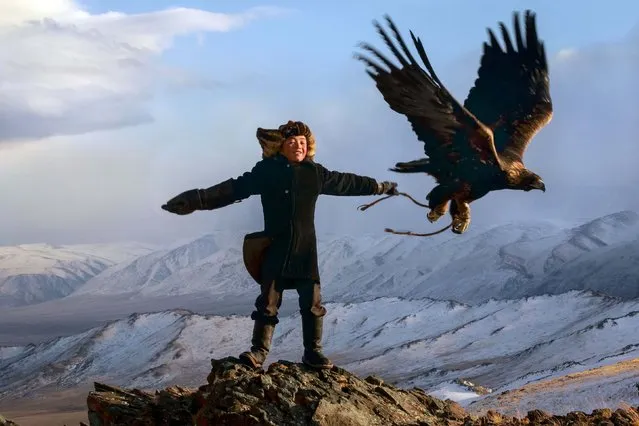
13 year old Irka Bolen with his eagle. Tradition wise, when a boy turns 13, then are strong enough to hold the weight of a fully grown eagle. (Photo by Asher Svidensky/Caters News)

These stunning photographs show the changing face of a majestic centuries old Kazakh pastime tradition that still lives in the lands of mongolia – eagle hunters. Photo: 13 year old Irka Bolen with his eagle. Tradition wise, when a boy turns 13, then are strong enough to hold the weight of a fully grown eagle. (Photo by Asher Svidensky/Caters News)
Details
20 Apr 2014 10:33:00
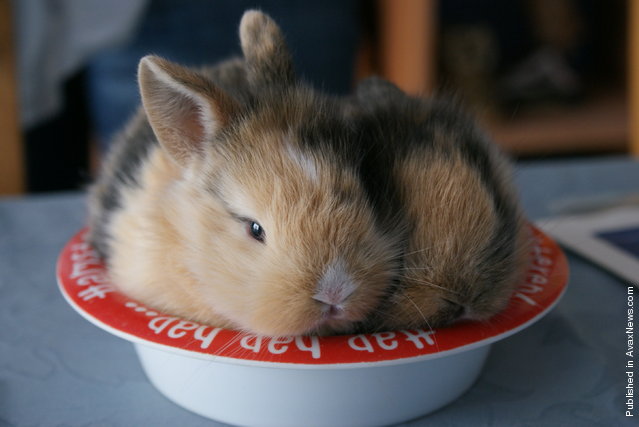
Bunny Baby

Rabbits have been kept as pets in Western nations since the 19th century. Rabbits kept indoors with proper care have a lifespan between 9 to 12 years. Rabbits are social animals. Rabbits as pets can find their companionship with a variety of creatures, including humans, other rabbits, guinea pigs, and sometimes even cats and dogs. Domestic rabbits that do not live indoors can also often serve as companions for their owners, typically living in an easily accessible hutch outside the home.

Photo by: jpockele; Source: Flickr
Details
25 Aug 2011 12:15:00
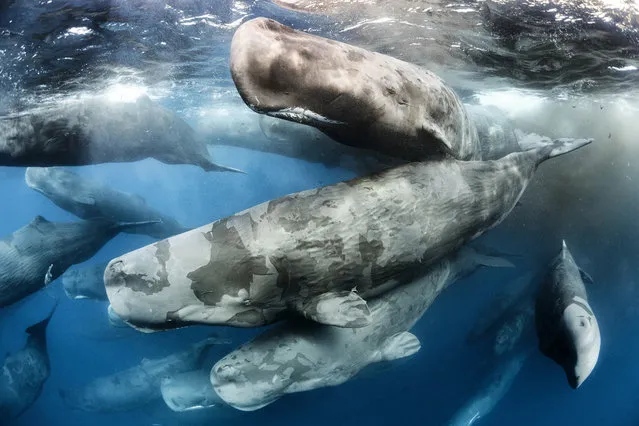
Giant gathering by Tony Wu. “The first indication that something extraordinary was going on were the blows, huge numbers of them – the exhalations of huge numbers of whales. Entering the water, the photographer witnessed an extraordinary scene. Hundreds, possibly thousands, of sperm whales were twirling and twisting through the water, bumping and rubbing against each other, and there was a cacophony of sound – the pulsation, buzz, creak and crackle of whale communication. The picture shows just a fraction of the scene, with the whales stacked up below. Undoubtedly, this was a clan gathering”. (Photo by Tony Wu/Unforgettable Underwater Photography/NHM)

A new book published by the UK Natural History Museum showcases some of the most memorable underwater photographs taken over the last few decades in its annual wildlife photographer of the year competition. Here: Giant gathering by Tony Wu. “The first indication that something extraordinary was going on were the blows, huge numbers of them – the exhalations of huge numbers of whales. Entering the water, the photographer witnessed an extraordinary scene”. (Photo by Tony Wu/Unforgettable Underwater Photography/NHM)
Details
17 Apr 2018 00:03:00
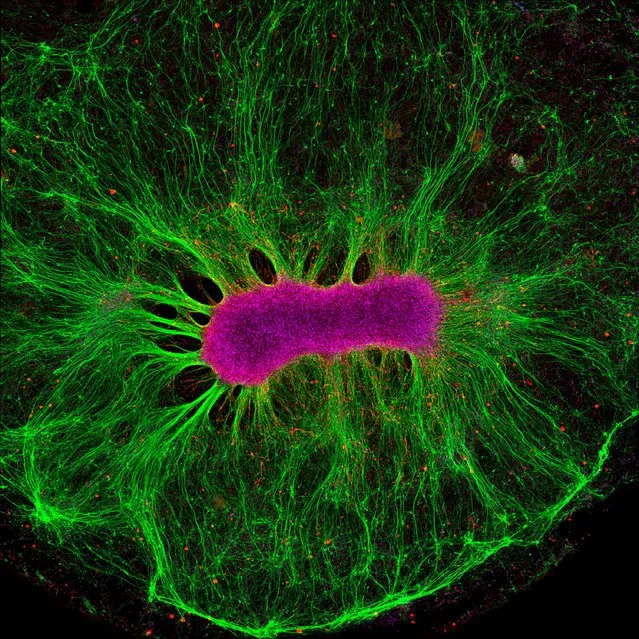
Brain-on-a-chip. Dazzling in green and magenta this image shows the nerve fibres (in green) produced by neural stem cells (in magenta) as they grow on a synthetic gel. Captured by a technique known as confocal microscopy, the image is part of research shedding light on how tinkering with the environment can affect the way in which nerve fibres grow. (Photo by Collin Edington and Iris Lee/Massachusetts Institute of Technology/Wellcome Images)

Brain-on-a-chip. Dazzling in green and magenta this image shows the nerve fibres (in green) produced by neural stem cells (in magenta) as they grow on a synthetic gel. Captured by a technique known as confocal microscopy, the image is part of research shedding light on how tinkering with the environment can affect the way in which nerve fibres grow. (Photo by Collin Edington and Iris Lee/Massachusetts Institute of Technology/Wellcome Images)
Details
17 Mar 2017 00:01:00