Loading...
Done
Thecacera Pacifica AKA Pikachu

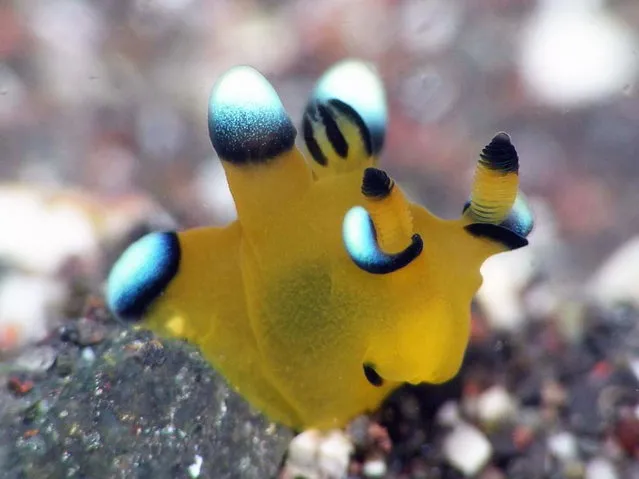
If you ever wanted to meet a live Pikachu, you might have a hard time finding one. However, there is a creature on this Earth that kind of looks like one. That creature’s name is Thecacera pacifica and it is a species of a sea slug. These little critters can be found in the Indian Ocean from African coast to Indonesia and Vanuatu. Their vibrant orange and blue colors look gorgeous, making it look like some sort of anemone. Also, as you might have guessed from the striking colors of the sea slug, just like most of anemones, this creature is very toxic. Thus, keeping it as a pet isn’t an option.

Details
19 Dec 2014 12:51:00
Experts In Work Safety

This is collection on most foolish peoples whose don’t have scene and don’t care about safety and work dangerously that mean they fell in any problem.If you want to see that person then look around you must find one of them.
Details
24 Dec 2013 12:22:00
“You wont fool the children of the revolution”. (Photo by Andy Teo)

“You wont fool the children of the revolution”. (Photo by Andy Teo)
Details
13 Mar 2015 09:25:00
Jumbo Hostel – Arlanda Airport, Stockholm, Sweden

The Jumbo Stay blends into the background at Stockholm Arlanda Airport. If you spot it as your plane rolls along a taxiway, you might notice an aging widebody jet parked by its lonesome self in a secluded part of the airport.
Details
28 Apr 2014 12:16:00
Edible Art By Sandra Van Den Broek

Sandra van den Broek from Netherlands creates the cutest character bento for her children’s. She’ll start by sketching the meal and prepares it with scissors, knives and toothpicks. Although you wouldn’t say, it usually takes Sandra only one hour to make a meal. She likes to make something practical, something for everyone to be able to follow. And if you look closely, you can see that it wouldn’t be too hard to make these bentos yourself.
Details
04 Sep 2014 10:29:00
Swiss Company Turns People’s Ashes Into Diamonds

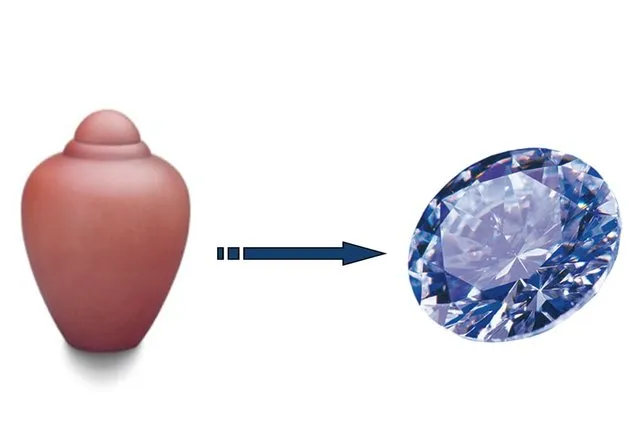
In the past people used to bury their loved ones or turn them into ashes. However, now there is a completely new possibility. Since having an urn with ashes in your house may be a bit weird, you may want to choose the option of turning your deceased relative into a diamond. Yes, diamond! You’ve heard us correctly. By using immense heat and pressure, the ashes you get after cremating a person can be turned into a real diamond. After this, the diamond can be left as it is, and stored in a jewelry box, or it can be used as a piece of jewelry, such as a ring or a pendant, allowing you to always keep your loved one close to your heart. (Photo by djd/Algordanza memorial diamonds)
Details
20 Oct 2014 08:52:00
A believer dressed as a “diablo” (devil) jumps at the San Blas' (Saint Blaise) procession during the “Endiablada” festival in Almonacid del Marquesado, in central Spain February 3, 2015. In the “Endiablada”, an undated traditional festival in honour of the Candelaria Virgin and San Blas. (Photo by Susana Vera/Reuters)

A believer dressed as a “diablo” (devil) jumps at the San Blas' (Saint Blaise) procession during the “Endiablada” festival in Almonacid del Marquesado, in central Spain February 3, 2015. In the “Endiablada”, an undated traditional festival in honour of the Candelaria Virgin and San Blas, believers are dressed in colourful costumes, wear a mitre with lead cowbells tied to their waists that ring as they wander around the village and in front of the saints' statues during their processions. (Photo by Susana Vera/Reuters)
Details
05 Feb 2015 12:02:00
Northern Lynx kittens, explore their enclosure at the Highland Wildlife park on October 9, 2012 in Kingussie, Scotland. The feline twins are believed to be the type of lynx found historically in Scotland. The Highland Wildlife Park specialises in Scottish animal species, both past and present, and species that are well adapted to cold weather.  (Photo by Jeff J. Mitchell)

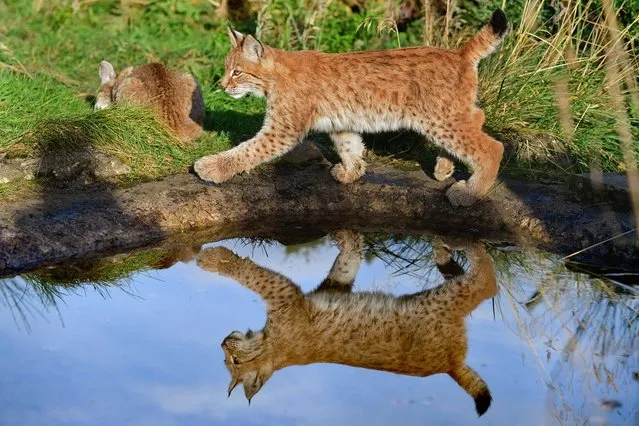
Northern Lynx kittens, explore their enclosure at the Highland Wildlife park on October 9, 2012 in Kingussie, Scotland. The feline twins are believed to be the type of lynx found historically in Scotland. The Highland Wildlife Park specialises in Scottish animal species, both past and present, and species that are well adapted to cold weather. (Photo by Jeff J. Mitchell)
Details
10 Oct 2012 09:30:00