Loading...
Done
ESA astronaut Tim Peake posted this stunning image on his social media channels, commenting: “Station passed through magnificent aurora Australis last night”. Tim is set to return to Earth on 18 June 2016, bringing his six-month Principia mission to the ISS to an end. During his stay he performed more than 30 scientific experiments for ESA and taking part in numerous others from ESA's international partners. ESA and the UK Space Agency have partnered to develop many exciting educational activities around the Principia mission, aimed at sparking the interest of young children in science and space. (Photo by Tim Peake/ESA/NASA)

ESA astronaut Tim Peake posted this stunning image on his social media channels, commenting: “Station passed through magnificent aurora Australis last night”. Tim is set to return to Earth on 18 June 2016, bringing his six-month Principia mission to the ISS to an end. During his stay he performed more than 30 scientific experiments for ESA and taking part in numerous others from ESA's international partners. ESA and the UK Space Agency have partnered to develop many exciting educational activities around the Principia mission, aimed at sparking the interest of young children in science and space. (Photo by Tim Peake/ESA/NASA)
Details
31 Dec 2016 10:21:00
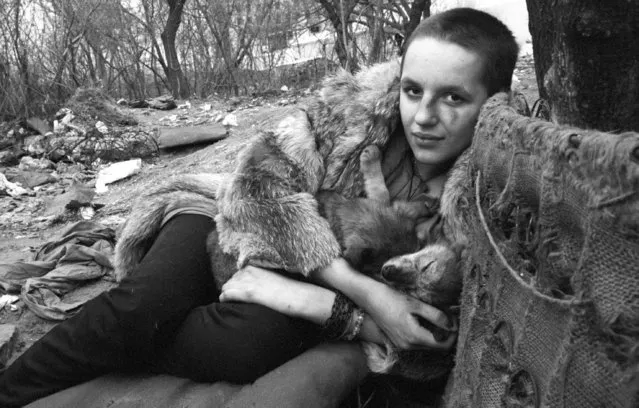
Suffering from a broken nose and bruised ribs Natasha Dzhuley, 16, relaxes after inhaling glue for the first time – something she swore she would never do, 2002. She was beaten by her pimps men in what Ruslana believes was a warning to other prostitutes to stay in line. Though another child believes her pimp had her beaten because she was pregnant. Less than a week after this picture of Natasha was taken she was dragged away by six men. She has not been heard or seen since. (Photo by Kurt Vinion /Getty Images)

Suffering from a broken nose and bruised ribs Natasha Dzhuley, 16, relaxes after inhaling glue for the first time – something she swore she would never do, 2002. She was beaten by her pimps men in what Ruslana believes was a warning to other prostitutes to stay in line. Though another child believes her pimp had her beaten because she was pregnant. Less than a week after this picture of Natasha was taken she was dragged away by six men. She has not been heard or seen since. (Photo by Kurt Vinion /Getty Images)
Details
18 Feb 2017 00:05:00
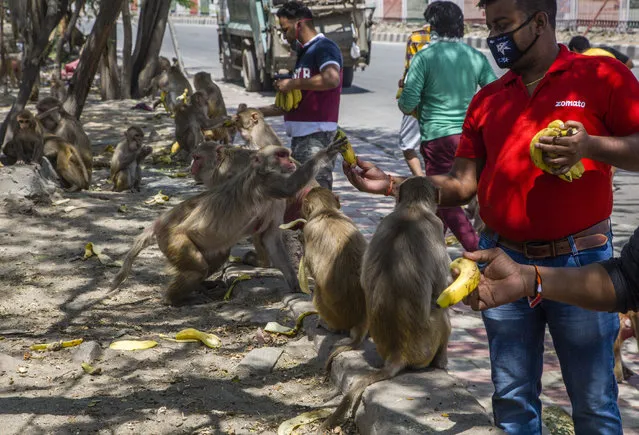
Men give bananas to monkeys gathered on the side of the road as India remains under an unprecedented lockdown over the highly contagious coronavirus (COVID-19) on April 08, 2020 in New Delhi, India. Wild animals, including monkeys, are roaming human settlements in India as people are staying indoors due to the 21-day lockdown. With India's 1.3 billion population and tens of millions of cars off the roads, wildlife is moving towards areas inhabited by humans. Wild animals in many countries have been seen roaming streets. A study says some 60 percent of the new diseases found around the globe every year are zoonotic, meaning they originate in animals and are passed on to humans. COVID-19 is a zoonotic disease that is suspected to have come from the wet markets of Wuhan, China. (Photo by Yawar Nazir/Getty Images)

Men give bananas to monkeys gathered on the side of the road as India remains under an unprecedented lockdown over the highly contagious coronavirus (COVID-19) on April 08, 2020 in New Delhi, India. Wild animals, including monkeys, are roaming human settlements in India as people are staying indoors due to the 21-day lockdown. (Photo by Yawar Nazir/Getty Images)
Details
12 Apr 2020 00:05:00
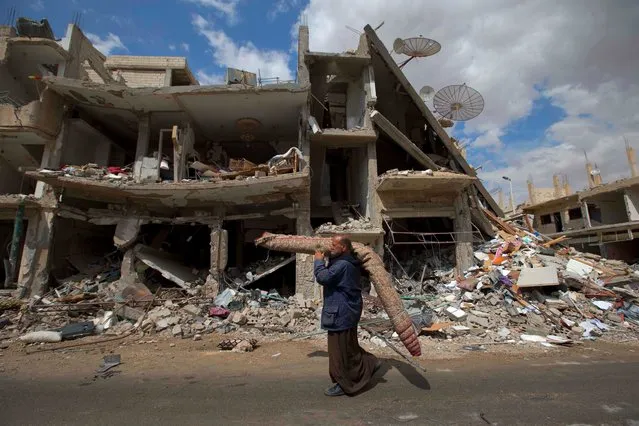
In this picture taken Thursday, April 14, 2016, a Syrian man carries a carpet as walk through a devastated part of the town of Palmyra as families load their belongings onto a bus in the central Homs province, Syria. (Photo by Hassan Ammar/AP Photo)

In this picture taken Thursday, April 14, 2016, a Syrian man carries a carpet as walk through a devastated part of the town of Palmyra as families load their belongings onto a bus in the central Homs province, Syria. Thousands of residents of this ancient town who fled Islamic State rule are returning briefly to check on their homes and salvage what they can – some carpets, blankets, a fridge or a few family mementos. There is no water or electricity in the town, and it will be at least few months before anyone can return to stay. (Photo by Hassan Ammar/AP Photo)
Details
16 Apr 2016 12:27:00
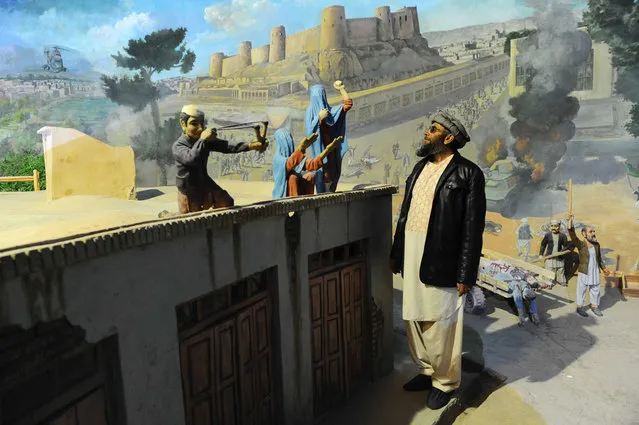
Museum assistant and former Soviet soldier, Sheikh Abdullah looks at a display in the Manzar-e Jahad, or Jihad Museum, which depicts the Soviet invasion of 1979 and the Afghan resistance, in Herat, on February 15, 2014. (Photo by Aref Karimi/AFP Photo via The Atlantic)

Museum assistant and former Soviet soldier, Sheikh Abdullah looks at a display in the Manzar-e Jahad, or Jihad Museum, which depicts the Soviet invasion of 1979 and the Afghan resistance, in Herat, on February 15, 2014. Sheikh Abdullah, who was a Soviet intelligence officer by the name of Khakimov Bakhrodin, was captured after being injured in battle with the Mujahideen. Abdullah stayed with his captors, converted to Islam and was renamed Abdullah. He never returned to his former homeland and now works at the Jihad Museum. (Photo by Aref Karimi/AFP Photo via The Atlantic)
Details
10 Mar 2014 09:08:00
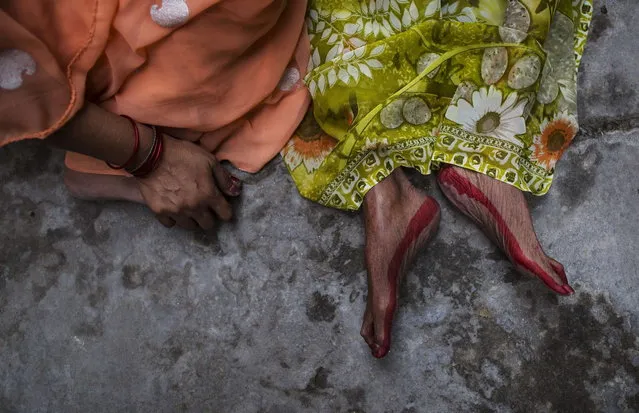
A relative (L) of Champa Devi, 88, sits next to her body, minutes after her death at Mukti Bhavan (Salvation House) at Varanasi, in the northern Indian state of Uttar Pradesh, June 21, 2014. (Photo by Danish Siddiqui/Reuters)

A relative (L) of Champa Devi, 88, sits next to her body, minutes after her death at Mukti Bhavan (Salvation House) at Varanasi, in the northern Indian state of Uttar Pradesh, June 21, 2014. The city of Varanasi, on the banks of the River Ganges, is widely considered Hinduism's holiest city and many Hindus believe that dying there and having their remains scattered in the Ganges allows their soul to escape a cycle of death and rebirth, attaining “moksha” or salvation. “Mukti Bhavan” or “Salvation House”, is a charity-run hostel that caters for people who wish to come to Varanasi to die. Guests can normally stay up to two weeks after which, if they haven't yet passed away, they are gently asked to leave. (Photo by Danish Siddiqui/Reuters)
Details
24 Jul 2014 12:32:00
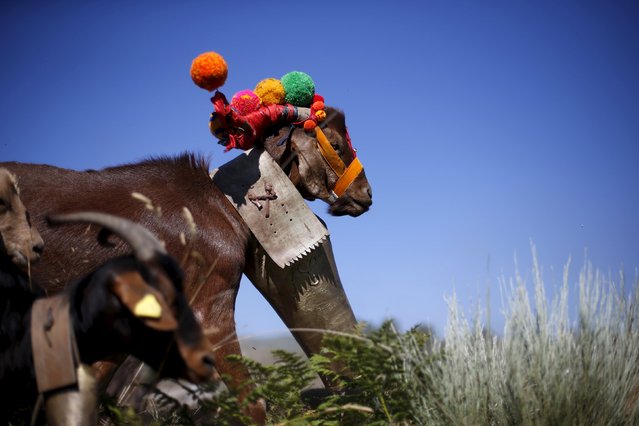
Sheep walk as they are herded to summer pastures in Serra da Estrela, near Seia, Portugal June 27, 2015. (Photo by Rafael Marchante/Reuters)

Sheep walk as they are herded to summer pastures in Serra da Estrela, near Seia, Portugal June 27, 2015. In late June, shepherds young and old in the Seia region of central Portugal start guiding sheep, goats and cattle to the Serra da Estrela, the country’s highest mountains, in search of better pastures. There they stay until the end of September. Modern-day shepherds may have mobile phones to keep in touch with family and friends, but their lifestyle has changed little for centuries. The sound of cowbells and the bark of longhaired mastiffs starts early in the morning as the animals – often decorated with traditional woollen balls on their horns – are herded up steep, narrow paths. (Photo by Rafael Marchante/Reuters)
Details
14 Jul 2015 13:48:00
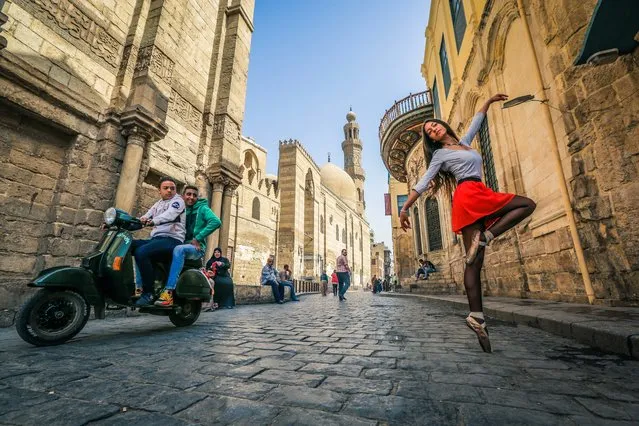
In his series “Ballerinas of Cairo”, photographer Mohamed Taher documents Egyptian dancers making the city streets their stage – pirouetting, leaping and posing their way through their country’s sprawling capital. The photos are, at first glance, stunning snapshots of a city’s vibrant culture in motion. But considering the dangers Egyptian women face for roaming these same streets on a daily basis, their impact is far deeper. Sexual harassment continues to present not just a possibility but a terrifying reality in present-day Egypt. A 2013 United Nations report calculated that 99.3 percent of women in the country have experienced sexual harassment on the streets, a problem that’s sparked initiatives giving women a way to fight back. The violence is rooted in an extreme conservative perspective encouraging women to stay in the home. (Photo by Mohamed Taher/Ballerinas of Cairo)

In his series “Ballerinas of Cairo”, photographer Mohamed Taher documents Egyptian dancers making the city streets their stage – pirouetting, leaping and posing their way through their country’s sprawling capital. The photos are, at first glance, stunning snapshots of a city’s vibrant culture in motion. (Photo by Mohamed Taher/Ballerinas of Cairo)
Details
17 Jan 2017 12:30:00