Loading...
Done
Tong Jieping, 44-year-old mentally disabled patient, is chained by his foot inside his room, in Qunxing village of Wangjiang county, Anhui province, China, July 14, 2015. Tong was diagnosed mentally ill when he was in his 20s. His parents, both in their 70s, could not afford the medical treatments so they had to lock him up in chains to prevent him from running away, according to Tong's family. (Photo by Reuters/Stringer)

Tong Jieping, 44-year-old mentally disabled patient, is chained by his foot inside his room, in Qunxing village of Wangjiang county, Anhui province, China, July 14, 2015. Tong was diagnosed mentally ill when he was in his 20s. His parents, both in their 70s, could not afford the medical treatments so they had to lock him up in chains to prevent him from running away, according to Tong's family. (Photo by Reuters/Stringer)
Details
15 Jul 2015 11:33:00
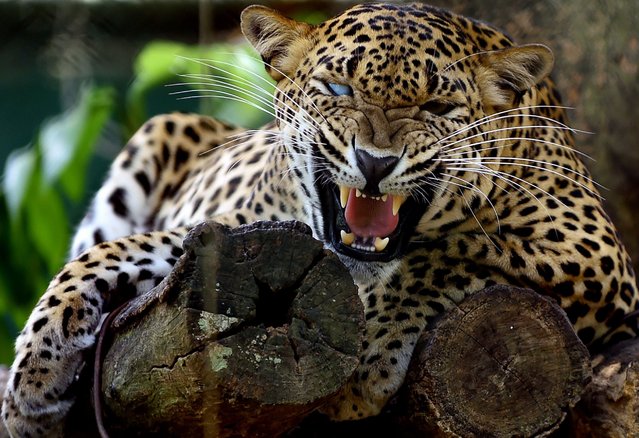
A Sri Lankan leopard is pictured at a zoo in Dehiwala near Colombo on March 3, 2016, on World Wildlife Day. (Photo by Ishara S. Kodikara/AFP Photo)

A Sri Lankan leopard is pictured at a zoo in Dehiwala near Colombo on March 3, 2016, on World Wildlife Day. (Photo by Ishara S. Kodikara/AFP Photo)
Details
06 Mar 2016 09:07:00
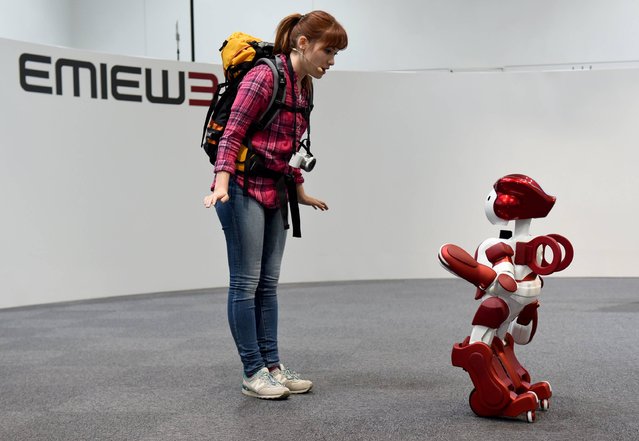
The “EMIEW3” robot (R) demonstrates communicating with a visitor during a press preview in Tokyo on April 8, 2016. Japanese electronics giant Hitachi unveiled its humanoid customer service and guidance robot “EMIEW3” and “remote brain” robotics IT platform. (Photo by Toshifumi Kitamura/AFP Photo)

The “EMIEW3” robot (R) demonstrates communicating with a visitor during a press preview in Tokyo on April 8, 2016. Japanese electronics giant Hitachi unveiled its humanoid customer service and guidance robot “EMIEW3” and “remote brain” robotics IT platform. (Photo by Toshifumi Kitamura/AFP Photo)
Details
08 Apr 2016 15:26:00
Breath of an Arctic fox by Marco Gaiotti, Italy. Marco was watching this little Arctic fox as it incessantly called another nearby. Gradually he noticed the fox’s wet breath was quickly freezing in the air after each call. It was late winter in Spitsbergen, Svalbard, and the air was -35C (-31F). Photographing Arctic foxes is often frustrating, as they are normally running around fast in search of food, but this one was very relaxed and let Marco get close enough to focus on it, with the light glowing perfectly in the background. (Photo by Marco Gaiotti/Wildlife Photographer of the Year 2021)

Breath of an Arctic fox by Marco Gaiotti, Italy. Marco was watching this little Arctic fox as it incessantly called another nearby. Gradually he noticed the fox’s wet breath was quickly freezing in the air after each call. It was late winter in Spitsbergen, Svalbard, and the air was -35C (-31F). Photographing Arctic foxes is often frustrating, as they are normally running around fast in search of food, but this one was very relaxed and let Marco get close enough to focus on it, with the light glowing perfectly in the background. (Photo by Marco Gaiotti/Wildlife Photographer of the Year 2021)
Details
05 Dec 2021 06:36:00
Some Iraqi candidates for Miss Iraq beauty contest pose in front of the Ishtar Gate at the ancient archaeological site of Babylon, outside the modern city of Hilla, south of the capital Baghdad on December 17, 2015. The beauty contest,  which is the first one in more than 40 years, aims to boost tourism in the city and will take place on December 19, 2015. (Photo by Ahmad Al-Rubaye/AFP Photo)

Some Iraqi candidates for Miss Iraq beauty contest pose in front of the Ishtar Gate at the ancient archaeological site of Babylon, outside the modern city of Hilla, south of the capital Baghdad on December 17, 2015. The beauty contest, which is the first one in more than 40 years, aims to boost tourism in the city and will take place on December 19, 2015. (Photo by Ahmad Al-Rubaye/AFP Photo)
Details
19 Dec 2015 10:25:00
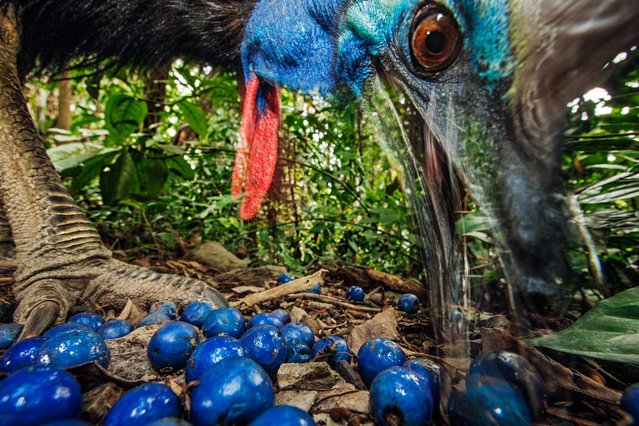
“Cassowaries are large, flightless birds related to emus and (more distantly) to ostriches, rheas, and kiwis”, writes Olivia Judson in the September issue of National Geographic magazine. (Photo by Christian Ziegler/National Geographic)

“Cassowaries are large, flightless birds related to emus and (more distantly) to ostriches, rheas, and kiwis”, writes Olivia Judson in the September issue of National Geographic magazine. How large? People-size: Adult males stand well over five foot five and top 110 pounds. Females are even taller, and can weigh more than 160 pounds. Dangerous when roused, they’re shy and peaceable when left alone. But even birds this big and tough are prey to habitat loss. The dense New Guinea and Australia rain forests where they live have dwindled. Today cassowaries might number 1,500 to 2,000. And because they help shape those same forests – by moving seeds from one place to another – “if they vanish”, Judson writes, “the structure of the forest would gradually change” too. (Photo by Christian Ziegler/National Geographic)
Details
06 Jan 2014 12:21:00
A person dressed as an astronaut walks past a man stopping traffic on a pedestrian crossing outside the Sydney Exhibition Centre September 13, 2014 where the science-fiction convention called “Oz Comic-Con” is currently being held. The two-day convention showcases “pop culture”, and includes appearances by actors from science-fiction movies and television shows. (Photo by David Gray/Reuters)

A person dressed as an astronaut walks past a man stopping traffic on a pedestrian crossing outside the Sydney Exhibition Centre September 13, 2014 where the science-fiction convention called “Oz Comic-Con” is currently being held. The two-day convention showcases “pop culture”, and includes appearances by actors from science-fiction movies and television shows. (Photo by David Gray/Reuters)
Details
13 Sep 2014 11:54:00
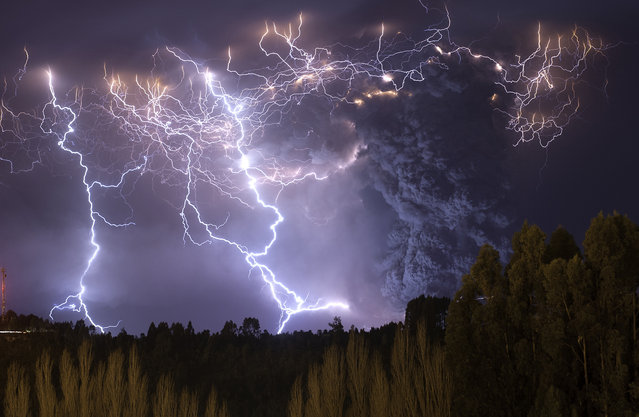
The eruption of Cordon Caulle began on June 4, 2011, located in the Region of Los Rios in Chile. For about 12 months, people and animals became accustomed to living with the daily fall of ash, which also caused problems in the air traffic in South America. The explosions and lightning during first days of the eruption could be seen from hundreds of miles around. This photograph was taken on the second night of eruption from the town of Lago Ranco. (Photo and caption by Francisco Negroni/National Geographic Traveler Photo Contest)

The eruption of Cordon Caulle began on June 4, 2011, located in the Region of Los Rios in Chile. For about 12 months, people and animals became accustomed to living with the daily fall of ash, which also caused problems in the air traffic in South America. The explosions and lightning during first days of the eruption could be seen from hundreds of miles around. This photograph was taken on the second night of eruption from the town of Lago Ranco. (Photo and caption by Francisco Negroni/National Geographic Traveler Photo Contest)

ATTENTION! All pictures are presented in high resolution. To see Hi-Res images – just TWICE click on any picture. In other words, click small picture – opens the BIG picture. Click BIG picture – opens VERY BIG picture.
Details
23 Jun 2013 11:24:00