Loading...
Done
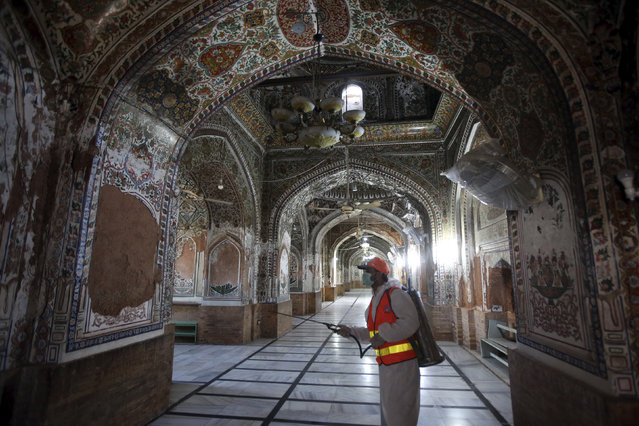
A worker disinfects a mosque for coronavirus, in Peshawar, Pakistan, Thursday, April 2, 2020. The government imposed a nationwide lockdown to try to contain the outbreak of the virus. (Photo by Muhammad Sajjad/AP Photo)

A worker disinfects a mosque for coronavirus, in Peshawar, Pakistan, Thursday, April 2, 2020. The government imposed a nationwide lockdown to try to contain the outbreak of the virus. (Photo by Muhammad Sajjad/AP Photo)
Details
04 Apr 2020 00:05:00
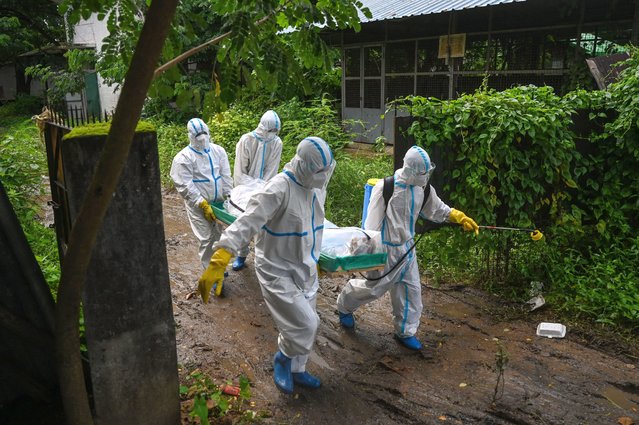
Volunteers wearing personal protective equipment (PPE) carry the body of a victim of the Covid-19 coronavirus to a cemetery in Hlegu Township in Yangon on July 10, 2021. (Photo by Ye Aung Thu/AFP Photo)

Volunteers wearing personal protective equipment (PPE) carry the body of a victim of the Covid-19 coronavirus to a cemetery in Hlegu Township in Yangon on July 10, 2021. (Photo by Ye Aung Thu/AFP Photo)
Details
12 Aug 2021 08:31:00
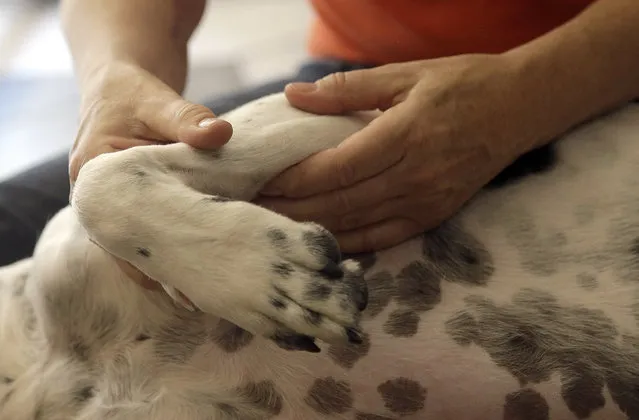
In this November 6, 2014 photo, Shelah Barr of Happy Hounds Massage gives a massage to Dewie, 2, at the home of Laurie Ubben in San Francisco. (Photo by Jeff Chiu/AP Photo)

“Spa treatments don't stop with people. You won't see any aromatherapy candles around, but animals get massages, too, and it's become a regular service that many pet owners value as more than just glorified petting. Practitioners say massage can be a preventive measure for younger animals and rehabilitative for older ones by boosting flexibility, circulation and immunity”. – Terry Tang via The Associated Press. Here: in this November 6, 2014 photo, Shelah Barr of Happy Hounds Massage gives a massage to Dewie, 2, at the home of Laurie Ubben in San Francisco. (Photo by Jeff Chiu/AP Photo)
Details
05 Dec 2014 13:31:00
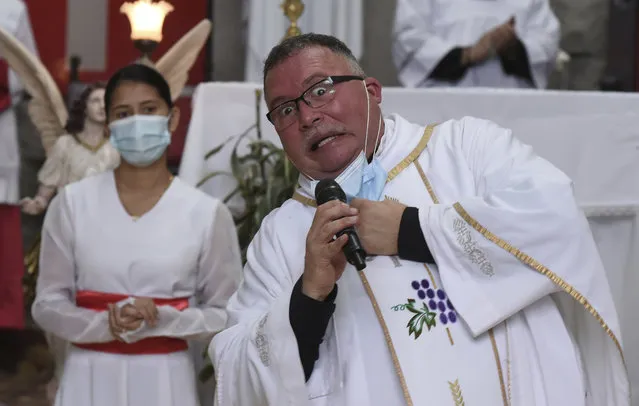
Sergio Valverde Espinoza, a Catholic priest of the Cristo Rey church who modified a popular song called “Sopa de Caracol”, or Snail Soup in English, gestures during a Mass in San Jose, Costa Rica, Sunday, May 2, 2021. Valverde changed the song's lyrics to a message calling for the use of face masks and care during the pandemic. (Photo by Carlos Gonzalez/AP Photo)

Sergio Valverde Espinoza, a Catholic priest of the Cristo Rey church who modified a popular song called “Sopa de Caracol”, or Snail Soup in English, gestures during a Mass in San Jose, Costa Rica, Sunday, May 2, 2021. Valverde changed the song's lyrics to a message calling for the use of face masks and care during the pandemic. (Photo by Carlos Gonzalez/AP Photo)
Details
04 May 2021 10:11:00
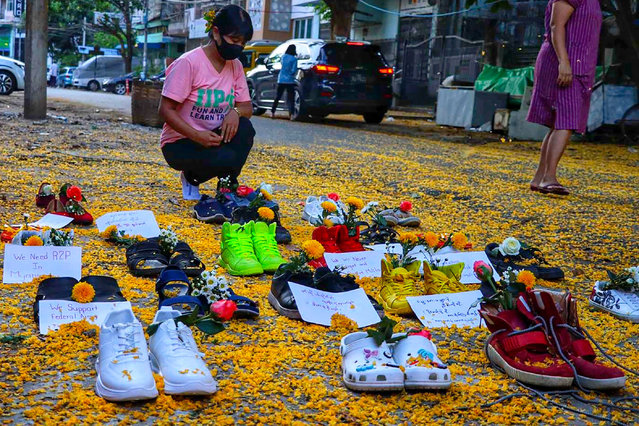
This photo taken and received courtesy of an anonymous source on April 8, 2021 show a woman looking at shoes displayed with flowers in Yangon's Myaynigone township, as part of the “Marching Shoes Strike” called on social media to protest against the demonstration against the military coup in Myanmar. (Photo by Handout via AFP Photo)

This photo taken and received courtesy of an anonymous source on April 8, 2021 show a woman looking at shoes displayed with flowers in Yangon's Myaynigone township, as part of the “Marching Shoes Strike” called on social media to protest against the demonstration against the military coup in Myanmar. (Photo by Handout via AFP Photo)
Details
20 Apr 2021 09:41:00
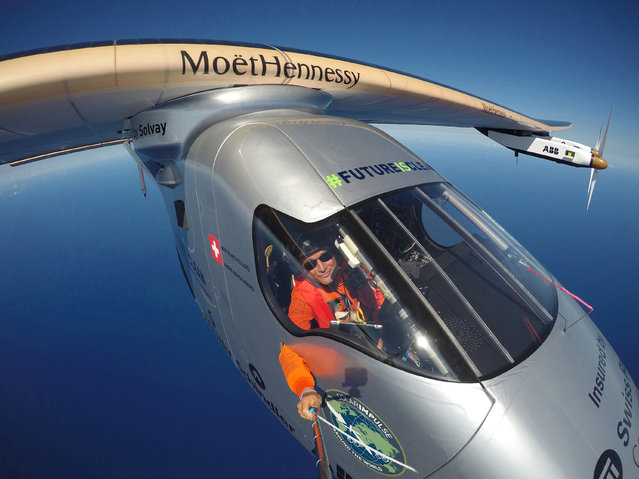
This April 9, 2016 photo provided by Bertrand Piccard via Global Newsroom shows Piccard taking a selfie on board Solar Impulse 2 during a test flight over the Pacific Ocean. The solar-powered airplane on an around-the-world journey had traveled 80 percent of the way from Hawaii to California by Saturday, April 23. The aircraft's destination on this leg of the journey is Mountain View, Calif., at the southern end of San Francisco Bay.  (Photo by Bertrand Piccard/Global Newsroom via AP Photo)

This April 9, 2016 photo provided by Bertrand Piccard via Global Newsroom shows Piccard taking a selfie on board Solar Impulse 2 during a test flight over the Pacific Ocean. The solar-powered airplane on an around-the-world journey had traveled 80 percent of the way from Hawaii to California by Saturday, April 23. The aircraft's destination on this leg of the journey is Mountain View, Calif., at the southern end of San Francisco Bay. (Photo by Bertrand Piccard/Global Newsroom via AP Photo)
Details
25 Apr 2016 09:42:00
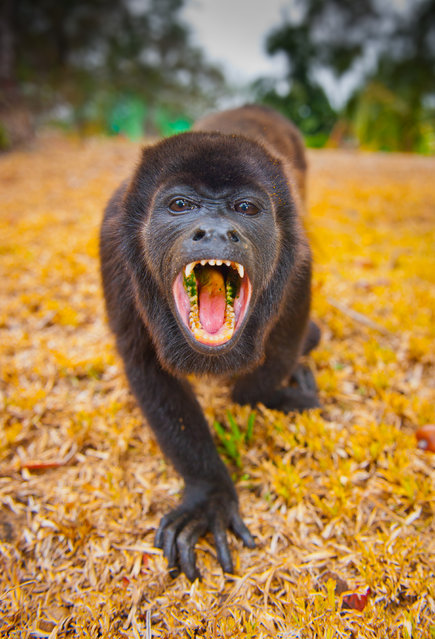
“Attacking Howler Monkey”. Due to a major tropical rainstorm my wife and I were forced to stay overnight in a Howler Monkey Rescue center in Panama. I used the time to explore the area and to take photos of the monkeys. Just after the rain finally stopped, I ran into this monkey that tried to mock attack me. I quickly took a couple of photos before retreating to a (more) safe distance. (Photo and caption by Christian Mueller-Planitz/National Geographic Traveler Photo Contest)

“Attacking Howler Monkey”. Due to a major tropical rainstorm my wife and I were forced to stay overnight in a Howler Monkey Rescue center in Panama. I used the time to explore the area and to take photos of the monkeys. Just after the rain finally stopped, I ran into this monkey that tried to mock attack me. I quickly took a couple of photos before retreating to a (more) safe distance. (Photo and caption by Christian Mueller-Planitz/National Geographic Traveler Photo Contest)

ATTENTION! All pictures are presented in high resolution. To see Hi-Res images – just TWICE click on any picture. In other words, click small picture – opens the BIG picture. Click BIG picture – opens VERY BIG picture.
Details
30 Jun 2013 12:25:00
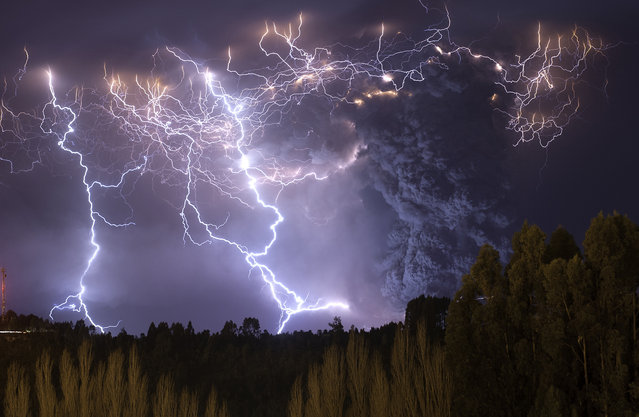
The eruption of Cordon Caulle began on June 4, 2011, located in the Region of Los Rios in Chile. For about 12 months, people and animals became accustomed to living with the daily fall of ash, which also caused problems in the air traffic in South America. The explosions and lightning during first days of the eruption could be seen from hundreds of miles around. This photograph was taken on the second night of eruption from the town of Lago Ranco. (Photo and caption by Francisco Negroni/National Geographic Traveler Photo Contest)

The eruption of Cordon Caulle began on June 4, 2011, located in the Region of Los Rios in Chile. For about 12 months, people and animals became accustomed to living with the daily fall of ash, which also caused problems in the air traffic in South America. The explosions and lightning during first days of the eruption could be seen from hundreds of miles around. This photograph was taken on the second night of eruption from the town of Lago Ranco. (Photo and caption by Francisco Negroni/National Geographic Traveler Photo Contest)

ATTENTION! All pictures are presented in high resolution. To see Hi-Res images – just TWICE click on any picture. In other words, click small picture – opens the BIG picture. Click BIG picture – opens VERY BIG picture.
Details
23 Jun 2013 11:24:00