Loading...
Done
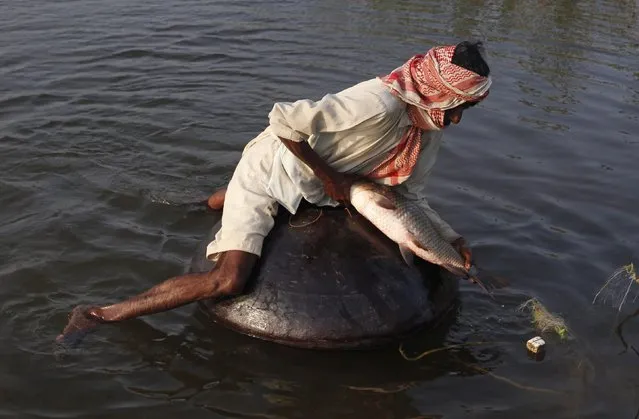
A man uses a floating pitcher to catch a fish after removing it from a net at Keenjhar Lake, near Thatta, February 22, 2015. This technique of fishing using floating pitchers is a unique and traditional one for this community, found only on Keenjhar Lake, one of the largest freshwater lakes in Pakistan, which is famous for its variety of breeding and wintering waterbirds. (Photo by Akhtar Soomro/Reuters)

A man uses a floating pitcher to catch a fish after removing it from a net at Keenjhar Lake, near Thatta, February 22, 2015. This technique of fishing using floating pitchers is a unique and traditional one for this community, found only on Keenjhar Lake, one of the largest freshwater lakes in Pakistan, which is famous for its variety of breeding and wintering waterbirds. (Photo by Akhtar Soomro/Reuters)
Details
23 Feb 2015 13:27:00
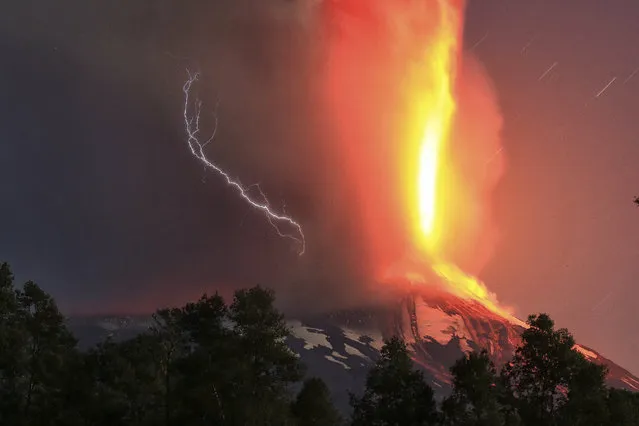
The Villarica volcano erupts near Pucon, Chile, early Tuesday, March 3, 2015. The Villarica volcano erupted Tuesday around 3 a.m. local time (06:00 GMT), according to the National Emergency Office, which issued a red alert and ordered evacuations. (Photo by Aton Chile/AP Photo)

The Villarica volcano erupts near Pucon, Chile, early Tuesday, March 3, 2015. The Villarica volcano erupted Tuesday around 3 a.m. local time (06:00 GMT), according to the National Emergency Office, which issued a red alert and ordered evacuations. (Photo by Aton Chile/AP Photo)
Details
25 Mar 2015 11:53:00
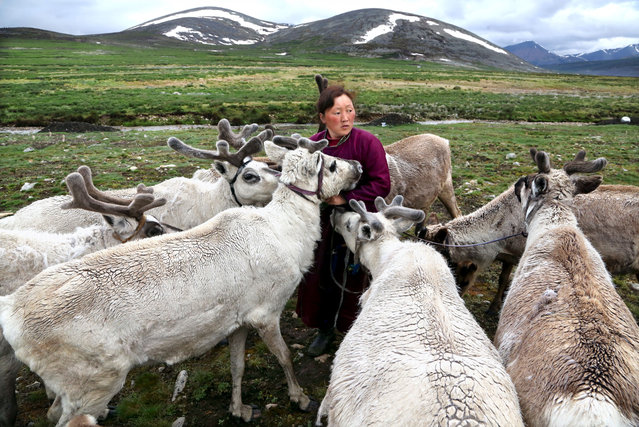
The Tsaatan people are one of the world’s last groups of nomadic reindeer herders and they live in Khövsgöl Aimag in northern Mongolia. They are originally from across the border in what is now the Tuva republic of Russia. (Photo by Pascal Mannaerts/Rex Feature/Shutterstock)

The Tsaatan people are one of the world’s last groups of nomadic reindeer herders and they live in Khövsgöl Aimag in northern Mongolia. They are originally from across the border in what is now the Tuva republic of Russia. (Photo by Pascal Mannaerts/Rex Feature/Shutterstock)
Details
04 Feb 2016 11:56:00
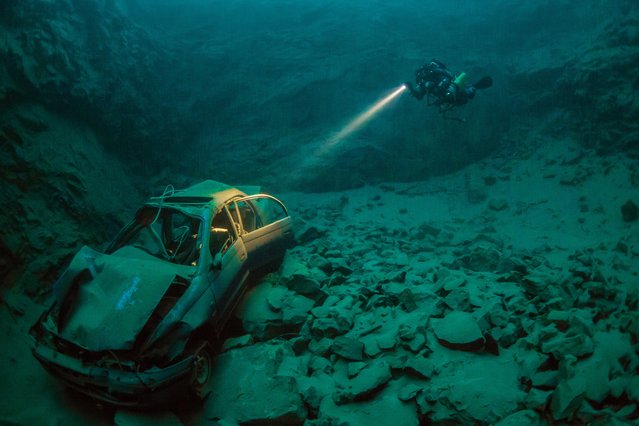
Wide-angle category winner. Part of the Illusion by Marcus Blatchford (UK). Location: National Dive & Activity Centre, Chepstow, Wales. “This is the deepest inland dive centre in the UK. The dive plan was to explore the deep end, but this time I dived ‘unplugged’ (without my strobes). With the exception of this change to my camera technique, there were no planned shots I wanted to achieve – just a fun dive with ad-hoc photos along the way. Shortly after this photo was captured, in 6C water and two hours of decompression ahead of us, we turned and started the long ascent back to the surface”. (Photo by Marcus Blatchford/Underwater Photographer of the Year 2016)

Wide-angle category winner. Part of the Illusion by Marcus Blatchford (UK). Location: National Dive & Activity Centre, Chepstow, Wales. “This is the deepest inland dive centre in the UK. The dive plan was to explore the deep end, but this time I dived ‘unplugged’ (without my strobes). With the exception of this change to my camera technique, there were no planned shots I wanted to achieve – just a fun dive with ad-hoc photos along the way. Shortly after this photo was captured, in 6C water and two hours of decompression ahead of us, we turned and started the long ascent back to the surface”. (Photo by Marcus Blatchford/Underwater Photographer of the Year 2016)
Details
18 Feb 2016 13:44:00
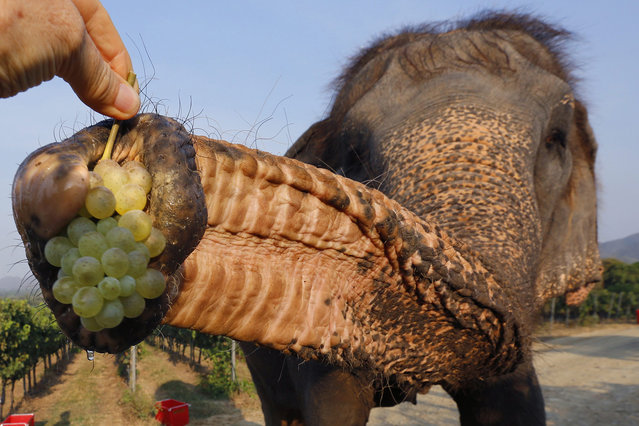
Tourists feed freshly picked grapes to 40-year-old elephant Boonruen, a long-term resident of the Hua Hin Hills vineyard, that used to be an elephant corral in Hua Hin, about 200km southwest of Bangkok, Thailand, 08 March 2016. The winery is among a handful of companies producing new latitude wines in non-traditional wine areas of the world near the equator. Harvest is only once a year in Thailand, this year in March. (Photo by Barbara Walton/EPA)

Tourists feed freshly picked grapes to 40-year-old elephant Boonruen, a long-term resident of the Hua Hin Hills vineyard, that used to be an elephant corral in Hua Hin, about 200km southwest of Bangkok, Thailand, 08 March 2016. The winery is among a handful of companies producing new latitude wines in non-traditional wine areas of the world near the equator. Harvest is only once a year in Thailand, this year in March. (Photo by Barbara Walton/EPA)
Details
20 Mar 2016 11:20:00
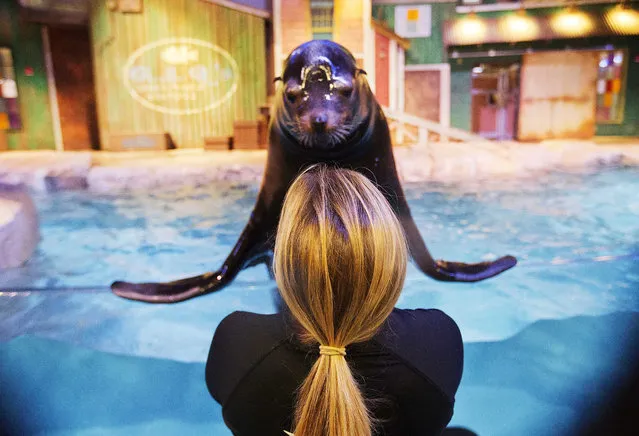
In this Monday, March 28, 2016 photo, trainer Catrina Bloomquist works with Nav, an 11-year-old rescued California sea lion, as part of a new exhibit opening at the Georgia Aquarium. The aquarium is in the midst of celebrating its tenth anniversary, and as part of the festivities, patrons will be introduced to the newest faces in Atlanta, a group of rescued California sea lions. (Photo by David Goldman/AP Photo)

In this Monday, March 28, 2016 photo, trainer Catrina Bloomquist works with Nav, an 11-year-old rescued California sea lion, as part of a new exhibit opening at the Georgia Aquarium. The aquarium is in the midst of celebrating its tenth anniversary, and as part of the festivities, patrons will be introduced to the newest faces in Atlanta, a group of rescued California sea lions. (Photo by David Goldman/AP Photo)
Details
01 Apr 2016 12:18:00
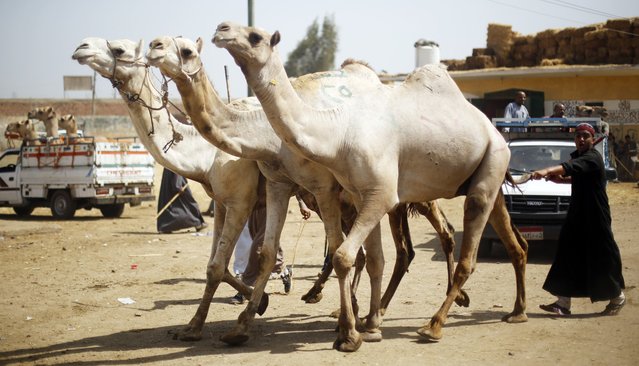
A man walks behind camels at the Birqash Camel Market, ahead of Eid al-Adha or Festival of Sacrifice, on the outskirts of Cairo September 29, 2014. (Photo by Amr Abdallah Dalsh/Reuters)

A man walks behind camels at the Birqash Camel Market, ahead of Eid al-Adha or Festival of Sacrifice, on the outskirts of Cairo September 29, 2014. Birqash Camel Market, one of the biggest markets for camel meat in Africa, draws sellers from Libya, Sudan, Somalia and other regions in Egypt. The camels sold at the market are also used in tourism. Traders say that the selling rate for a camel in 2014 is anywhere between 5,000 and 20,000 Egyptian pounds (700 – 2800 USD). (Photo by Amr Abdallah Dalsh/Reuters)
Details
02 Oct 2014 10:20:00
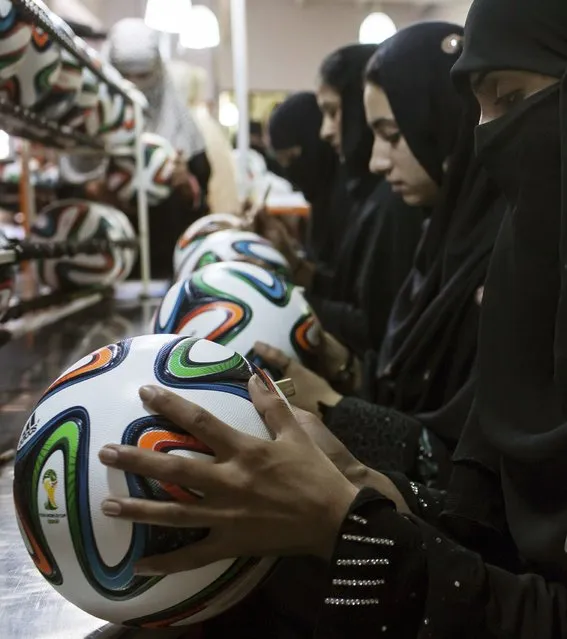
Employees conduct a final check to fix any cavities in the seams of balls inside the soccer ball factory that produces official match balls for the 2014 World Cup in Brazil, in Sialkot, Punjab province May 16, 2014. (Photo by Sara Farid/Reuters)

Employees conduct a final check to fix any cavities in the seams of balls inside the soccer ball factory that produces official match balls for the 2014 World Cup in Brazil, in Sialkot, Punjab province May 16, 2014. It was when he felt the roar of the crowd at the 2006 World Cup in Germany that Pakistani factory owner Khawaja Akhtar first dreamt up a goal of his own: to manufacture the ball for the biggest soccer tournament on the planet. Last year he finally got his chance – but only 33 days to make it happen. (Photo by Sara Farid/Reuters)
Details
26 May 2014 13:59:00