Loading...
Done
An aerial view shows a sinkhole 3.5 km (2 miles) to the east of Solikamsk-2 mine in Perm region, November 20, 2014. Shares in Russia's Uralkali, the world's top potash producer, fell sharply for a second day on Wednesday after a mine accident that could reduce global supplies and push up prices of the crop nutrient worldwide. (Photo by Reuters/Press service of Uralkali company)

An aerial view shows a sinkhole 3.5 km (2 miles) to the east of Solikamsk-2 mine in Perm region, November 20, 2014. Shares in Russia's Uralkali, the world's top potash producer, fell sharply for a second day on Wednesday after a mine accident that could reduce global supplies and push up prices of the crop nutrient worldwide. Uralkali shares have fallen 28 percent since Tuesday when it suspended work at its Solikamsk-2 mine, which accounts for a fifth of the company's output and 3.5 percent of global capacity, following an inflow of water. A sinkhole, stretching 30 by 40 metres (yards), found at an abandoned mine 3.5 km (2 miles) to the east, increased concern about the future of the mine because an inflow of water and the resulting sinkhole in 2006 forced another Uralkali operation to shut permanently. (Photo by Reuters/Press service of Uralkali company)
Details
22 Nov 2014 13:51:00
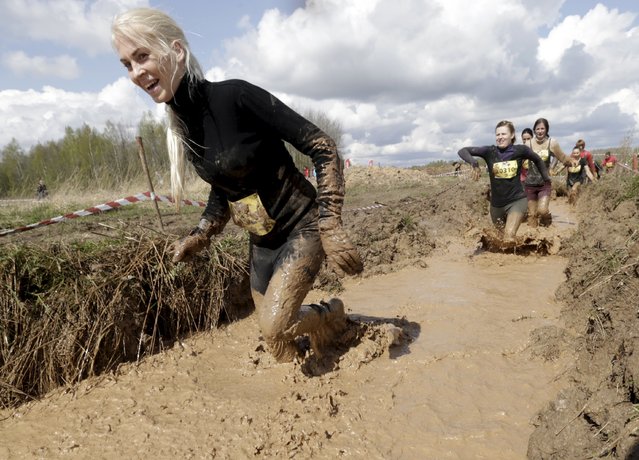
Participants compete during the Strong Race event near Tukums, Latvia, May 3, 2015. (Photo by Ints Kalnins/Reuters)

Participants compete during the Strong Race event near Tukums, Latvia, May 3, 2015. More than 4,000 people participated in this 9 km endurance race with 33 different obstacles. (Photo by Ints Kalnins/Reuters)
Details
04 May 2015 09:06:00
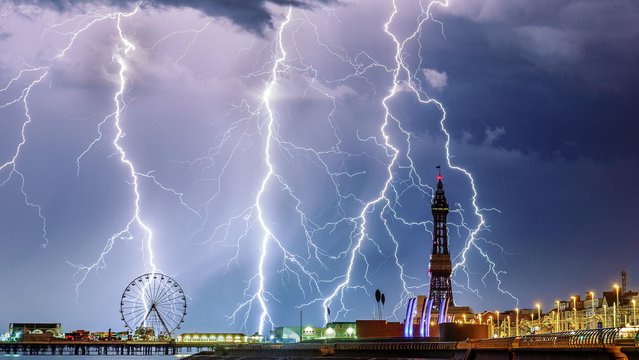
Capturing this picture of lightning striking near Blackpool Tower has earned Stephen Cheatley the UK Weather Photographer of the Year award 2018. (Photo by Stephen Cheatley/Bav Media)

Capturing this picture of lightning striking near Blackpool Tower has earned Stephen Cheatley the UK Weather Photographer of the Year award 2018. (Photo by Stephen Cheatley/Bav Media)
Details
31 May 2019 00:05:00
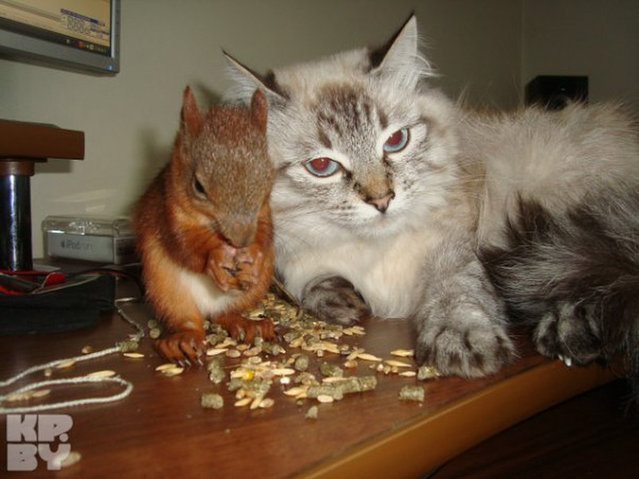
Little squirrel in Minsk worked with the taxi driver

Belarusian soldiers found a little squirrel two years ago. The little baby squirrel was just about to die but the officer of the team Peter Pankraty start feeding and taking care of it. The squirrel survived and two years later it just refuses to be separated by its saviour. Now Peter is taxi driver and squirrel Minsk makes him a good company through the entire shift. He uses the squirrel as an attraction and even promotes the tax at his taxi as “Just 45 cents and a few nuts per km”.
Details
04 Oct 2012 08:46:00
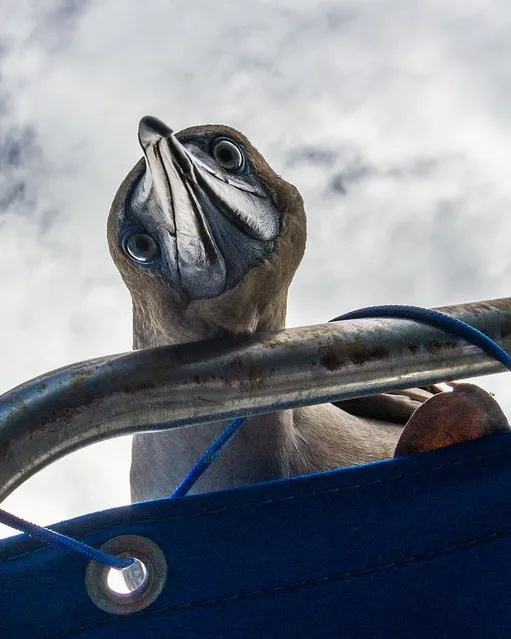
“Close-up. We had a juvenile Red-Footed Booby come visit us on the sun deck. I got some closeups with my ultrawide 11-16mm Tokina”. (Photo by Carl Fredrickson)

Situated in the Pacific Ocean some 620 miles (1,000 km) from the South American continent, these 19 islands and the surrounding marine reserve have been called a unique “living museum and showcase of evolution”. Photo: “Close-up. We had a juvenile Red-Footed Booby come visit us on the sun deck. I got some closeups with my ultrawide 11-16mm Tokina”. (Photo by Carl Fredrickson)
Details
04 Sep 2013 11:49:00
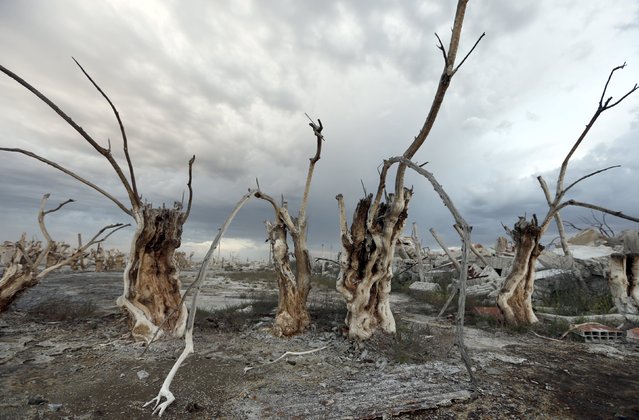
Deadwood is pictured in the onetime spa and resort town Epecuen, November 5, 2015. (Photo by Enrique Marcarian/Reuters)

Deadwood is pictured in the onetime spa and resort town Epecuen, November 5, 2015. Over the past few years the town of Epecuen, located 550 km (341 miles) southwest of Buenos Aires, has been attracting tourists with its eerie apocalyptic atmosphere after a flood submerged it in salt water for more than two decades. Photo by Enrique Marcarian/Reuters)
Details
12 Nov 2015 08:05:00
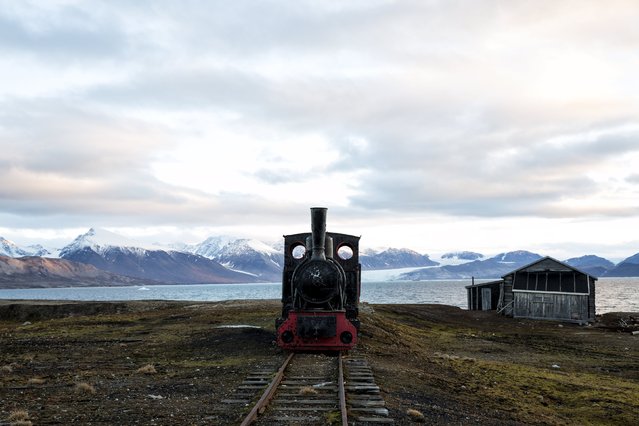
An old locomotive train that was used for transporting coal is preserved as a monument at Ny-Alesund, in Svalbard, Norway, October 11, 2015. (Photo by Anna Filipova/Reuters)

An old locomotive train that was used for transporting coal is preserved as a monument at Ny-Alesund, in Svalbard, Norway, October 11, 2015. A Norwegian chain of islands just 1,200 km (750 miles) from the North Pole is trying to promote new technologies, tourism and scientific research in a shift from high-polluting coal mining that has been a backbone of the remote economy for decades. (Photo by Anna Filipova/Reuters)
Details
29 Jan 2016 13:19:00
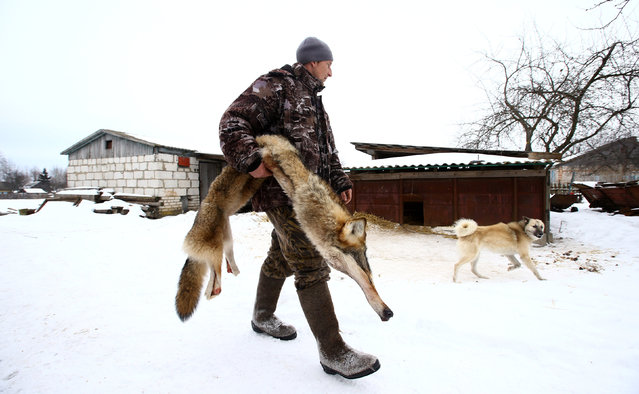
Nikolay Skidan, a hunter, carries the skin of a wolf in the village of Khrapkovo, Belarus February 1, 2017. (Photo by Vasily Fedosenko/Reuters)

Nikolay Skidan, a hunter, carries the skin of a wolf in the village of Khrapkovo, Belarus February 1, 2017. Wolf fur grows thickest in winter, so Belarussian hunter Vladimir Krivenchik only sets his traps once snow is on the ground. He and his wife live on the edge of the Chernobyl exclusion zone – 2,600 square km of land on the Belarus-Ukraine border that was contaminated by a nuclear disaster in 1986. (Photo by Vasily Fedosenko/Reuters)
Details
16 Feb 2017 00:04:00