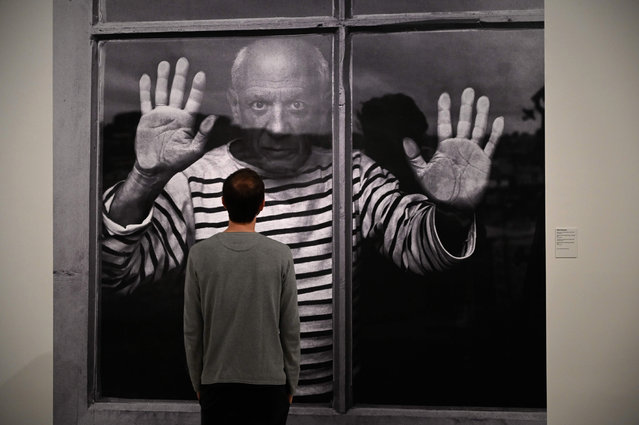
A man looks at a photograph by French photographer Robert Doisneau entitled “The Fate Line: Pablo Picasso at Vallauris, 1952” during the presentation of the photo-exhibition “Picasso, photographer's gaze”, on June 5, 2019 at the Picasso Museum in Barcelona. (Photo by Lluis Gene/AFP Photo)
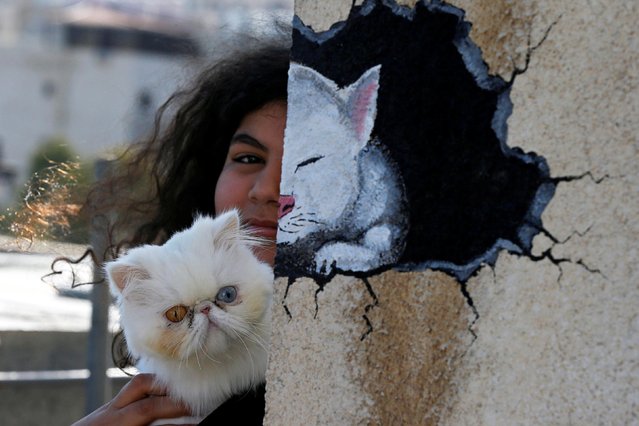
Jude Hajjaj, carries her cat near a picture of her cat painted on the wall by her father Osama Hajjaj, who teams up with his neighbours in creating works of art at their roof during the curfew imposed by the Jordanian government amid concerns over the spread of the coronavirus disease (COVID-19) in Amman, Jordan, May 10, 2020. (Photo by Muhammad Hamed/Reuters)
These girls are all smiles as they celebrate surviving A-level results day in Birmingham, England on August 15, 2019. The A Level is a subject-based qualification conferred as part of the General Certificate of Education, as well as a school leaving qualification offered by the educational bodies in the United Kingdom. (Photo by SnapperSK/SnapperMS)
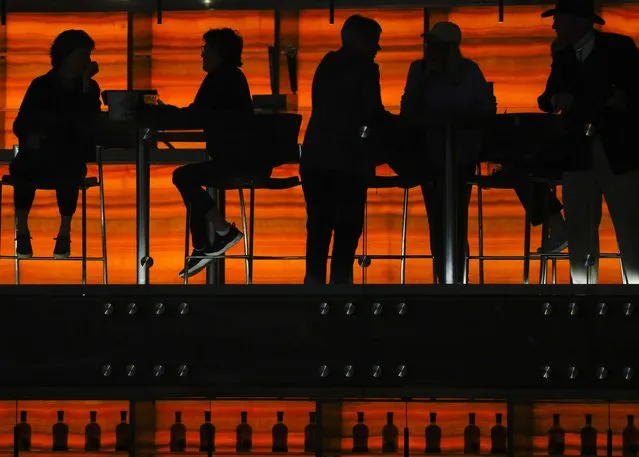
Fans watch during a match between Daria Kasatkina, of Russia, and Coco Gauff during round-robin play on day four of the WTA Finals tennis tournament in Fort Worth, Texas, Thursday, November 3, 2022. (Photo by Ron Jenkins/AP Photo)
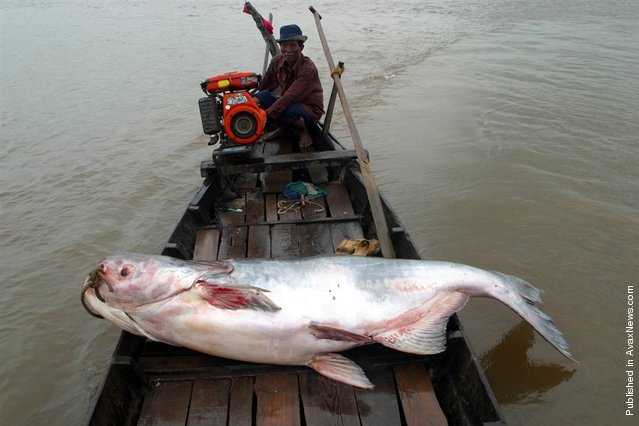
Among the fish populations that could be harmed by the Xayaburi dam in Laos is the critically endangered Mekong giant catfish, considered by the Guinness Book of World Records to be the world’s largest freshwater fish. The fish, which grows to 650 pounds and about 10 feet long, is only found in the Mekong River. It is migratory, moving between downstream habitats in Cambodia upstream to northern Thailand and Laos each year to spawn. Some experts fear the Xayaburi dam could block the migration and drive the giant catfish to extinction. (Photo by Courtesy of Zeb Hogan/University of Nevada, Reno)