Loading...
Done
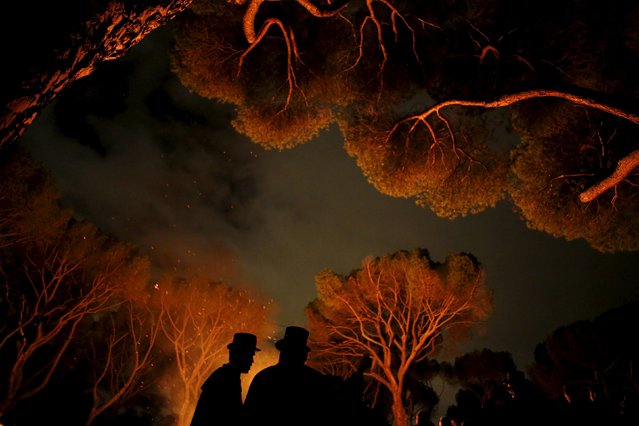
People take part in the “The Burial of the Sardine” funeral procession, which marks the end of carnival festivities, in Madrid, Spain, February 10, 2016. (Photo by Juan Medina/Reuters)

People take part in the “The Burial of the Sardine” funeral procession, which marks the end of carnival festivities, in Madrid, Spain, February 10, 2016. “Mourners” carry a coffin with a mock sardine through the streets to celebrate the countdown to Lent. Spanish painter Francisco de Goya's painting “El entierro de la sardina” (The Burial of the Sardine) was inspired by this tradition, which started in Madrid in the 18th century, around the time of Spanish King Carlos III. (Photo by Juan Medina/Reuters)
Details
11 Feb 2016 12:29:00
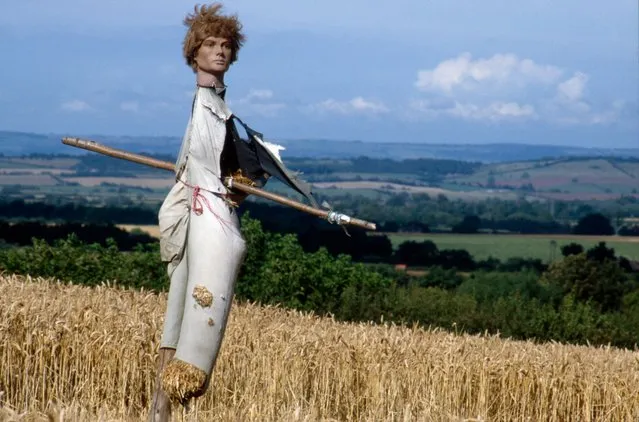
“The ripening crops eloquently signify that the scarecrow’s work is done. Few remain to see their task fulfilled because if they become entangled in the harvesting machinery it causes serious damage”. (Photo by Colin Garratt)

When Colin Garratt went to photograph the traditional sentinels of the British countryside, he found they ranged from the dapper to the downright sinister. “They are not from the anaesthetised world of the craft fair”, says Colin Garratt, “but are the direct descendants of the ancient spectres which have haunted the landscape for centuries”. The Scarecrow Exhibition is at Geddes Gallery, London, from 25 to 30 March. (Photo by Colin Garratt)
Details
29 Mar 2016 11:46:00
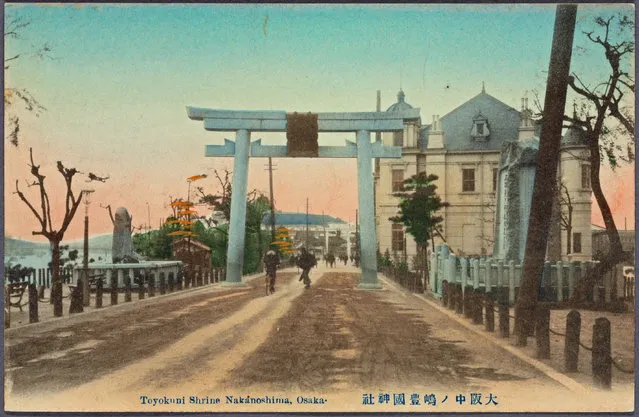
Toyokuni Shrine Nakanoshima, Osaka, Japan. (Photo by New York Public Library/Caters News)

These timeless postcards offer an eye-opening glimpse into life in Japan in the early 20th century. Taken from hand-colored photographs, the postcards showcase the still beauty of the country, depicting a nation on the cusp of modernization. The images feature solemn fishermen, bustling streets, temples and shrines: a country yet to be influenced by Western culture. The tinting effect brings out the rich colors of the natural surroundings, with trees, flowers and cherry blossoms jumping from the original black-and-white images. Here: Toyokuni Shrine Nakanoshima, Osaka, Japan. (Photo by New York Public Library/Caters News)
Details
02 Apr 2016 09:33:00
Buns are stamped the Chinese characters “Ping An”, meaning peaceful and safe, inside a bakery, at Hong Kong's Cheung Chau island, China May 17, 2015, ahead of the upcoming Bun Festival on May 25. (Photo by Tyrone Siu/Reuters)

Buns are stamped the Chinese characters “Ping An”, meaning peaceful and safe, inside a bakery, at Hong Kong's Cheung Chau island, China May 17, 2015, ahead of the upcoming Bun Festival on May 25. The festival celebrates the islanders' deliverance from famine many centuries ago and is meant to placate ghosts and restless spirits. (Photo by Tyrone Siu/Reuters)
Details
24 May 2015 09:49:00
A staff member holds “The Henry Graves Supercomplication” handmade watch by Patek Philippe which was completed in 1932 at Sotheby's auction house in London October 21, 2014. (Photo by Suzanne Plunkett/Reuters)

What makes a watch the most valuable in the world? It’s supercomplicated – literally. In 1925 banker Henry Graves Jr. (considered the greatest watch collector of the 20th century) commissioned Patek Philippe to create a unique gold pocket watch. When Graves finally received it – eight years later – it was the most complex timepiece ever created by human hands... (Photo by Suzanne Plunkett/Reuters)
Details
21 Oct 2014 13:23:00
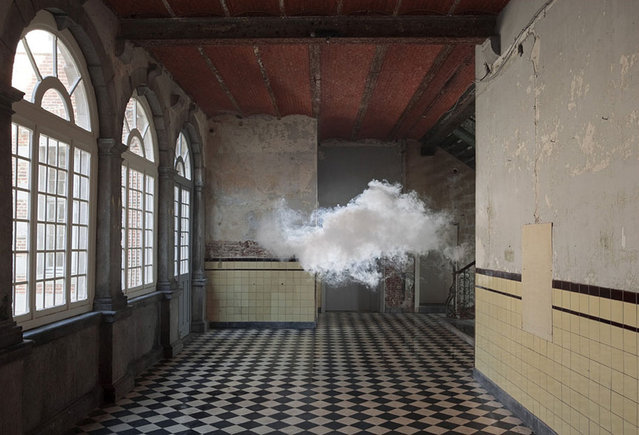
Berndnaut Smilde Creater Clouds

Dutch artist Berndnaut Smilde is interested in the ephemeral -- impermanent states of being which he documents through photographs. For Nimbus II, he used a smoke machine, combined with moisture and dramatic lighting to create a hovering indoor cloud in the empty setting of a sixteenth-century chapel in Hoorn, a small town in Holland. “I imagined walking into a museum hall with just empty walls. The place even looked deserted. On the one hand I wanted to create an ominous situation. You could see the cloud as a sign of misfortune. You could also read it as an element out of the Dutch landscape paintings in a physical form in a classical museum hall.”
Details
25 Dec 2012 12:31:00
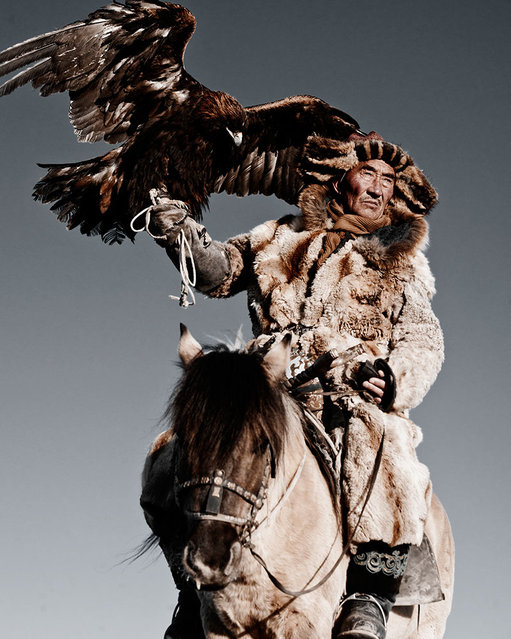
13 year old Irka Bolen with his eagle. Tradition wise, when a boy turns 13, then are strong enough to hold the weight of a fully grown eagle. (Photo by Asher Svidensky/Caters News)

These stunning photographs show the changing face of a majestic centuries old Kazakh pastime tradition that still lives in the lands of mongolia – eagle hunters. Photo: 13 year old Irka Bolen with his eagle. Tradition wise, when a boy turns 13, then are strong enough to hold the weight of a fully grown eagle. (Photo by Asher Svidensky/Caters News)
Details
20 Apr 2014 10:33:00
Fine Horses And Fierce Eagles Are The wings Of The Kazakh

The Kazakhs are the descendants of Turkic, Mongolic and Indo-Iranian tribes and Huns that populated the territory between Siberia and the Black Sea. They are a semi-nomadic people and have roamed the mountains and valleys of western Mongolia with their herds since the 19th century. The ancient art of eagle hunting is one of many traditions and skills that the Kazakhs have, in recent decades, been able to hold on to. They rely on their clan and herds, believing in pre-Islamic cults of the sky, the ancestors, fire and the supernatural forces of good and evil spirits.
Details
20 Feb 2014 12:12:00