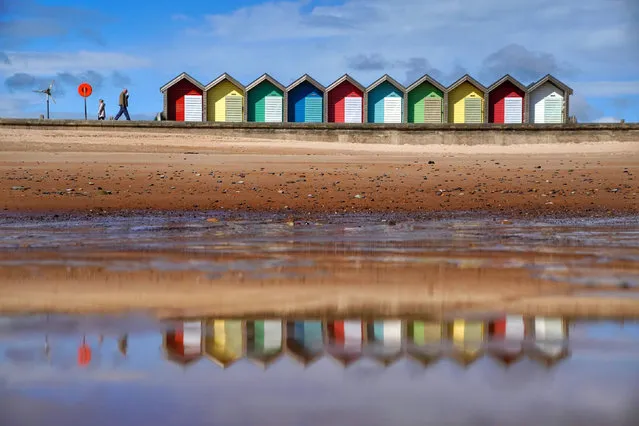
People walk along the sea front at Blyth in Northumberland in North East England on Monday, May 24, 2021. (Photo by Owen Humphreys/PA Images via Getty Images)
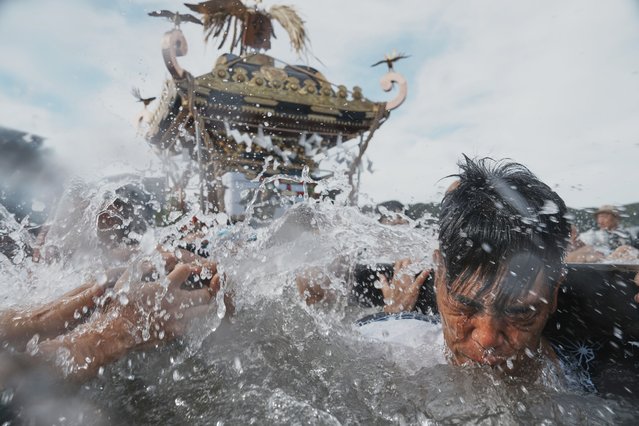
Participants carry a portable shrine, or mikoshi, into the sea during a purification rite at the annual Kurihama Sumiyoshi Shrine Festival at Kurihama, Yokosuka city, south of Tokyo Sunday, July 27, 2025. (Photo by Eugene Hoshiko/AP Photo)
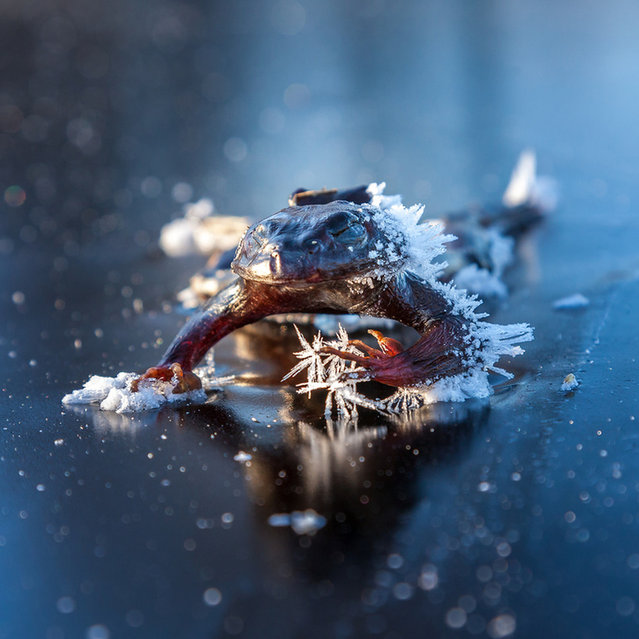
After some days with temperatures below freezing point, I was out skating at some lakes at the outskirts of Oslo in Norway. After a while I noticed something on the ice. To my astonishment it was a dead frozen frog.
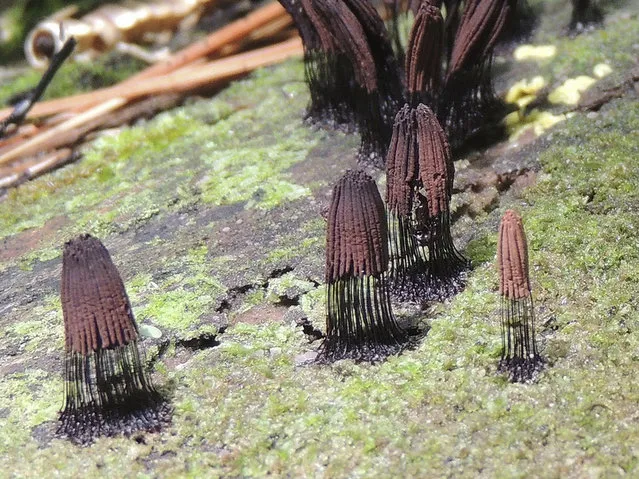
Stemonitis axifera is a species of slime mold. It fruits in clusters on dead wood, and has distinctive tall reddish-brown sporangia, supported on slender stalks. The species was first described as Trichia axifera by Jean Baptiste François Pierre Bulliard in 1791. Thomas Huston MacBride transferred it to the genus Stemonitis in 1889. Stemonitis fasciculata and Stemonitis smithii are synonyms.
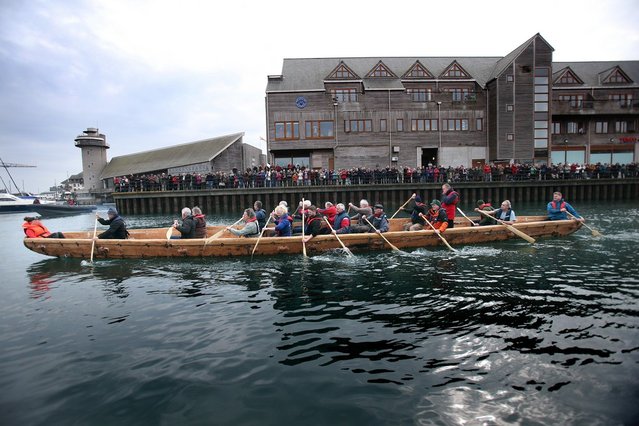
Crew in Britain's first ever full-size reconstructed sea-going Bronze Age boat, paddle out to sea near to the National Maritime Museum as it makes its maiden voyage on March 6, 2013 in Falmouth, England. (Photo by Matt Cardy)
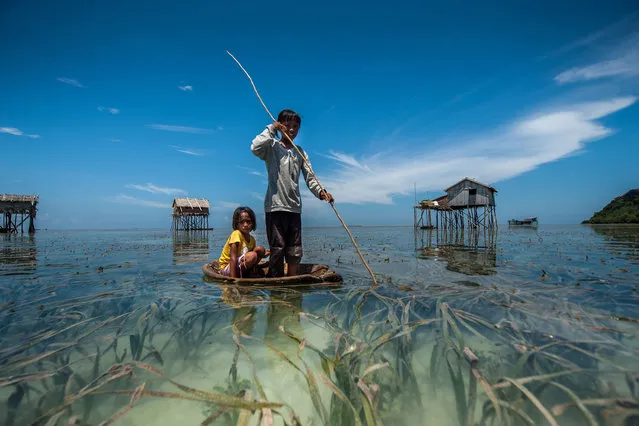
The Bajau people of Malaysia live their lives completely at sea, living in wooden huts and spending their days fishing. Sailing over crystal clear waters, the Bajau people of Malaysia live their lives almost entirely at sea. Photographer Ng Choo Kia joined the Bajau people on their pirogues, which are long narrow canoes made from single tree trunks, and documented their daily life in a series of pictures. (Photo by Ng Choo Kia/Hotspot Media/SIPA Press)
A Romanian female soldier adjusts her helmet before taking part in weapons training with US Marines female counterparts at the Capu Midia Surface to Air Firing Range, on the Black Sea coast in Romania, Monday, March 20, 2017. About 1,200 US and Romanian troops take part in the Spring Storm 17 exercise, meant to simulate defense of the Romanian Black Sea coastline and urban areas. (Photo by Vadim Ghirda/AP Photo)
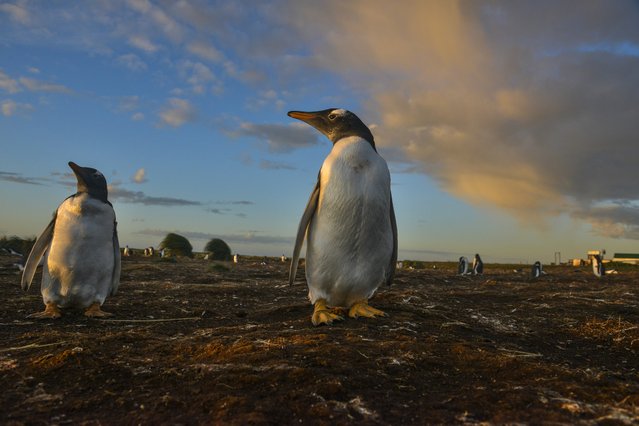
As the sun rises, Gentoo penguins start their day on Wednesday, February 17, 2016, on Sea Lion Island, Falkland Islands. Sea Lion Island, which lies about 10 miles to the south of mainland East Falkland, is the southern most human-inhabited island of the more than 750 islands and islets of the Falkland Islands. (Photo by Jahi Chikwendiu/The Washington Post)