Loading...
Done
Two women wearing nun outfits drink beer while watching the 2014 Tim Hortons Brier curling championships in Kamloops, British Columbia in this March 8, 2014 file photo. (Photo and caption by Ben Nelms/Reuters)

Two women wearing nun outfits drink beer while watching the 2014 Tim Hortons Brier curling championships in Kamloops, British Columbia in this March 8, 2014 file photo. Although some people might conclude that a curling event could produce a dull atmosphere, it is actually far from it. Some of the most energetic and loyal fans are committed to showing their colours at tournaments around the world. There was a lull in the games that were being held on this day and I remember spotting these nuns sitting in their seats earlier. Although them just sitting there didn't produce a picture, I kept my eye on them for the entire match. As soon as I spotted them with beer in their hands, I slowly turned my camera towards them and waited for them to take a drink. One of the challenges of shooting this image was to not have everyone notice me taking the photo. I had a longer lens on and was right in the middle of the rink. I slowly turned my lens, not to make my intentions too obvious, and waited until they drank from their beers together. (Photo and caption by Ben Nelms/Reuters)
Details
27 Nov 2014 14:39:00
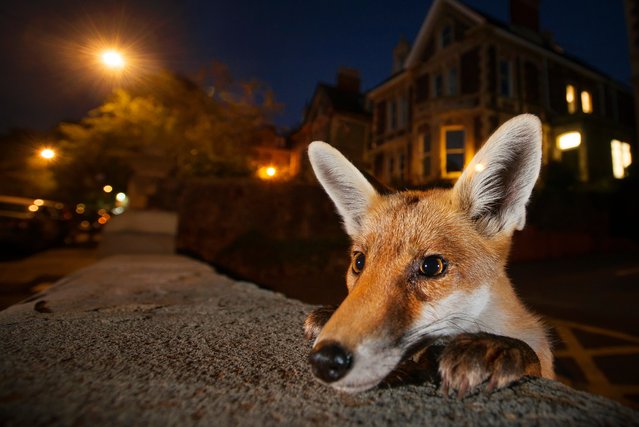
Nosy neighbour by Sam Hobson, UK. Sam knew exactly who to expect when he set his camera on the wall one summer’s evening in a suburban street in Bristol, the UK’s famous fox city. He wanted to capture the inquisitive nature of the urban red fox in a way that would pique the curiosity of its human neighbours about the wildlife around them. (Photo by Sam Hobson/2016 Wildlife Photographer of the Year)

Nosy neighbour by Sam Hobson, UK. Sam knew exactly who to expect when he set his camera on the wall one summer’s evening in a suburban street in Bristol, the UK’s famous fox city. He wanted to capture the inquisitive nature of the urban red fox in a way that would pique the curiosity of its human neighbours about the wildlife around them. (Photo by Sam Hobson/2016 Wildlife Photographer of the Year)
Details
31 Aug 2016 12:05:00
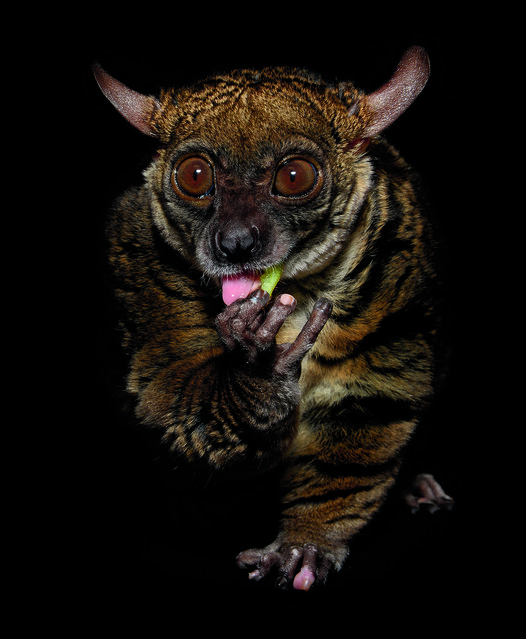
Galagos, more commonly known as bush babies, are tiny African primates with remarkable jumping abilities. Thanks to the elastic energy stored in the tendons of their lower legs, small-eared galagos can jump 6 feet straight up in the air. (Photo by Traer Scott/Chronicle Books)

Galagos, more commonly known as bush babies, are tiny African primates with remarkable jumping abilities. Thanks to the elastic energy stored in the tendons of their lower legs, small-eared galagos can jump 6 feet straight up in the air. (Photo by Traer Scott/Chronicle Books)
Details
07 Sep 2014 12:38:00
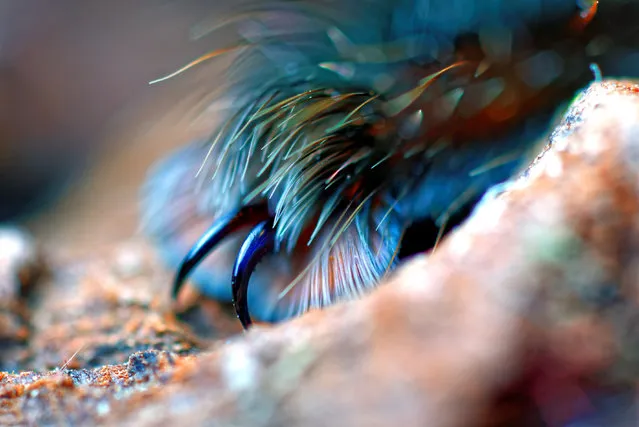
Brachypelma albopilosum, foot detail. (Photo by Michael Pankratz/Caters News Agency)

Michael Pankratz’s intriguing works focus specifically on the feet of tarantulas – an appendage that many have perhaps never focused on. The extreme close-ups of tarantulas’ “paws” show fine, colourful hairs, and sharp claws. Here: Brachypelma albopilosum, foot detail. (Photo by Michael Pankratz/Caters News Agency)
Details
19 Oct 2017 09:17:00
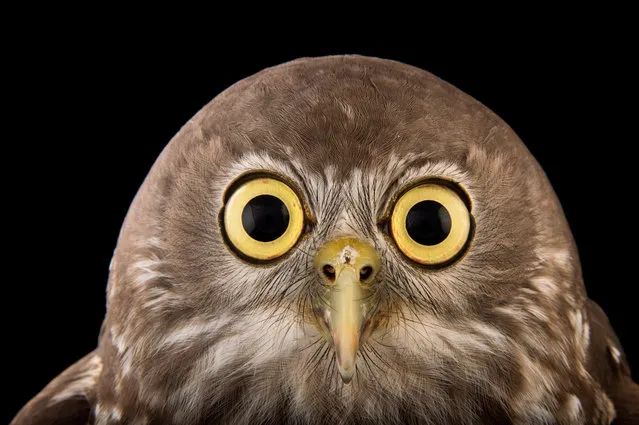
The National Geographic Photo Ark is a travelling exhibition of photographer Joel Sartore’s quest to create a photo archive of biodiversity around the world. So far, Sartore has captured studio portraits of more than 6,000 species – a number that he hopes to double. On 1 July, the ark will open at Melbourne zoo – the first time it has been exhibited in the southern hemisphere. More than 50 portraits will be on display, including many of Australian endangered animals being protected by programs at the zoo itself. These captions have been edited from text supplied by Melbourne zoo. Here: Barking owl. So-named because its call sounds like a barking dog, these birds are native to Australia, Indonesia and Papua New Guinea. In Victoria they are listed as an endangered species, and in 2003 there were estimated to be fewer than 50 breeding pairs. The main threat to the species in Victoria is loss of habitat, especially large trees with hollows in which they can nest and on which many of their prey depend. Apart from a bark, they may utter a chilling scream when they feel threatened. (Photo by Joel Sartore/National Geographic Photo Ark/The Guardian)

The National Geographic Photo Ark is a travelling exhibition of photographer Joel Sartore’s quest to create a photo archive of biodiversity around the world. So far, Sartore has captured studio portraits of more than 6,000 species – a number that he hopes to double. On 1 July, the ark will open at Melbourne zoo – the first time it has been exhibited in the southern hemisphere. More than 50 portraits will be on display, including many of Australian endangered animals being protected by programs at the zoo itself. These captions have been edited from text supplied by Melbourne zoo. Here: Barking owl. (Photo by Joel Sartore/National Geographic Photo Ark/The Guardian)
Details
01 Jul 2017 07:45:00
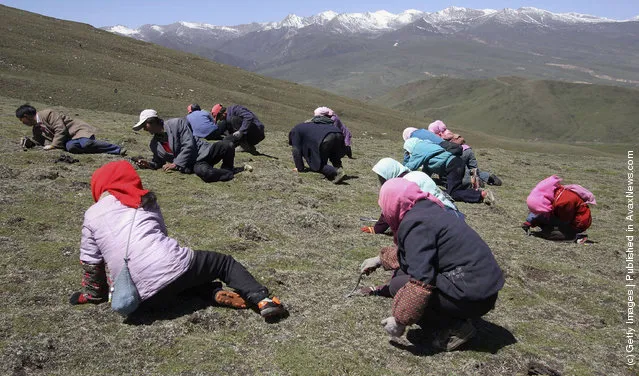
Ophiocordyceps Sinensis A.K.A. Caterpillar Fungus

“There are over 680 documented species of the sac fungus genus Ophiocordyceps, and one of the best known of these is Ophiocordyceps sinensis, colloquially known as caterpillar fungus. The fungus is known in Tibetan as yartsa gunbu or yatsa gunbu. O. sinensis is known in the West as a medicinal mushroom and its use has a long history in Traditional Chinese medicine as well as Traditional Tibetan medicine. The highly valuable fungus-caterpillar combination is hand-collected and is used as an aphrodisiac and as a treatment for a variety of ailments from fatigue to cancer”. – Wikipedia

Photo: Nomads dig for Chinese caterpillar fungus from a mountain May 25, 2007 in Guide County, Hainan Prefecture, Qinghai Province, China. Nomads can earn about 2,000 yuan to 5,000 yuan (about U.S. $260 to $653 ) through their work during the fifty-day Chinese caterpillar fungus gathering season. (Photo by China Photos/Getty Images)
Details
26 Sep 2011 10:47:00
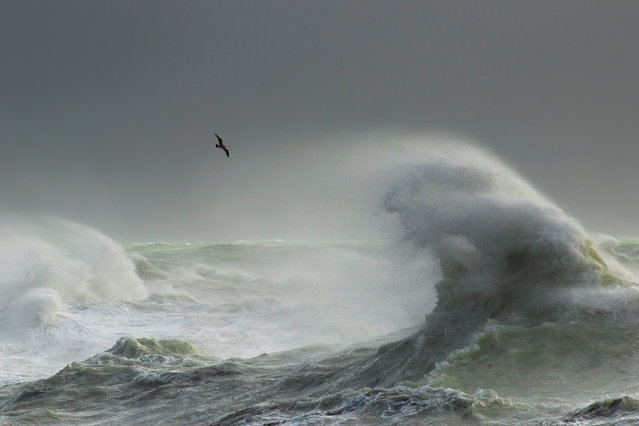
Coast and marine winner: Storm Gull (Lesser black-backed gull), New Haven, East Sussex. (Photo by Craig Denford/British Wildlife Photography Awards)

Coast and marine winner: Storm Gull (Lesser black-backed gull), New Haven, East Sussex. (Photo by Craig Denford/British Wildlife Photography Awards)
Details
07 Nov 2018 00:05:00
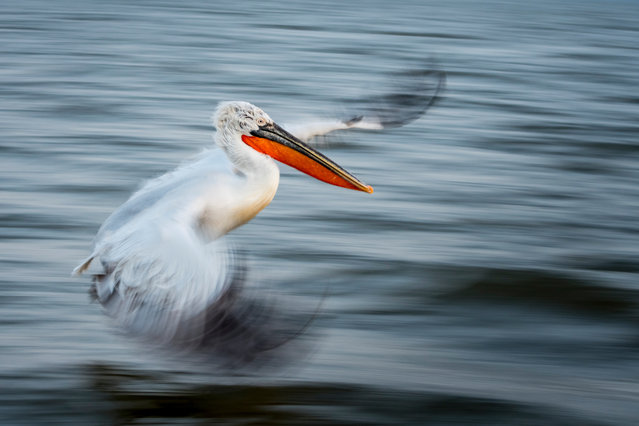
Overall winner: The Art of Flight by Alwin Hardenbol (University of Eastern Finland). A panning shot of a Dalmatian pelican in flight. The picture was taken on Lake Kerkini in Greece. (Photo by Alwin Hardenbol/2020 British Ecological Society Photography Competition)

Overall winner: The Art of Flight by Alwin Hardenbol (University of Eastern Finland). A panning shot of a Dalmatian pelican in flight. The picture was taken on Lake Kerkini in Greece. (Photo by Alwin Hardenbol/2020 British Ecological Society Photography Competition)
Details
01 Dec 2020 00:03:00