Loading...
Done
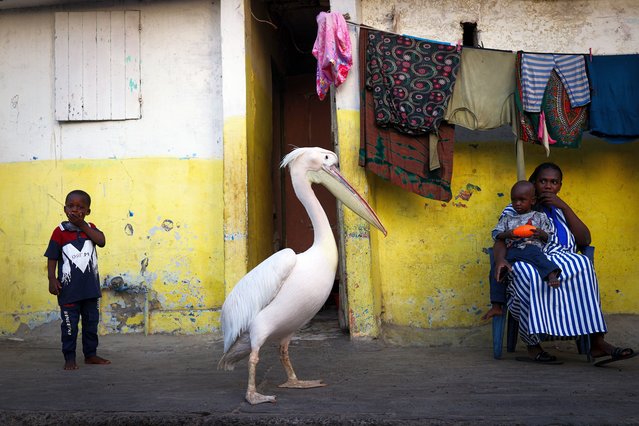
The pelican, named “Ndagabar”, which means pelican in the local Wolof language, begins visiting the neighborhood in the early hours of the day in Saint-Louis, Senegal on November 02, 2024. The pelican, which 62-year-old retired fisherman Madiop Gueye, has been keeping in front of his house for five years, has become the center of both the neighborhood and the region, attracting the attention of both local and foreign tourists. (Photo by Cem Ozdel/Anadolu via Getty Images)

The pelican, named “Ndagabar”, which means pelican in the local Wolof language, begins visiting the neighborhood in the early hours of the day in Saint-Louis, Senegal on November 02, 2024. The pelican, which 62-year-old retired fisherman Madiop Gueye, has been keeping in front of his house for five years, has become the center of both the neighborhood and the region, attracting the attention of both local and foreign tourists. (Photo by Cem Ozdel/Anadolu via Getty Images)
Details
10 Nov 2024 03:59:00
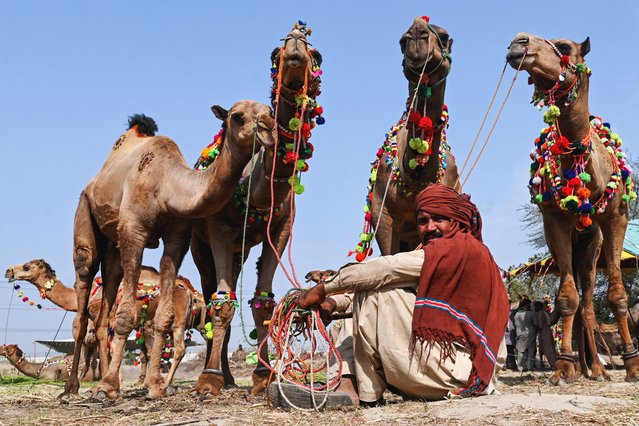
A herder sits amidst his camels at a cattle market in Lahore on June 3, 2025, ahead of the Muslim festival of Eid al-Adha. (Photo by Arif Ali/AFP Photo)

A herder sits amidst his camels at a cattle market in Lahore on June 3, 2025, ahead of the Muslim festival of Eid al-Adha. (Photo by Arif Ali/AFP Photo)
Details
25 Jul 2025 03:22:00
Fashionistas pose for photographs in front of a homeless man outside Moynihan Station following a showing of the Rag & Bone Spring/Summer 2013 collection during New York Fashion Week in this September 7, 2012 file photo. (Photo by Lucas Jackson/Reuters)

Fashionistas pose for photographs in front of a homeless man outside Moynihan Station following a showing of the Rag & Bone Spring/Summer 2013 collection during New York Fashion Week in this September 7, 2012 file photo. (Photo by Lucas Jackson/Reuters)
Details
24 Sep 2015 08:04:00
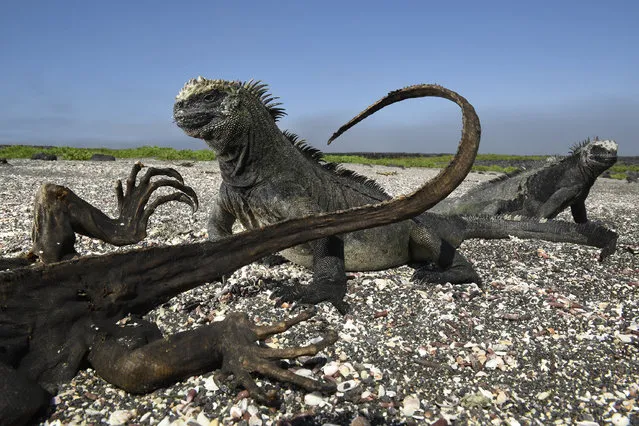
Galapagos – Rocking the Cradle: Four major ocean currents converge along the Galapagos archipelago, creating the conditions for an extraordinary diversity of animal life, April 25, 2016. The islands are home to at least 7,000 flora and fauna species, of which 97 percent of the reptiles, 80 percent of the land birds, 50 percent of the insects and 30 percent of the plants are endemic. The local ecosystem is highly sensitive to the changes in temperature, rainfall and ocean currents that characterize the climatic events known as El Niño and La Niña. These changes cause marked fluctuations in weather and food availability. Many scientists expect the frequency of El Niño and La Niña to increase as a result of climate change, making the Galapagos a possible early-warning location for its effects. (Photo by Thomas P. Peschak for National Geographic/World Press Photo)

Galapagos – Rocking the Cradle: Four major ocean currents converge along the Galapagos archipelago, creating the conditions for an extraordinary diversity of animal life, April 25, 2016. The islands are home to at least 7,000 flora and fauna species, of which 97 percent of the reptiles, 80 percent of the land birds, 50 percent of the insects and 30 percent of the plants are endemic. (Photo by Thomas P. Peschak for National Geographic/World Press Photo)
Details
16 Apr 2018 00:01:00
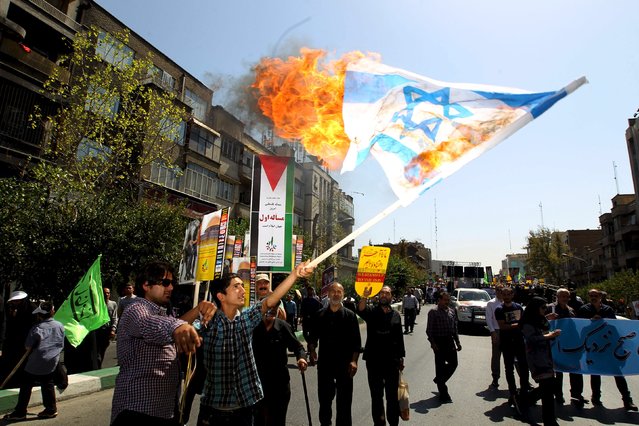
Iranian demonstrators burn an Israeli flag during a rally marking al-Quds (Jerusalem) Day in Tehran July 10, 2015. (Photo by Reuters/Stringer/TIMA)

Iranian demonstrators burn an Israeli flag during a rally marking al-Quds (Jerusalem) Day in Tehran July 10, 2015. (Photo by Reuters/Stringer/TIMA)
Details
12 Jul 2015 13:46:00
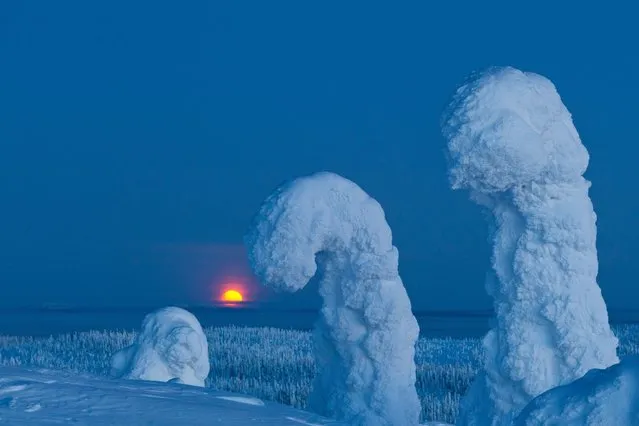
The Northern Lights glow green in a spectacular light show above a field of trees frozen solid with snow. (Photo by Jaak Sarv/Solent News & Photo Agency)

The Northern Lights glow green in a spectacular light show above a field of trees frozen solid with snow. (Photo by Jaak Sarv/Solent News & Photo Agency)
Details
09 Feb 2014 12:36:00
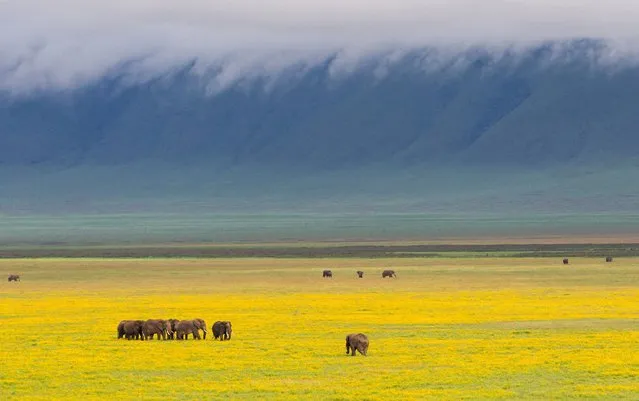
Ngorongoro Crater (Tanzania). At 610m deep and 260 sq km, this is the largest unflooded caldera in the world. A blue-green vision from above it's a haven for engangered wildlife and Maasai livestock. The crater was formed three million years ago when a giant volcano, which could have been as high as Kilimanjaro, exploded and collapsed. The caldera formed the concentric fractures in the crust cracked down to a magma reservoir deep underground. (Photo by John Bryant/Getty Images)

Ngorongoro Crater (Tanzania). At 610m deep and 260 sq km, this is the largest unflooded caldera in the world. A blue-green vision from above it's a haven for engangered wildlife and Maasai livestock. The crater was formed three million years ago when a giant volcano, which could have been as high as Kilimanjaro, exploded and collapsed. The caldera formed the concentric fractures in the crust cracked down to a magma reservoir deep underground. (Photo by John Bryant/Getty Images)
Details
28 Mar 2014 08:08:00
“I was doing some event shooting for Bar One's Beer And Wine garden. I was working with these two ladies when all of a sudden I hear an "excuse me” and I see dude step into the frame right when I pressed the shutter button!” (Photo by 17thletter Photography)

“I was doing some event shooting for Bar One's Beer And Wine garden. I was working with these two ladies when all of a sudden I hear an "excuse me” and I see dude step into the frame right when I pressed the shutter button!” (Photo by 17thletter Photography)
Details
12 Mar 2014 12:02:00