Loading...
Done
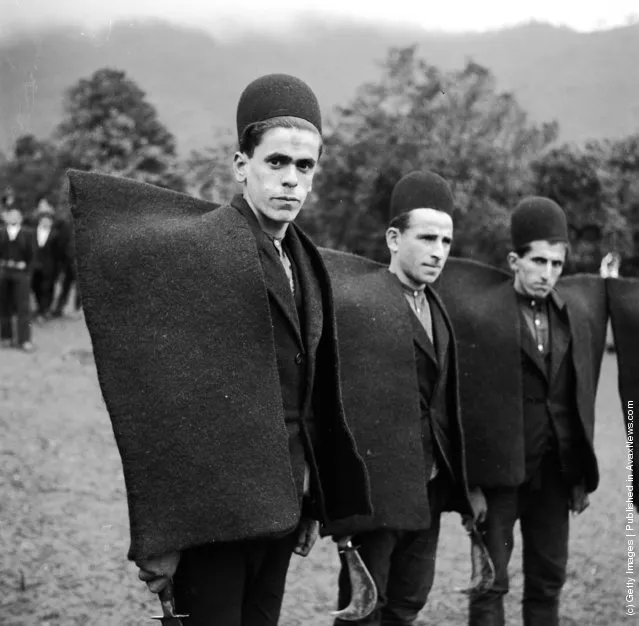
1952:  Shepherds from the north wear their traditional heavy woollen mantles as they stand ready to shear sheep with sycthe-like shears

Shepherds from the north wear their traditional heavy woollen mantles as they stand ready to shear sheep with sycthe-like shears. (Photo by Three Lions/Getty Images). Circa 1952
Details
03 Dec 2011 13:34:00
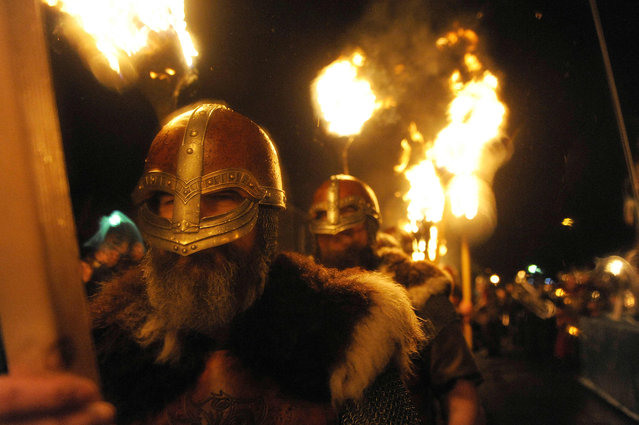
Participants dressed as Vikings carry torches as they march in procession before burning their viking galley ship at the culmination of the annual Up Helly Aa festival in Lerwick, Shetland Islands, on January 31, 2017. (Photo by Andy Buchanan/AFP Photo)

Participants dressed as Vikings carry torches as they march in procession before burning their viking galley ship at the culmination of the annual Up Helly Aa festival in Lerwick, Shetland Islands, on January 31, 2017. (Photo by Andy Buchanan/AFP Photo)
Details
02 Feb 2017 05:12:00
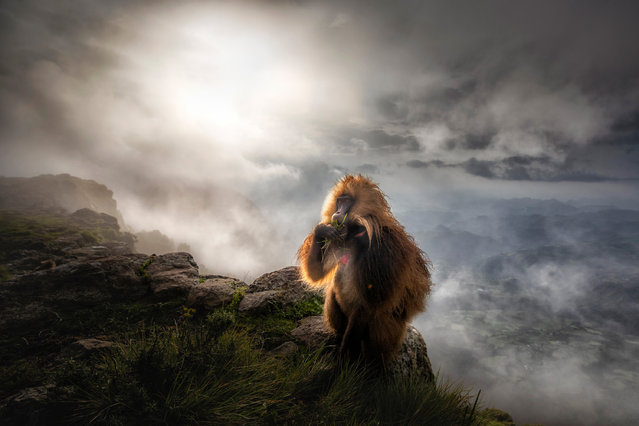
Highly commended, mammals: Gelada after the storm – Marco Gaiotti (Italy). “Gelada baboons are the only monkey species in the world that feed on grasses. They are native to the tableland of Ethiopia. Every morning large family groups wander from their sleeping places in the steep rock face, up to 1,000 metres high, to the feeding grounds at the tablelands. This image clearly depicts their feeding strategy: they pull out bunches of grass, sort the stalks and then lift them to their mouth. This shot was taken towards the end of the rainy season after a heavy storm”. (Photo by Marco Gaiotti/2019 GDT European Wildlife Photographer of the Year)

Highly commended, mammals: Gelada after the storm – Marco Gaiotti (Italy). “Gelada baboons are the only monkey species in the world that feed on grasses. They are native to the tableland of Ethiopia. Every morning large family groups wander from their sleeping places in the steep rock face, up to 1,000 metres high, to the feeding grounds at the tablelands. This image clearly depicts their feeding strategy: they pull out bunches of grass, sort the stalks and then lift them to their mouth. This shot was taken towards the end of the rainy season after a heavy storm”. (Photo by Marco Gaiotti/2019 GDT European Wildlife Photographer of the Year)
Details
31 Oct 2019 00:03:00
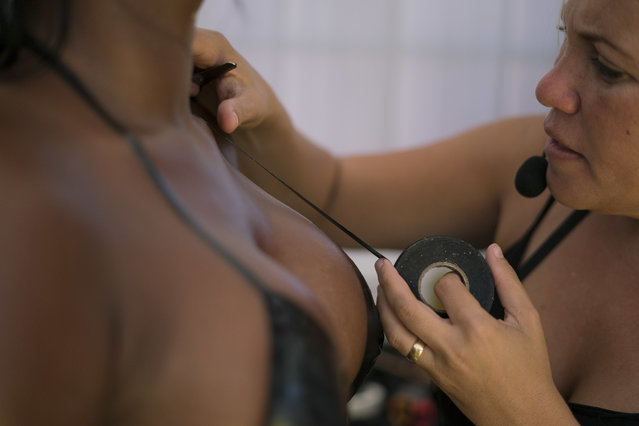
In this January 11, 2017 photo, Erika Martins uses black electrical tape to create a customer's bikini, in order to attain crisp tan lines, on her rooftop Erika Bronze salon in the suburb of Realengo in Rio de Janeiro, Brazil. Martins wears a microphone connected to an open speaker system in order to direct her assistants to clients who need more tanning lotion or a sprinkling of water on their skin. (Photo by Renata Brito/AP Photo)

In this January 11, 2017 photo, Erika Martins uses black electrical tape to create a customer's bikini, in order to attain crisp tan lines, on her rooftop Erika Bronze salon in the suburb of Realengo in Rio de Janeiro, Brazil. Martins wears a microphone connected to an open speaker system in order to direct her assistants to clients who need more tanning lotion or a sprinkling of water on their skin. (Photo by Renata Brito/AP Photo)
Details
25 Jan 2017 11:21:00
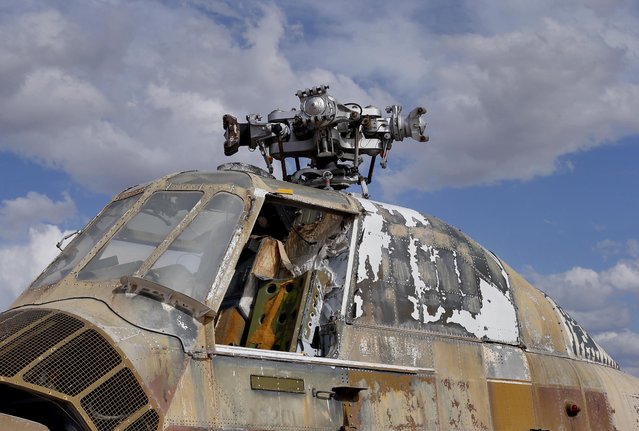
An Army Sikorsky VH-34s Choctaw helicopter once used to transport President Dwight D. Eisenhower sits in a field at the 309th Aerospace Maintenance and Regeneration Group boneyard Thursday, May 14, 2015 at Davis-Monthan Air Force Base in Tucson, Ariz. President Eisenhower became the first chief executive to be transported by helicopter. (Photo by Matt York/AP Photo)

An Army Sikorsky VH-34s Choctaw helicopter once used to transport President Dwight D. Eisenhower sits in a field at the 309th Aerospace Maintenance and Regeneration Group boneyard Thursday, May 14, 2015 at Davis-Monthan Air Force Base in Tucson, Ariz. President Eisenhower became the first chief executive to be transported by helicopter. Presidents Eisenhower and John F. Kennedy were transported in VH-34 helicopters and VH-34's served as “Army One” from 1958 through 1963. (Photo by Matt York/AP Photo)
Details
23 May 2015 11:48:00
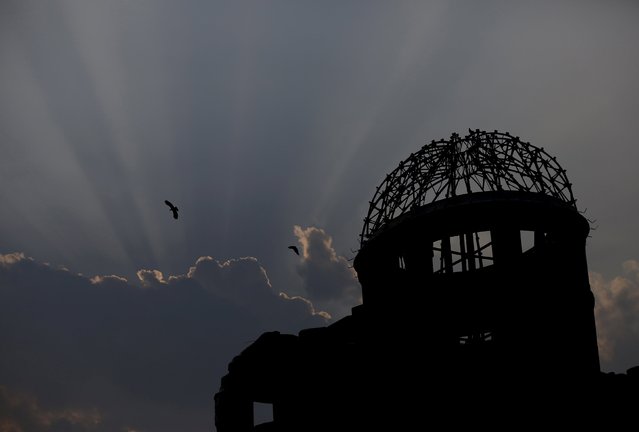
Birds fly over the Atomic Bomb Dome in Hiroshima, western Japan July 29, 2015. On August 6, 1945, the U.S. dropped the atomic bomb on Hiroshima, killing about 140,000 by the end of the year in a city of 350,000 residents, in the world's first nuclear attack. (Photo by Issei Kato/Reuters)

Birds fly over the Atomic Bomb Dome in Hiroshima, western Japan July 29, 2015. On August 6, 1945, the U.S. dropped the atomic bomb on Hiroshima, killing about 140,000 by the end of the year in a city of 350,000 residents, in the world's first nuclear attack. Three days later, a second atomic bomb was dropped on Nagasaki. Influenced by the shadows scorched into outdoor surfaces by the heat of the blasts 70 years ago, Reuters photographer Issei Kato pays homage to survivors, residents and historic buildings in both cities in a personal project that captures the shadows of today. (Photo by Issei Kato/Reuters)
Details
04 Aug 2015 12:01:00
A devotee offers prayers to the setting sun during the "Chhat" festival at Bagmati river in Kathmandu, Nepal November 17, 2015. (Photo by Navesh Chitrakar/Reuters)

A devotee offers prayers to the setting sun during the "Chhat" festival at Bagmati river in Kathmandu, Nepal November 17, 2015. Hindus in Nepal celebrate "Chhat", a four-day festival that honours the sun god, by praying at sunrise and sunset, and seek blessings for one's family by giving offerings. (Photo by Navesh Chitrakar/Reuters)
Details
19 Nov 2015 08:01:00
The monument of Ilirska Bistrica was designed by Janez Lenassi and built in 1965. It is dedicated to Slovenian soldiers that fell in World War II. (Photo by Jan Kempenaers)

The brutalist war memorials found throughout the former Yugoslavia were weird enough when they were built in the 1960s and 70s. Today, separated by the end of an architectural movement and the disintegration of the country, they seem almost alien. Belgian photographer Jan Kempenaers treats them purely as artistic objects in his book, “Spomenik”, named for the Serb-Croat word for monument. Known for photographing geographical oddities, Kempenaers was captivated by the spomenik after seeing them in an art encyclopedia. After hearing that many had been destroyed or abandoned, he set out to record what was left. (Photo by Jan Kempenaers)
Details
18 Aug 2014 09:07:00