Loading...
Done
U.S Army combat camera photographer Spc. Hilda Clayton took this photo July 2, 2013 that was released by the U.S. Army, that shows an Afghan soldier engulfed in flame as a mortar tube explodes during an Afghan National Army live-fire training exercise in Laghman Province, Afghanistan. The accident killed Clayton and four Afghan National Army soldiers. (Photo by Spc. Hilda Clayton/U.S. Army via AP Photo)

U.S Army combat camera photographer Spc. Hilda Clayton took this photo July 2, 2013 that was released by the U.S. Army, that shows an Afghan soldier engulfed in flame as a mortar tube explodes during an Afghan National Army live-fire training exercise in Laghman Province, Afghanistan. The accident killed Clayton and four Afghan National Army soldiers. (Photo by Spc. Hilda Clayton/U.S. Army via AP Photo)
Details
26 May 2017 09:09:00
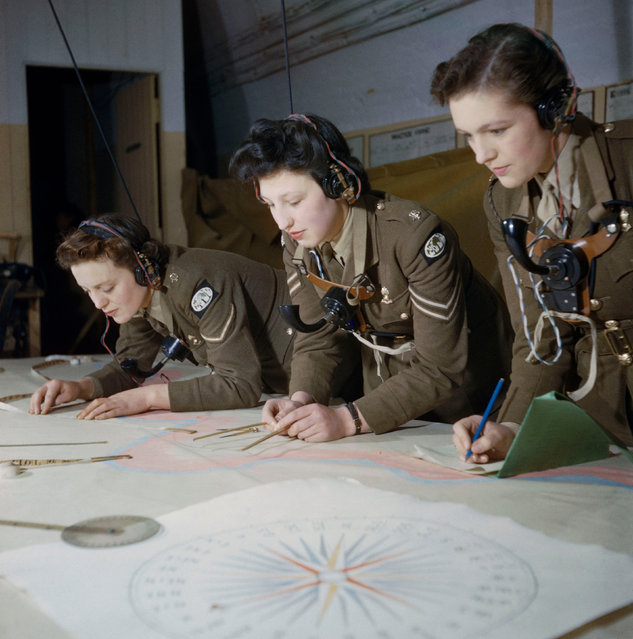
Auxiliary Territorial Service (ATS) plotters at work at Coastal Artillery Headquarters in Dover, December 1942. (Photo by Ted Dearberg/IWM/PA Wire)

Auxiliary Territorial Service (ATS) plotters at work at Coastal Artillery Headquarters in Dover, December 1942. The Auxiliary Territorial Service was the women's branch of the British Army during the Second World War. It was formed on 9 September 1938, initially as a women's voluntary service, and existed until 1 February 1949, when it was merged into the Women's Royal Army Corps. The ATS had its roots in the Women's Auxiliary Army Corps (WAAC), which was formed in 1917 as a voluntary service. During the First World War its members served in a number of jobs including clerks, cooks, telephonists and waitresses. The WAAC was disbanded after four years in 1921. (Photo by Ted Dearberg/IWM/PA Wire)
Details
13 Jul 2017 07:52:00
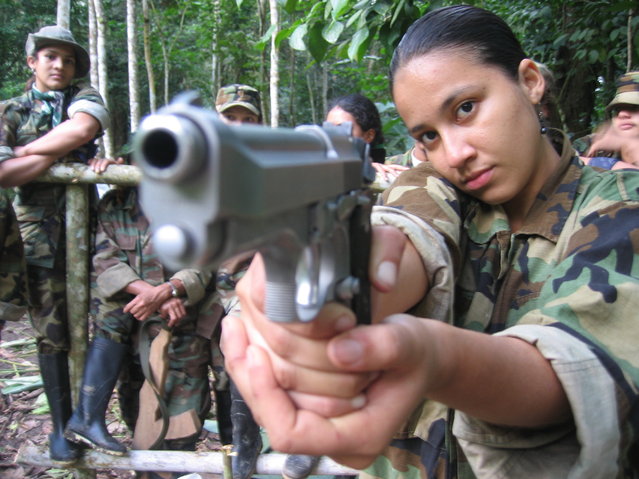
A member of the Revolutionary Armed Forces of Colombia (FARC) pose for a picture at a camp in the Colombian mountains on February 2005. (Photo by Frank Piasecki Poulsen)

A member of the Revolutionary Armed Forces of Colombia (FARC) pose for a picture at a camp in the Colombian mountains on February 2005. (Photo by Frank Piasecki Poulsen)
Details
29 Sep 2016 08:51:00
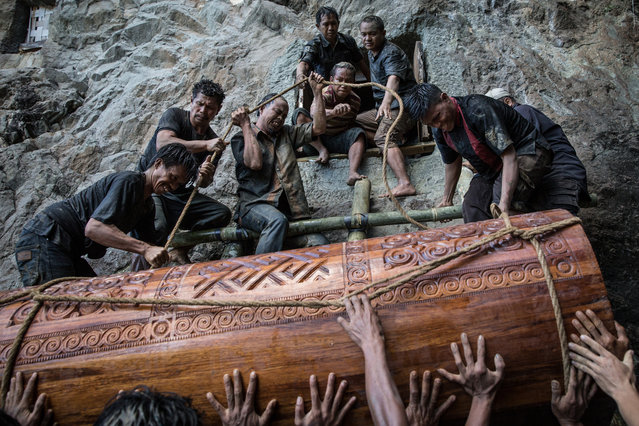
It is said that Torajans are people who “live to die”. For this Indonesian ethnic group, funerals are such extravagant events that they sometimes attract tourists. Families can postpone burials years (and the deceased are considered sick and hosted at home until the funeral) until the family can raise enough money and gather as many relatives as possible. And then it’s a jubilant multiday social event with a parade, dances and animal sacrifices. Agung Parameswara photographed these funerary practices when he traveled to South Sulawesi province, where the Torajans live. But often, their funeral isn’t the last time the dead are seen. In August, crypts are opened, coffins are slid back out and bodies delicately unsheathed. This tender ritual is known as Ma’Nene, which is customarily performed every few years. (Photo by Agung Parameswara/The Washington Post)

It is said that Torajans are people who “live to die”. For this Indonesian ethnic group, funerals are such extravagant events that they sometimes attract tourists. Families can postpone burials years (and the deceased are considered sick and hosted at home until the funeral) until the family can raise enough money and gather as many relatives as possible. And then it’s a jubilant multiday social event with a parade, dances and animal sacrifices. Agung Parameswara photographed these funerary practices when he traveled to South Sulawesi province, where the Torajans live. (Photo by Agung Parameswara/The Washington Post)
Details
06 Oct 2016 09:15:00
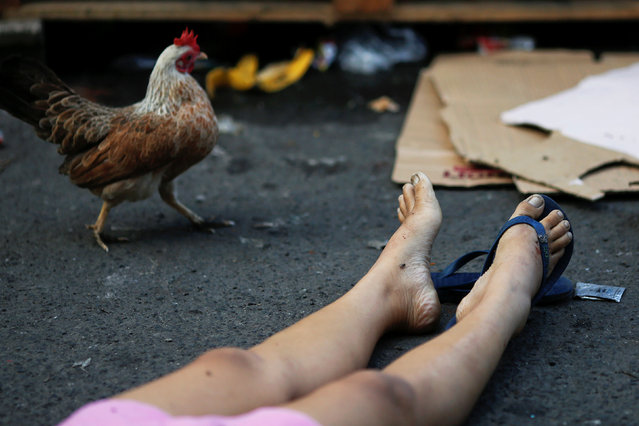
A chicken is seen next to the body of a woman killed by unknown gunmen at the market in a port area of Manila, Philippines October 28, 2016. (Photo by Damir Sagolj/Reuters)

A chicken is seen next to the body of a woman killed by unknown gunmen at the market in a port area of Manila, Philippines October 28, 2016. Philippine President Rodrigo Duterte's war on drugs and other crimes took he office on June 30 has claimed 4,447 lives, according to official figures made available by police on November 10. (Photo by Damir Sagolj/Reuters)
Details
11 Nov 2016 08:07:00
Person viewing the Northern lights over the lava landscape, Reykjanes Peninsula, Iceland. (Photo by Arctic-Images/Getty Images)

A person viewing the Northern lights over the lava landscape, Reykjanes Peninsula, Iceland. (Photo by Arctic-Images/Getty Images)
Details
19 Nov 2016 11:30:00
Kimono-clad women enjoy the view from Tokyo Sky Tree’s 350-meter-high observation deck in Sumida Ward, Tokyo, on the Coming of Age Day, January 9, 2017. Sumida Ward invited about 430 local 20-year-old to the deck to celebrate them. Many city governments invite local 20-years-old to there’s symbolic places and celebrate for their Coming of Age Day. (Photo by The Yomiuri Shimbun via AP Images)

Kimono-clad women enjoy the view from Tokyo Sky Tree’s 350-meter-high observation deck in Sumida Ward, Tokyo, on the Coming of Age Day, January 9, 2017. Sumida Ward invited about 430 local 20-year-old to the deck to celebrate them. Many city governments invite local 20-years-old to there’s symbolic places and celebrate for their Coming of Age Day. (Photo by The Yomiuri Shimbun via AP Images)
Details
10 Jan 2017 13:41:00
Kawakanih Yawalapiti, 9, Upper Xingu region of Mato Grosso, Brazil, 2018: Kawakanih lives with her tribe, the Yawalapiti, in Xingu national park, a preserve in the Amazon basin of Brazil. The Yawalapiti collect seeds to preserve species unique to their ecosystem, which lies between the rain forest and savannah. Kawakanih’s diet is simple, consisting mainly of fish, cassava, porridge, fruit and nuts. “It takes five minutes to catch dinner”, says Kawakanih. “When you’re hungry, you just go to the river with your net”. (Photo by Gregg Segal/The Guardian)

Photographer Gregg Segal travelled the world to document children and the food they eat in a week. Partly inspired by the increasing problems of childhood obesity, he tracked traditional regional diets as yet unaffected by globalisation, and ironically, found that the healthiest diets were often eaten by the least well off. (Photo by Gregg Segal/The Guardian)
Details
03 Jul 2019 00:03:00