Loading...
Done
Lush green rice terraces sprawl over 2,200 hectares of mountainside ready to be harvested. These stunning images, captured by photographer Saravut Whanset, show the incredible terraces throughout the course of the day, including at sunrise and sunset. Workers tend to the fields, with each terrace between 1 and 1.5 metres wide, while wooden huts stand on stilts on the mountainside. The beautiful panoramic pictures were taken in Mu Cang Chai, Vietnam, with the fields located at the foot of the Hoang Lien Son mountain range, 1,000 metres above sea level. (Photo by Saravut Whanset/Solent News and Photo Agency)

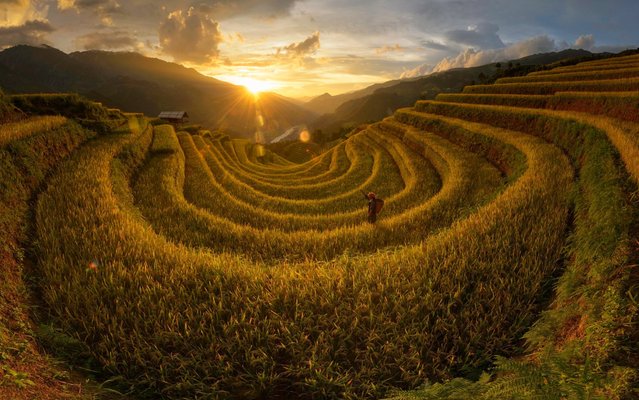
Lush green rice terraces sprawl over 2,200 hectares of mountainside ready to be harvested. These stunning images, captured by photographer Saravut Whanset, show the incredible terraces throughout the course of the day, including at sunrise and sunset. Workers tend to the fields, with each terrace between 1 and 1.5 metres wide, while wooden huts stand on stilts on the mountainside. The beautiful panoramic pictures were taken in Mu Cang Chai, Vietnam, with the fields located at the foot of the Hoang Lien Son mountain range, 1,000 metres above sea level. (Photo by Saravut Whanset/Solent News and Photo Agency)
Details
13 Nov 2017 07:21:00
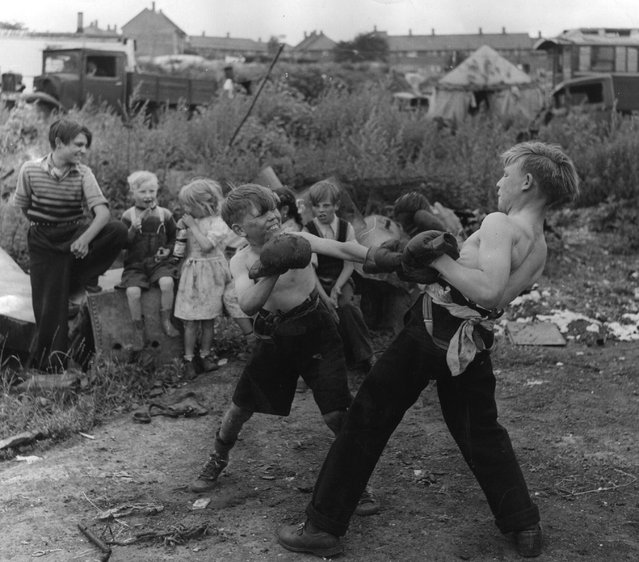
The unromantic gypsies. Children boxing in a gypsy camp in Kent, England on July 1, 1951. Like all boys these gypsy lads like to try their hand at boxing. Encouraged by their friends they fight it out on Corke's Meadow. Few Romanies now live a life of wandering romance. Most are like the three hundred squatters of Corke's Meadow, Kent, which is part of a “gypsy problem” that involves about 100,000 today. Of those about 25,000 can be rightly called gypsies, the rest are Mumpers and Posh-rats and Hobos. Corke's Meadow has both kinds. “Picture Post” cameraman Bert Hardy photographs the Corke's Meadow gypsies in their encampment. (Photo by Hulton-Deutsch Collection/Corbis via Getty Images)

The unromantic gypsies. Children boxing in a gypsy camp in Kent, England on July 1, 1951. Like all boys these gypsy lads like to try their hand at boxing. Encouraged by their friends they fight it out on Corke's Meadow. Few Romanies now live a life of wandering romance. Most are like the three hundred squatters of Corke's Meadow, Kent, which is part of a “gypsy problem” that involves about 100,000 today. Of those about 25,000 can be rightly called gypsies, the rest are Mumpers and Posh-rats and Hobos. Corke's Meadow has both kinds. “Picture Post” cameraman Bert Hardy photographs the Corke's Meadow gypsies in their encampment. (Photo by Hulton-Deutsch Collection/Corbis via Getty Images)
Details
12 Mar 2017 00:01:00
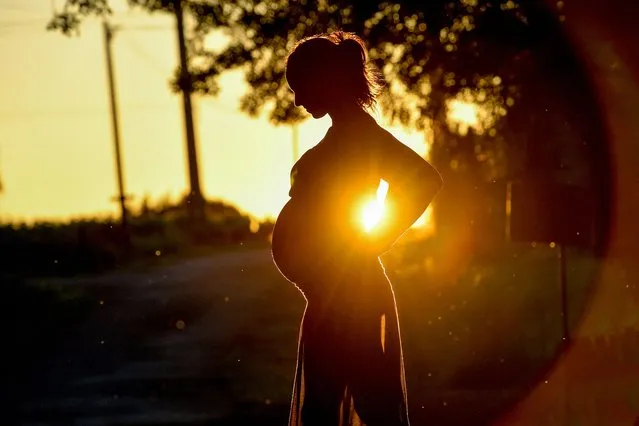
A pregnant woman poses on June 19, 2018 in Vertou, western France. France had an estimated population of 68.4 million by January 1, 2024, representing a further year-on-year increase of 0.3 percent, limited by a marked drop in the birth rate, the INSEE national statistics bureau of France reported on January 16, 2024. In 2023, 678,000 babies were born in France, 6.6 percent fewer than the previous year, the lowest number of births in any year since 1946. Over the same period, there were 631,000 deaths, down 6.5 percent on 2022, a year marked by the consequences of the Covid-19 pandemic and episodes of extreme heat. (Photo by Loic Venance/AFP Photo)

A pregnant woman poses on June 19, 2018 in Vertou, western France. France had an estimated population of 68.4 million by January 1, 2024, representing a further year-on-year increase of 0.3 percent, limited by a marked drop in the birth rate, the INSEE national statistics bureau of France reported on January 16, 2024. In 2023, 678,000 babies were born in France, 6.6 percent fewer than the previous year, the lowest number of births in any year since 1946. Over the same period, there were 631,000 deaths, down 6.5 percent on 2022, a year marked by the consequences of the Covid-19 pandemic and episodes of extreme heat. (Photo by Loic Venance/AFP Photo)
Details
27 Feb 2024 07:29:00
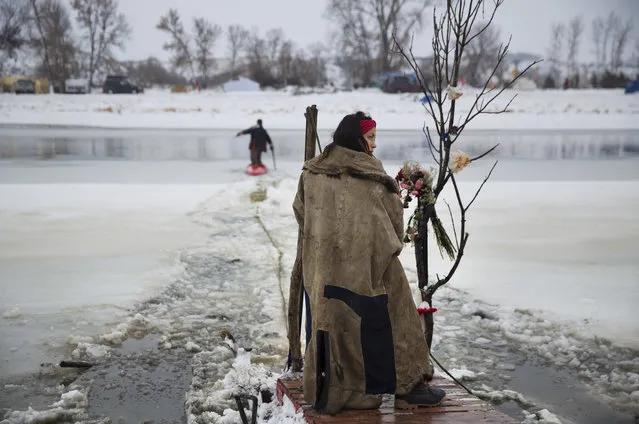
In this Thursday, December 1, 2016 photo, Cat Bigney, part of the Oglala Native American tribe, waits on the shore of the Cannonball river for travelers to arrive by canoe at the Oceti Sakowin camp where people have gathered to protest the Dakota Access oil pipeline in Cannon Ball, N.D. So far, those at the camp have shrugged off the heavy snow, icy winds and frigid temperatures. But if they defy next week's government deadline to abandon the camp, demonstrators know the real deep freeze lies ahead. Life-threatening wind chills and towering snow drifts could mean the greatest challenge is simple survival. (Photo by David Goldman/AP Photo)

In this Thursday, December 1, 2016 photo, Cat Bigney, part of the Oglala Native American tribe, waits on the shore of the Cannonball river for travelers to arrive by canoe at the Oceti Sakowin camp where people have gathered to protest the Dakota Access oil pipeline in Cannon Ball, N.D. So far, those at the camp have shrugged off the heavy snow, icy winds and frigid temperatures. But if they defy next week's government deadline to abandon the camp, demonstrators know the real deep freeze lies ahead. Life-threatening wind chills and towering snow drifts could mean the greatest challenge is simple survival. (Photo by David Goldman/AP Photo)
Details
06 Dec 2016 10:22:00
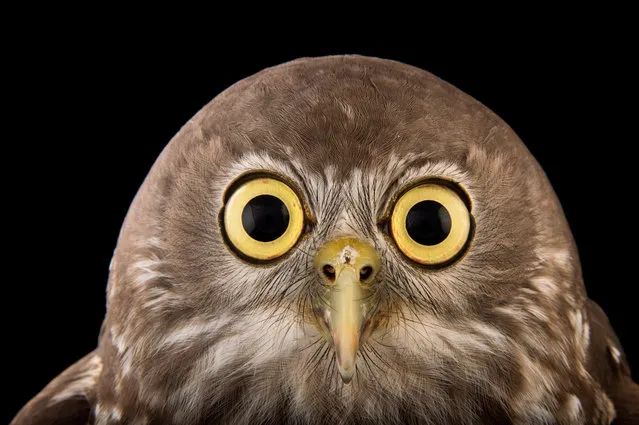
The National Geographic Photo Ark is a travelling exhibition of photographer Joel Sartore’s quest to create a photo archive of biodiversity around the world. So far, Sartore has captured studio portraits of more than 6,000 species – a number that he hopes to double. On 1 July, the ark will open at Melbourne zoo – the first time it has been exhibited in the southern hemisphere. More than 50 portraits will be on display, including many of Australian endangered animals being protected by programs at the zoo itself. These captions have been edited from text supplied by Melbourne zoo. Here: Barking owl. So-named because its call sounds like a barking dog, these birds are native to Australia, Indonesia and Papua New Guinea. In Victoria they are listed as an endangered species, and in 2003 there were estimated to be fewer than 50 breeding pairs. The main threat to the species in Victoria is loss of habitat, especially large trees with hollows in which they can nest and on which many of their prey depend. Apart from a bark, they may utter a chilling scream when they feel threatened. (Photo by Joel Sartore/National Geographic Photo Ark/The Guardian)

The National Geographic Photo Ark is a travelling exhibition of photographer Joel Sartore’s quest to create a photo archive of biodiversity around the world. So far, Sartore has captured studio portraits of more than 6,000 species – a number that he hopes to double. On 1 July, the ark will open at Melbourne zoo – the first time it has been exhibited in the southern hemisphere. More than 50 portraits will be on display, including many of Australian endangered animals being protected by programs at the zoo itself. These captions have been edited from text supplied by Melbourne zoo. Here: Barking owl. (Photo by Joel Sartore/National Geographic Photo Ark/The Guardian)
Details
01 Jul 2017 07:45:00
Charli XCX performs on day three of the Pitchfork Music Festival at Union Park on July 21, 2019 in Chicago, Illinois. (Photo by Michael Hickey/Getty Images)

Charli XCX performs on day three of the Pitchfork Music Festival at Union Park on July 21, 2019 in Chicago, Illinois. (Photo by Michael Hickey/Getty Images)
Details
03 Sep 2019 00:01:00
Children watch their classmate pour cold water on herself under the watch of a fitness coach at a local kindergarten in Russia's Siberian city of Krasnoyarsk, March 11, 2015. The program, which also involves sports training and sauna usage, has been practiced by the kindergarten for more than 15 years as they believe it has health benefits and keeps the children fit. (Photo by Ilya Naymushin/Reuters)

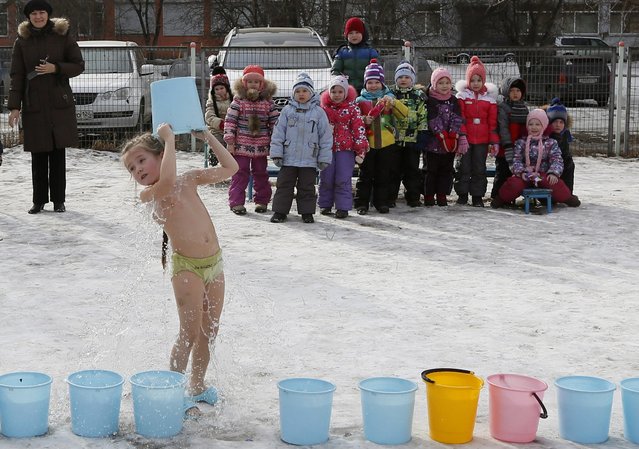
Children watch their classmate pour cold water on herself under the watch of a fitness coach at a local kindergarten in Russia's Siberian city of Krasnoyarsk, March 11, 2015. The program, which also involves sports training and sauna usage, has been practiced by the kindergarten for more than 15 years as they believe it has health benefits and keeps the children fit. Children start pouring cold water on themselves outdoors after about three years of training and undergoing medical tests, and the kindergarten is the only one in the region that practices these exercises, according to employees. (Photo by Ilya Naymushin/Reuters)
Details
19 Mar 2015 13:18:00

In this photo taken on Sunday, March 15, 2015, a Nenets woman rides steers a sled during a reindeer race at the Reindeer Herder's Day in the city of Nadym, in Yamal-Nenets Region, 2500 kilometers (about 1553 miles) northeast of Moscow, Russia. For the indigenous nomadic Nenets people, the Reindeer Herder's Day offers a chance to show their prowess in wrestling, high jumps and other traditional local sports, but, above all, reindeer races. (Photo by Dmitry Lovetsky/AP Photo)

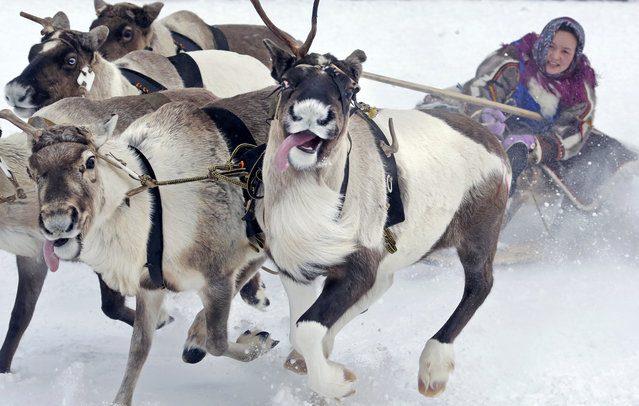
In this photo taken on Sunday, March 15, 2015, a Nenets woman rides steers a sled during a reindeer race at the Reindeer Herder's Day in the city of Nadym, in Yamal-Nenets Region, 2500 kilometers (about 1553 miles) northeast of Moscow, Russia. For the indigenous nomadic Nenets people, the Reindeer Herder's Day offers a chance to show their prowess in wrestling, high jumps and other traditional local sports, but, above all, reindeer races. (Photo by Dmitry Lovetsky/AP Photo)
Details
24 Mar 2015 10:36:00