Pascal Martinot-Lagarde, of France, celebrates his bronze medal in the men's 110 meter hurdles final at the World Athletics Championships in Doha, Qatar, Wednesday, October 2, 2019. (Photo by Petr David Josek/AP Photo)
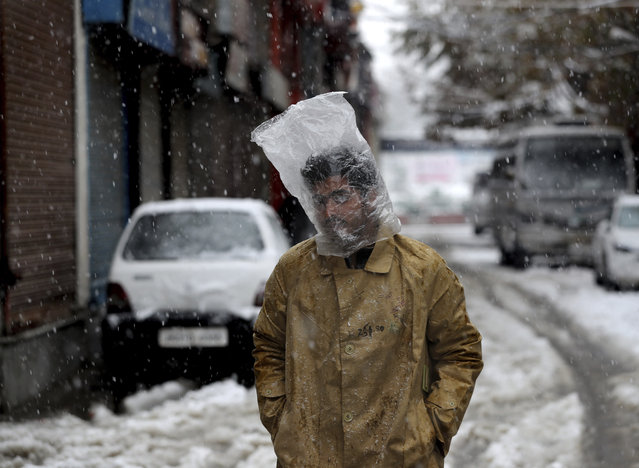
A Kashmiri man cover his head with plastic bag as it snows in Srinagar, Indian controlled Kashmir, Thursday, November 7, 2019. The region received its first snow on Wednesday, bringing temperatures down drastically and affecting air and vehicular traffic. (Photo by Mukhtar Khan/AP Photo)
A woman poses for photographs while Indonesian police officers burn seized various drugs during a press conference at the regional police headquarters in Banda Aceh on June 12, 2025. (Photo by Chaideer Mahyuddin/AFP Photo)
A member of the Gumatj clan performs a ceremonial welcome during the Garma Festival at the Gulkula ceremonial in the Gove Peninsula of the Northern Territory, Australia 03 August 2024. The Garma Festival is Australia’s largest Indigenous gathering, a 4-day celebration of Yolngu life and culture held in remote northeast Arnhem Land. (Photo by Mick Tsikas/EPA)
People clash with Venezuelan National Guards as they try to cross the border to Colombia over the Francisco de Paula Santander international bridge in Urena, Venezuela December 18, 2016. (Photo by Carlos Eduardo Ramirez/Reuters)
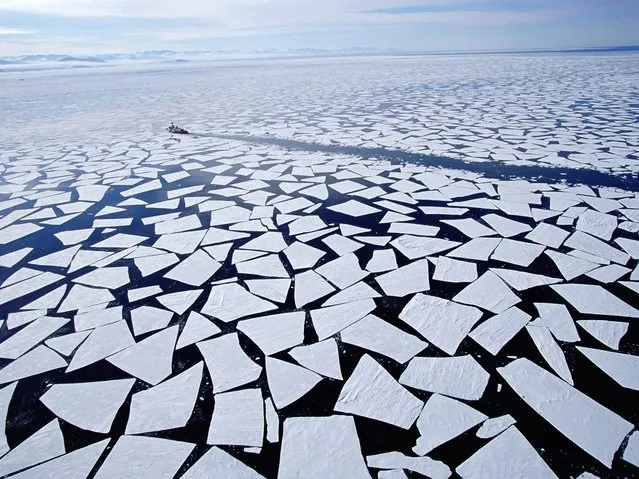
McMurdo Station is a U.S. Antarctic research centre located on the southern tip of Ross Island, which is in the New Zealand-claimed Ross Dependency on the shore of McMurdo Sound in Antarctica. It is operated by the United States through the United States Antarctic Program, a branch of the National Science Foundation. The station is the largest community in Antarctica, capable of supporting up to 1,258 residents, and serves as the United States Antarctic science facility. All personnel and cargo going to or coming from Amundsen–Scott South Pole Station first pass through McMurdo.
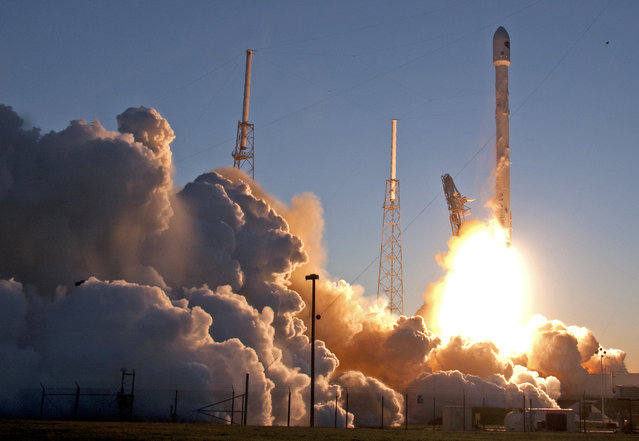
An unmanned Falcon 9 SpaceX rocket lifts off from launch complex 40 at the Cape Canaveral Air Force Station, Wednesday, February 11, 2015, in Cape Canaveral, Fla. On board is the Deep Space Climate Observatory, which will head toward a solar-storm lookout point a million miles away. (Photo by John Raoux/AP Photo)