Loading...
Done
Florin Bors, aged 8 from Bacau, northern Romania, wearing a bear fur takes a break from performing a holiday season ritual in Bucharest, Romania, Tuesday, December 16, 2014. In pre-Christian rural traditions, dancers wearing colored costumes or animal furs, touring house to house in villages singing and dancing to ward off evil. (Photo by Octav Ganea/AP Photo/Mediafax)

Florin Bors, aged 8 from Bacau, northern Romania, wearing a bear fur takes a break from performing a holiday season ritual in Bucharest, Romania, Tuesday, December 16, 2014. In pre-Christian rural traditions, dancers wearing colored costumes or animal furs, touring house to house in villages singing and dancing to ward off evil. In recent years following the economic downturn in Romania, a European Union member since 2007, the tradition has moved to Romania's cities where dancers travel to perform the ritual for money. (Photo by Octav Ganea/AP Photo/Mediafax)
Details
20 Dec 2014 12:07:00
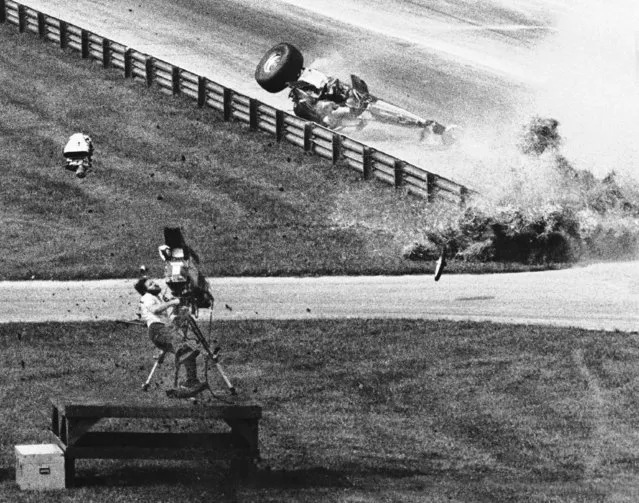
A dragster supercharger hits cameraman Joe Rooks of Bowling Green, Ohio, in the back at the U.S. Nationals N.H.R.A. drag races in Indianapolis, Indiana, on Saturday, September 1, 1979. Rooks was knocked flat by the heavy blower from a dragster that turned over and disintegrated near Rooks. Rooks died en route to the hospital. (Photo by Chuck Robinson/AP Photo)

A dragster supercharger hits cameraman Joe Rooks of Bowling Green, Ohio, in the back at the U.S. Nationals N.H.R.A. drag races in Indianapolis, Indiana, on Saturday, September 1, 1979. Rooks was knocked flat by the heavy blower from a dragster that turned over and disintegrated near Rooks. Rooks died en route to the hospital. (Photo by Chuck Robinson/AP Photo)
Details
18 Jun 2021 14:52:00
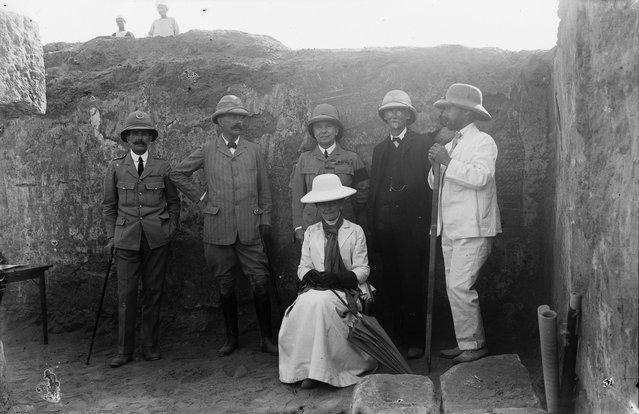
Remarkable discoveries were made, like the decapitated head of a bronze statue of Roman emperor Augustus, sacked from a raid on Roman garrisons further north in Egypt. Here: A group visiting the excavations at Meroë, including (from left) Midwinter Bey, director of Sudan Railways; Lord Kitchener; General Sir Francis Reginald Wingate, Sirdar of the Egyptian Army; Professor Archibald Sayce; John Garstang; and Lady Catherine Wingate, 1911. (Photo by Garstang Museum of Archaeology)

The city of Meroë laid undiscovered for two millennia before British archaeologist John Garstang excavated it in the early 20th century. Garstang took the radical decision to document his discoveries with photography – and immortalised an ancient world. “Meroë: Africa’s Forgotten Empire” is being shown until 14 September at Garstang Museum of Archaeology, Liverpool. Here: A group visiting the excavations at Meroë, including (from left) Midwinter Bey, director of Sudan Railways; Lord Kitchener; General Sir Francis Reginald Wingate, Sirdar of the Egyptian Army; Professor Archibald Sayce; John Garstang; and Lady Catherine Wingate, 1911. (Photo by Garstang Museum of Archaeology)
Details
15 Jun 2016 14:49:00
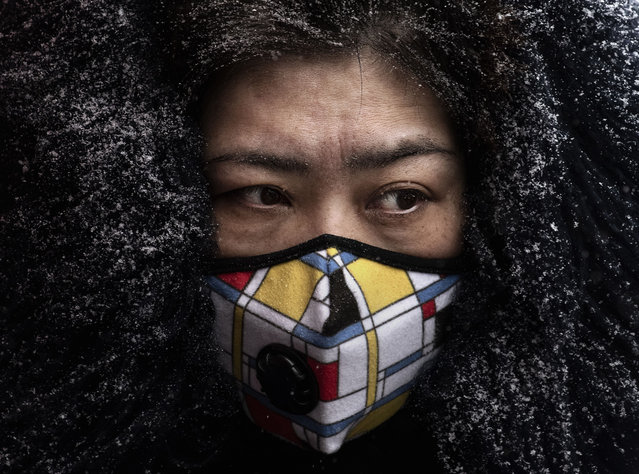
A Chinese woman wears a protective mask as she shops in a market on February 6, 2020 in Beijing, China. The number of cases of a deadly new coronavirus rose to more than 28000 in mainland China Thursday, days after the World Health Organization (WHO) declared the outbreak a global public health emergency. China continued to lock down the city of Wuhan in an effort to contain the spread of the pneumonia-like disease which medicals experts have confirmed can be passed from human to human. In an unprecedented move, Chinese authorities have put travel restrictions on the city which is the epicenter of the virus and municipalities in other parts of the country affecting tens of millions of people. The number of those who have died from the virus in China climbed to over 564 on Thursday, mostly in Hubei province, and cases have been reported in other countries including the United States, Canada, Australia, Japan, South Korea, India, the United Kingdom, Germany, France and several others. The World Health Organization has warned all governments to be on alert and screening has been stepped up at airports around the world. Some countries, including the United States, have put restrictions on Chinese travelers entering and advised their citizens against travel to China. (Photo by Kevin Frayer/Getty Images)

A Chinese woman wears a protective mask as she shops in a market on February 6, 2020 in Beijing, China. The number of cases of a deadly new coronavirus rose to more than 28000 in mainland China Thursday, days after the World Health Organization (WHO) declared the outbreak a global public health emergency. (Photo by Kevin Frayer/Getty Images)
Details
09 Feb 2020 00:07:00
The American artist’s work encompasses fashion, photography and film with characteristically vivid colour and unsettling theatricality. Here: The Big Valley, Susie and Friends, 2008. (Photo by Alex Prager Studio/Lehmann Maupin Gallery)

Alex Prager is an American art photographer and filmmaker based in Los Angeles. Her photographs primarily use staged actors, models and extras to create “meticulously designed mise en scène”, often described as film-like and hyperreal. “Alex Prager: Silver Lake Drive” is at the Photographers’ Gallery, London, 15 June – 14 October 2018. Here: The Big Valley, Susie and Friends, 2008. (Photo by Alex Prager Studio/Lehmann Maupin Gallery)
Details
15 Jun 2018 00:01:00
A masked man in military fatigues brings a blindfolded Irma Krat, arrested and held by pro-Russian protestors before her meeting with journalists near of occupied police station in Slaviansk, Ukraine, 21 April 2014. Pro-Russian activists are demanding broader autonomy from Kiev and closer ties to Russia. (Photo by Roman Pilipey/EPA)

A masked man in military fatigues brings a blindfolded Irma Krat, arrested and held by pro-Russian protestors before her meeting with journalists near of occupied police station in Slaviansk, Ukraine, 21 April 2014. Pro-Russian activists are demanding broader autonomy from Kiev and closer ties to Russia. Pro-Russian activists continued occupying government, police and other administrative buildings in eastern Ukrainian cities, in defiance of an ultimatum by the Ukrainian government to lay down their weapons. Russia, the United States, the European Union and Ukraine on 17 April had agreed on steps to de-escalate the crisis in Ukraine during talks in Geneva, Switzerland. (Photo by Roman Pilipey/EPA)
Details
26 Apr 2014 12:00:00
The Lun-class Ekranoplane was used by the Soviet Navy starting in 1987, and wasn't retired until the late 1990s, after the Soviet Union's fall. (Igor113)

“The Lun-class ekranoplan (NATO reporting name Duck) was a ground effect vehicle (GEV) designed by Rostislav Evgenievich Alexeev and used by the Soviet and Russian navies from 1987 until sometime in the late 1990s. It “flew” using the lift generated by the ground effect of its large wings when close to the surface of the water – about four metres or less. Although they might look similar and/or have related technical characteristics, ekranoplans like the Lun are not aircraft, seaplanes, hovercraft, or hydrofoils – ground effect is a separate technology altogether. The International Maritime Organization classifies these vehicles as maritime ships. The name Lun comes from the Russian for harrier”. – Wikipedia (Photo by Igor113)
Details
08 Aug 2014 10:51:00
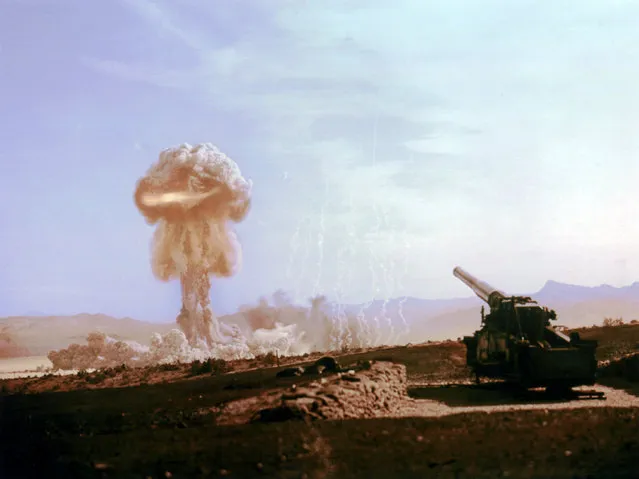
Atomic Annie at work during the Upshot-Knothole test series, 1953. (Photo by Los Alamos National Laboratory/US Army)

“A fter the former Soviet Union conducted its first nuclear test in August 1949, the US reevaluated its postwar defense policies. With the US monopoly on atomic weapons broken, military and political leaders chose to diversify the American stockpile by developing thermonuclear and tactical nuclear weapons. One of the more interesting concepts to come out of this period was atomic artillery, which was successfully tested at the Nevada Proving Grounds (now the Nevada Test Site) in May 1953”. – Alan Carr. Photo: Atomic Annie at work during the Upshot-Knothole test series, 1953. (Photo by Los Alamos National Laboratory/US Army)
Details
11 Mar 2013 11:43:00