Loading...
Done
Fantasy House

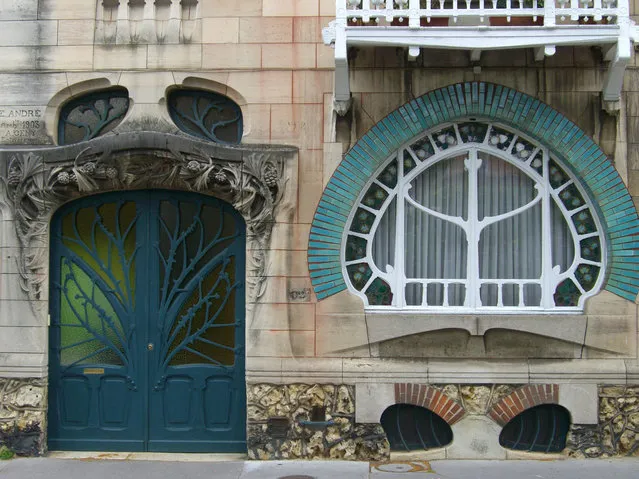
This house was designed by the architect Emile André (1871-1933) from Nancy, France. Some of his work still visible in Nancy includes the Huot House built in 1903.
Details
24 Jun 2012 03:01:00
Refuge Gervasutti

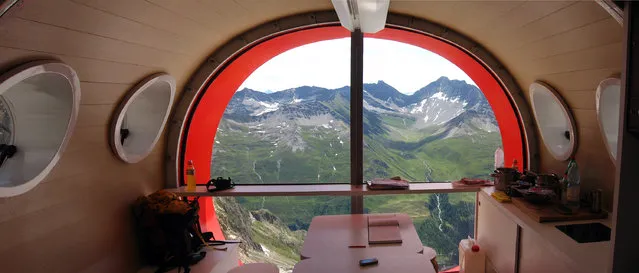
New Refuge Gervasutti, the survival unit was designed by Italian architects LEAPfactory, who specialise in modular accommodation for extreme environments.’ This is a solar powered tubular mountain cabin installed on Mt.Blanc with the use of helicopters.
Details
28 Oct 2012 09:03:00
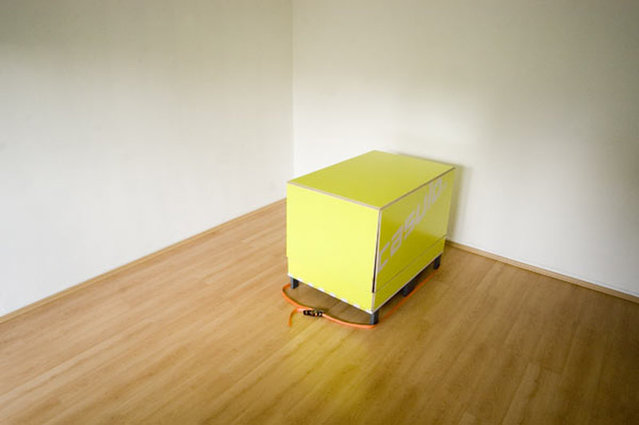
Casulo Room in a Pallet

Casulo, a new concept for mobile living originated in June 2007 as a part of the dissertation of Marcel Krings and Sebastian Mühlhäuser at the Köln International School of Design in Cologne and is patent-protected (Gebrauchsmuster).
Details
07 Nov 2012 14:29:00
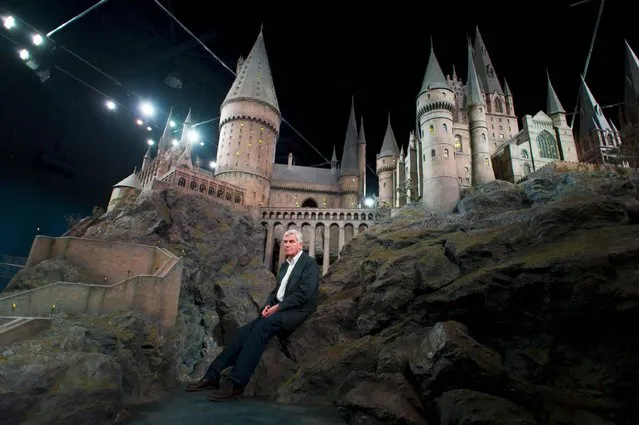
Model of Hogwarts Castle

Production Designer Stuart Craig was on hand today at Warner Bros. Studio Tour London - The Making of Harry Potter to reveal one of the best kept secrets of the tour: the incredibly detailed model of Hogwarts castle used in the films.
Details
23 Nov 2012 14:45:00


The Oshkosh M-ATV – MRAP (Mine Resistant Ambush Protected) vehicle developed by the Oshkosh Corporation of Oshkosh, Wisconsin. It is designed to provide the same levels of protection as the larger and heavier previous MRAPs but with improved mobility and it is intended to replace M1114 HMMWVs. (wikipedia) (Photo by Alex Wong/Getty Images)
Details
22 Nov 2011 04:03:00
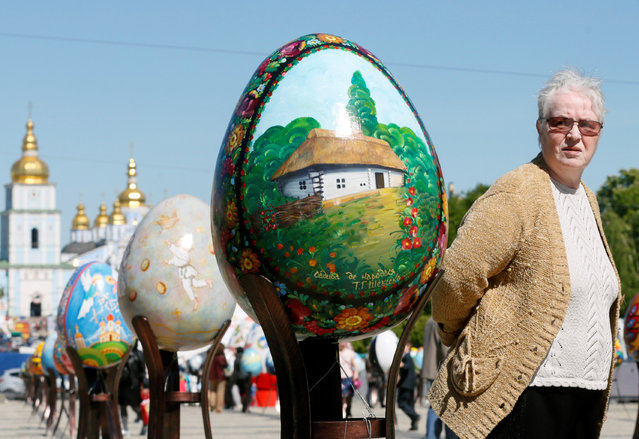
A woman looks at traditional Ukrainian Easter eggs “Pysanka”, installed as part of the upcoming celebrations of Easter, in central Kiev, Ukraine, April 29, 2016. A pysanka is a Ukrainian Easter egg, decorated with traditional Ukrainian folk designs using a wax-resist (batik) method. The word pysanka comes from the verb pysaty, “to write”, as the designs are not painted on, but written with beeswax. Many other eastern European ethnic groups decorate eggs using wax resist for Easter. These include the Belarusians, Bulgarians, Croats, Czechs, Hungarians, Lithuanians, Poles, Romanians, Serbs, Slovaks, Slovenes and Sorbs. (Photo by Valentyn Ogirenko/Reuters)

A woman looks at traditional Ukrainian Easter eggs “Pysanka”, installed as part of the upcoming celebrations of Easter, in central Kiev, Ukraine, April 29, 2016. A pysanka is a Ukrainian Easter egg, decorated with traditional Ukrainian folk designs using a wax-resist (batik) method. The word pysanka comes from the verb pysaty, “to write”, as the designs are not painted on, but written with beeswax. Many other eastern European ethnic groups decorate eggs using wax resist for Easter. These include the Belarusians, Bulgarians, Croats, Czechs, Hungarians, Lithuanians, Poles, Romanians, Serbs, Slovaks, Slovenes and Sorbs. (Photo by Valentyn Ogirenko/Reuters)
Details
30 Apr 2016 09:00:00
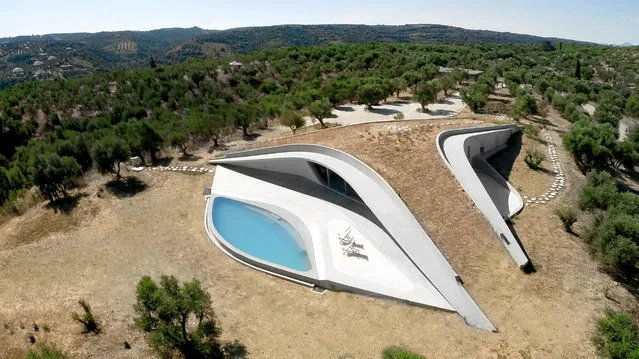
Summer House by LASSA In Greek

The 150-square-metre Villa Ypsilon was designed by London- and Brussels-based firm LASSA, which is headed up by architects Theo Sarantoglou Lalis and Dora Sweijd.
Details
01 Jun 2017 09:55:00
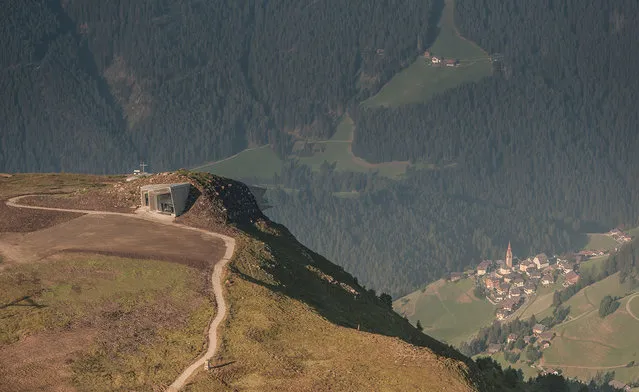
Museum In the Dolomites By Zaha Hadid

The Messner Mountain Museum (MMM) Corones, designed by the renowned Iraqi-British architect Zaha Hadid, is the final instalment in a series of six mountain-top museums curated by Reinhold Messner, the Italian mountaineer known for making the first ascent of Mount Everest without supplemental oxygen.
Details
04 Aug 2015 09:18:00