Women take a photo in the late afternoon sun during the Coachella Valley Music and Arts Festival on April 17, 2017 in Indio, California. (Photo by Carlo Allegri/Reuters)
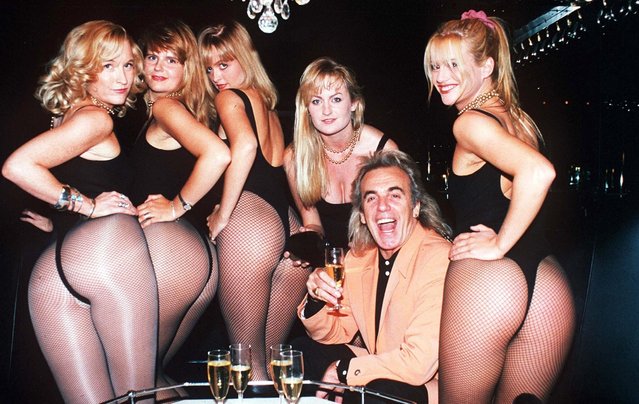
Peter Stringfellow, 1994. He was an English businessman and nightclub owner. Stringfellow started in the nighttime trade in the early 1960s and recalled booking acts including The Beatles, The Kinks and Jimi Hendrix to play at his clubs. Peter Stringfellow has died aged 77 on June 7, 2018. (Photo by Rex Features/Shutterstock)
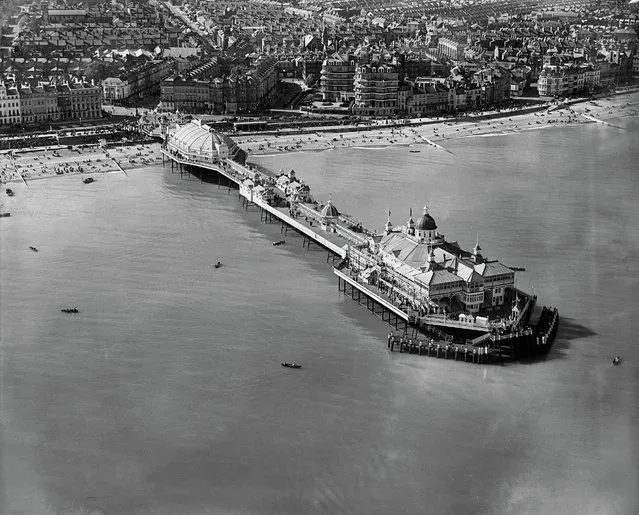
While the lido was described as bringing “modernism to the masses” on the British coast it was just the latest example of a trend that had been developing since Victorian times – transforming seaside towns into resorts for leisure and entertainment. In the latter half of the nineteenth century, the fashion was for local authorities to build great piers stretching from the promenade out into the sea. The Eastbourne Pier, pictured here in May 1931, was erected between 1866 and 1870 to an ingenious design by Eugenius Birch, which saw the structure sitting on special cups allowing the supporting struts to “move” in bad weather. Arranged on the pier's 1,000-foot length were kiosks, a theatre, a ballroom and a camera obscura. 1931. (Photo by Aerofilms Collection via “A History of Britain From Above”)
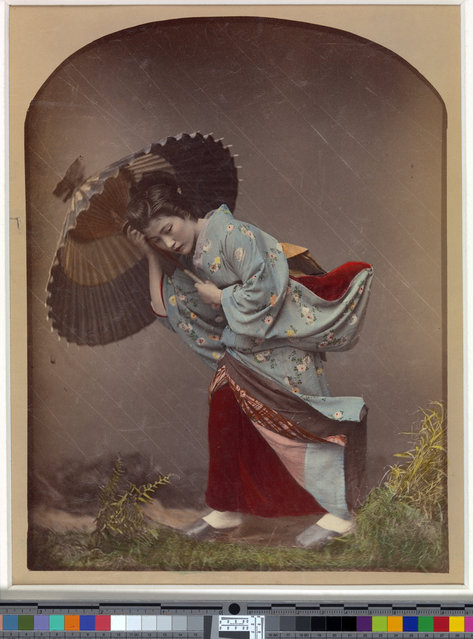
“Woman with Umbrella in Rain” by Raimund von Stillfried. Artist: Kusakabe Kimbei (Japanese, 1841–1934), 1870s. Commercial photography studios in Meiji-era Japan were renowned for the subtlety and refinement of their coloring techniques. This hand-tinted image of a young woman caught in a heavy rainstorm achieved its naturalistic effect by knitting together multiple strands of artifice: the greenery in the foreground was a studio prop; the flaps of the kimono were suspended by thin wires to create the impression of a strong wind; and long, diagonal marks were made on the negative to suggest streaks of rain. (Photo courtesy of The Metropolitan Museum of Art)
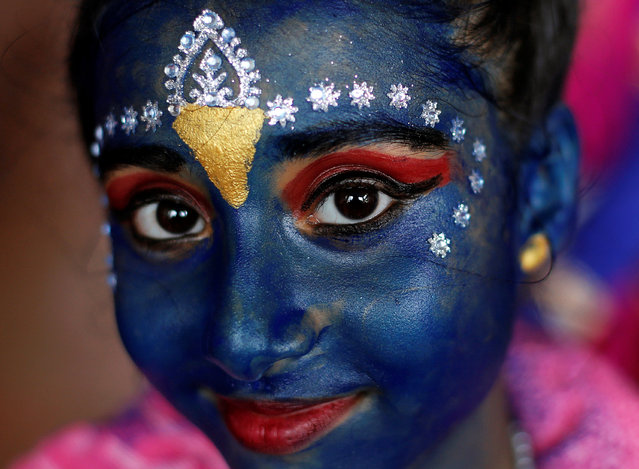
A student participates in celebrations ahead of the Janmashtami festival, which marks the birth anniversary of Lord Krishna in Mumbai, India, August 23, 2016. (Photo by Danish Siddiqui/Reuters)
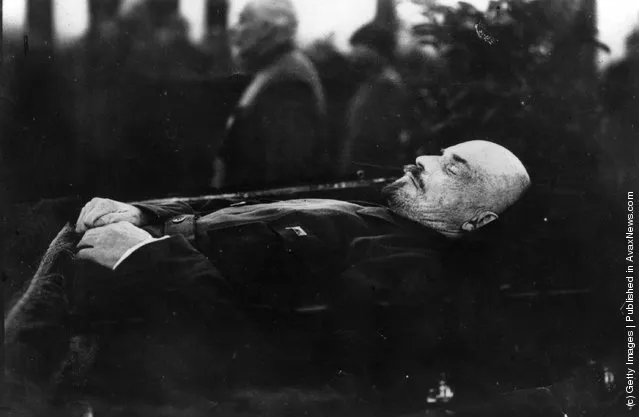
Photo: Vladimir Ilyich Lenin (1870 – 1924) lying in state in the Kremlin. (Photo by Hulton Archive/Getty Images). 1924
Important! For the same article in Russian language click here.
Something quite intriguing is happening within Russian-speaking internet during the last few – should you type a fully academic inquiry (at least, according to Russian academic requirements) in national search engines for "Lenin's mausoleum" – the first thing you get (even in top 10 searches) is website pages talking about black magic and occult. Website authors view this construction differently, but unconditionally agree on one thing: the mausoleum of the "leader of the world proletariat” – the essence of a magical artifact, a sort of “energy vampire”. It was built with a certain purpose: to drain the energy out of miserable Soviet citizens on one hand; and to poison the anthroposphere of one-sixth part of the earth with its vibes (the exact territory that was occupied by the former Soviet Union), depriving the Russian people of will to resist on the other hand. Complete nonsense? No doubt. Nevertheless, an intriguing one. Well, probably because some oddities do exist in mausoleum's history. These oddities are the thing we are going to discuss this time. First, let me refresh you memory on the subject.
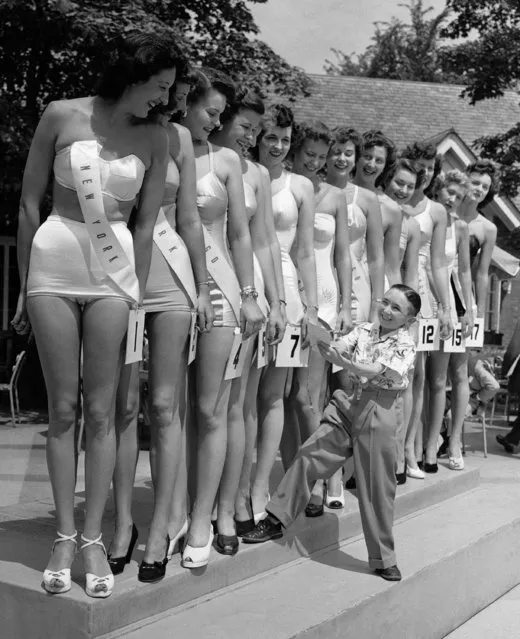
At a beauty contest to select the nation's Queen of Height during the first national convention of Tall People's Clubs in New York on July 29, 1949, little Charlie Young, only three feet, eleven inches tall, acting as judge, had a tough time making up his mind for the choice. The national minimum height requirement for women members is 5 feet 10 inches, and for men, 6 feet. (Photo by Robert Kradin/AP Photo)
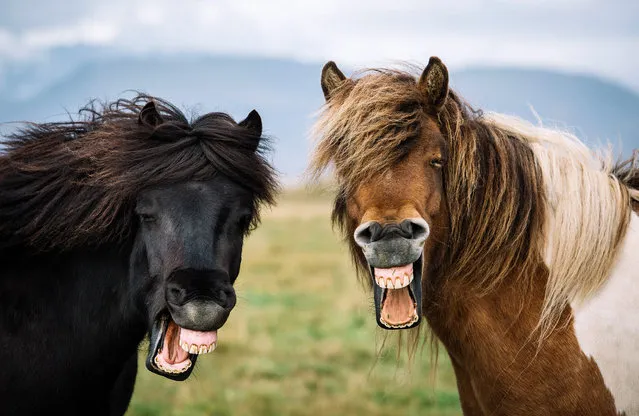
Two horses appear to burst into laughter before a sweet embrace. The horses both turn their head to look at the camera and flash their teeth, treating the lucky photographer to a rare shot. Moments later the pair show their affectionate side by coming together and “hugging”. Photographer Nir Amos, 34, said he was “amazed” to capture the horses “laughing” in a field near Skógar, in the south east of Iceland on July 31, 2018. (Photo by Nir Amos/Solent News & Photo Agency)