Secondary school graduates play in a fountain as they celebrate the last day of school, traditionally called the “last bell” in central Kiev, Ukraine on May 31, 2019. (Photo by Valentyn Ogirenko/Reuters)
People help a wounded man following an Israel airstrike in central Tehran, Iran, 15 June 2025. Israel and Iran have been exchanging fire since Israel attacked Iran on 13 June 2025 as part of operation “Rising Lion”. (Photo by Majid Khahi/EPA/EFE)
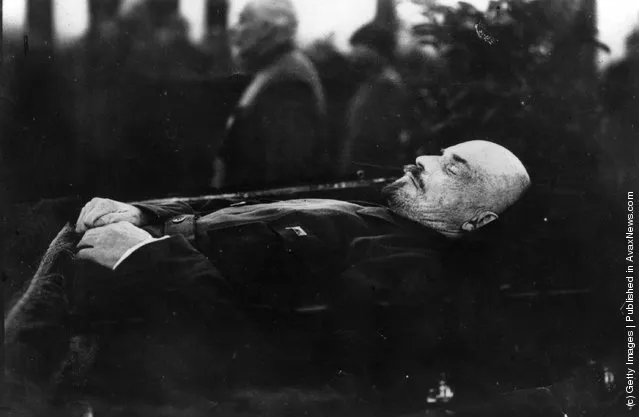
Photo: Vladimir Ilyich Lenin (1870 – 1924) lying in state in the Kremlin. (Photo by Hulton Archive/Getty Images). 1924
Important! For the same article in Russian language click here.
Something quite intriguing is happening within Russian-speaking internet during the last few – should you type a fully academic inquiry (at least, according to Russian academic requirements) in national search engines for "Lenin's mausoleum" – the first thing you get (even in top 10 searches) is website pages talking about black magic and occult. Website authors view this construction differently, but unconditionally agree on one thing: the mausoleum of the "leader of the world proletariat” – the essence of a magical artifact, a sort of “energy vampire”. It was built with a certain purpose: to drain the energy out of miserable Soviet citizens on one hand; and to poison the anthroposphere of one-sixth part of the earth with its vibes (the exact territory that was occupied by the former Soviet Union), depriving the Russian people of will to resist on the other hand. Complete nonsense? No doubt. Nevertheless, an intriguing one. Well, probably because some oddities do exist in mausoleum's history. These oddities are the thing we are going to discuss this time. First, let me refresh you memory on the subject.
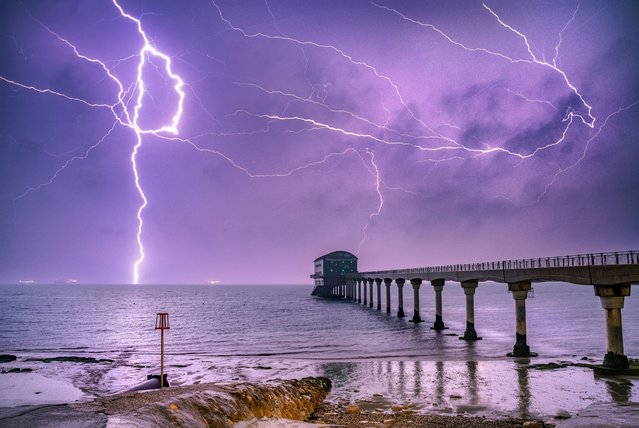
Dramatic weather ahead the bank holiday weekend last night on the Isle of Wight Lightning over Bembridge Lifeboat Station on the Isle of Wight last night, May 2, 2024. (Photo by Jamie Russell/IslandVisions/Bournemouth News)
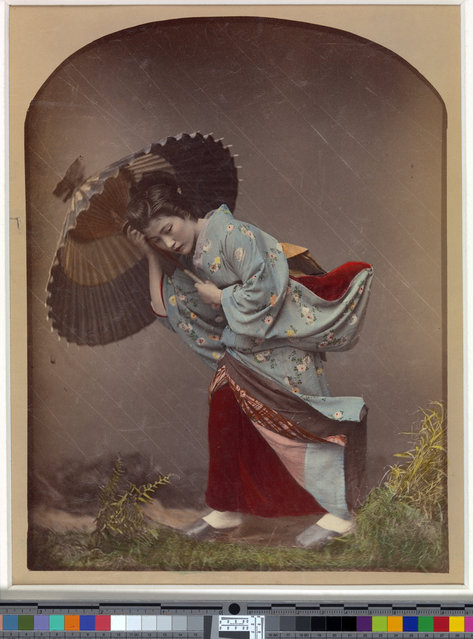
“Woman with Umbrella in Rain” by Raimund von Stillfried. Artist: Kusakabe Kimbei (Japanese, 1841–1934), 1870s. Commercial photography studios in Meiji-era Japan were renowned for the subtlety and refinement of their coloring techniques. This hand-tinted image of a young woman caught in a heavy rainstorm achieved its naturalistic effect by knitting together multiple strands of artifice: the greenery in the foreground was a studio prop; the flaps of the kimono were suspended by thin wires to create the impression of a strong wind; and long, diagonal marks were made on the negative to suggest streaks of rain. (Photo courtesy of The Metropolitan Museum of Art)
Militants loyal to Yemen's exiled government ride on the back of a pick-up truck in the country's central city of Taiz August 19, 2015. Militia forces loyal to Yemen's exiled government fought their way deep into the central city of Taiz this week, local officials said, largely pushing out Houthi militiamen from the country's third largest city. (Photo by Reuters/Stringer)
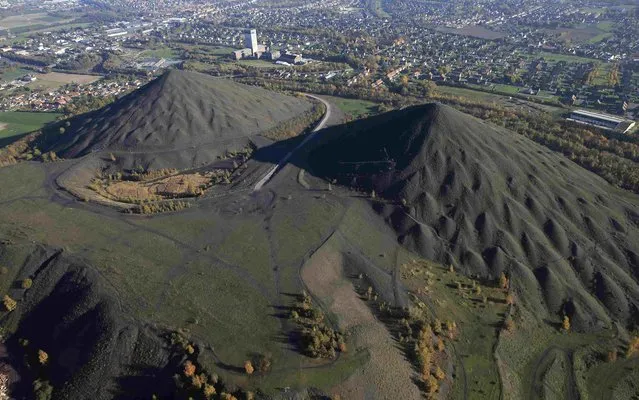
An aerial view shows the 11/19 pit and twin slag heaps at the former coal mine site in Loos-en-Gohelle, northern France, November 1, 2015. Loos-en-Gohelle, a town of 7000 inhabitants in the North of France, marked by the closure of coal mines in 1970, has demonstrated a successful transition from coal to a green economy. (Photo by Pascal Rossignol/Reuters)