Loading...
Done
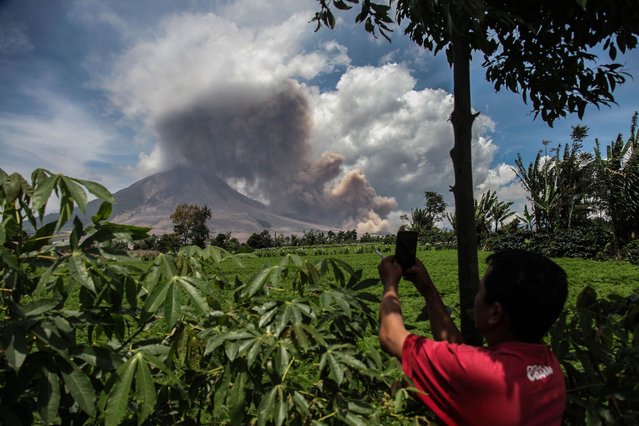
Mount Sinabung continues to spew thick smoke into the air in Karo, North Sumatra on October 30, 2020. (Photo by Albert Ivan Damanik/Anadolu Agency via Getty Images)

Mount Sinabung continues to spew thick smoke into the air in Karo, North Sumatra on October 30, 2020. (Photo by Albert Ivan Damanik/Anadolu Agency via Getty Images)
Details
12 Nov 2020 00:05:00
A child poses for a photo inside a life-sized doll box after watching the “Barbie” film at the SM North Edsa in Quezon City on July 19, 2023. (Photo by Jam Sta Rosa/AFP Photo)

A child poses for a photo inside a life-sized doll box after watching the “Barbie” film at the SM North Edsa in Quezon City on July 19, 2023. (Photo by Jam Sta Rosa/AFP Photo)
Details
03 Aug 2023 03:53:00
Woman enjoying the sun on one of Maui's black sand beaches, Hawaii, United States of America, North America on February 25, 2022. (Photo by Laura Grier/Robert Harding RF via AFP Photo)

Woman enjoying the sun on one of Maui's black sand beaches, Hawaii, United States of America, North America on February 25, 2022. (Photo by Laura Grier/Robert Harding RF via AFP Photo)
Details
11 Aug 2023 05:06:00
A hand-painted sign encouraging citizens to vote, sits with Halloween decorations in the front yard of a home in Chapel Hill, North Carolina, U.S. October 20, 2024. (Photo by Jonathan Drake/Reuters)

A hand-painted sign encouraging citizens to vote, sits with Halloween decorations in the front yard of a home in Chapel Hill, North Carolina, U.S. October 20, 2024. (Photo by Jonathan Drake/Reuters)
Details
31 Oct 2024 03:26:00
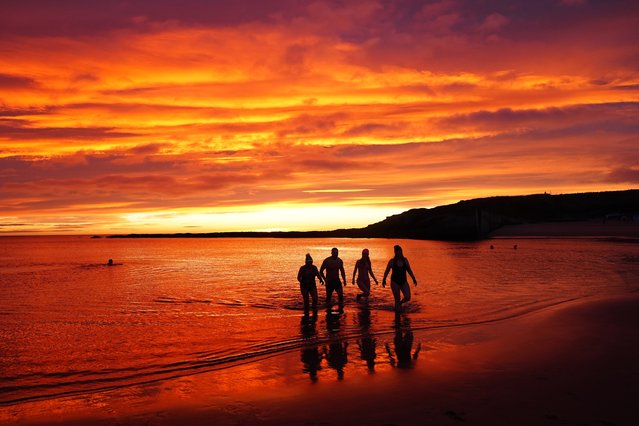
Early morning swimmers at Cullercoats Bay on the north east coast of England on Sunday, December 29, 2024. (Photo by Owen Humphreys/PA Images via Getty Images)

Early morning swimmers at Cullercoats Bay on the north east coast of England on Sunday, December 29, 2024. (Photo by Owen Humphreys/PA Images via Getty Images)
Details
22 Jan 2025 01:02:00
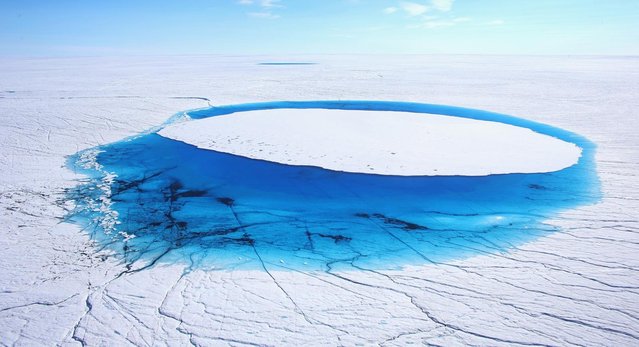
Water is seen on part of the glacial ice sheet that covers about 80 percent of the country is seen on July 17, 2013 on the Glacial Ice Sheet, Greenland. (Photo by Joe Raedle/Getty Images via The Atlantic)

Water is seen on part of the glacial ice sheet that covers about 80 percent of the country is seen on July 17, 2013 on the Glacial Ice Sheet, Greenland. As the sea levels around the globe rise, researchers affilitated with the National Science Foundation and other organizations are studying the phenomena of the melting glaciers and its long-term ramifications. The warmer temperatures that have had an effect on the glaciers in Greenland also have altered the ways in which the local populace farm, fish, hunt and even travel across land. In recent years, sea level rise in places such as Miami Beach has led to increased street flooding and prompted leaders such as New York City Mayor Michael Bloomberg to propose a $19.5 billion plan to boost the citys capacity to withstand future extreme weather events by, among other things, devising mechanisms to withstand flooding. (Photo by Joe Raedle)
Details
02 Aug 2013 10:51:00


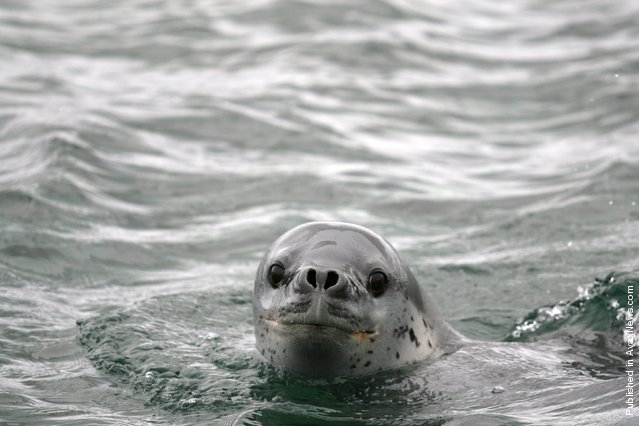
“The leopard seal (Hydrurga leptonyx), also referred to as the sea leopard, is the second largest species of seal in the Antarctic (after the southern elephant seal). It is most common in the southern hemisphere along the coast of Antarctica and on most sub-Antarctic islands, but can also be found on the coasts of southern Australia, Tasmania, South Africa, New Zealand, Lord Howe Island, Tierra del Fuego, the Cook Islands, and the Atlantic coast of South America. It can live twenty-six years, possibly more. Orcas and large sharks are the only natural predators of leopard seals”. – Wikipedia

Photo by: Gilad Rom; Source: Flickr
Details
13 Nov 2011 11:24:00
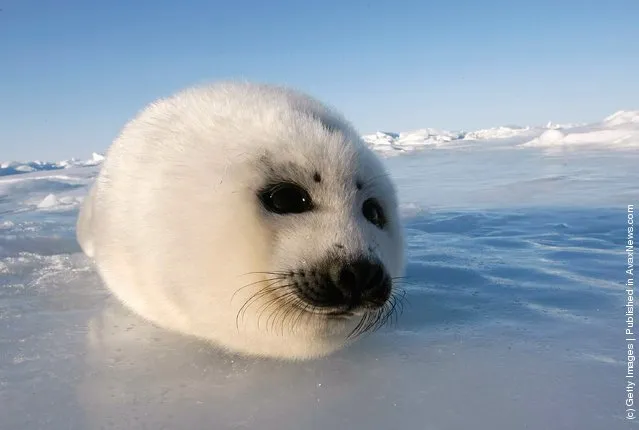
A harp seal pup

“The harp seal or saddleback seal is a species of earless seal native to the northernmost Atlantic Ocean and adjacent parts of the Arctic Ocean. Newborn pups weigh around 11 kilograms (24 lb) and are 80–85 centimetres (31–33 in) long. After birth, the mother only feeds that pup. During the 12 day nursing period, the mother does not eat, losing up to 3 kilograms (7 lb) per day. Harp seal milk contains up to 48% fat, so pups gain over 2.2 kilograms (4.9 lb) per day. During this time, the juvenile's “greycoat” grows in beneath the white neonatal coat, and it weighs 80 pounds (36 kg)”. – Wikipedia

Photo: A harp seal pup lies on an ice floe in the Gulf of Saint Lawrence March 24, 2008 in Charlottetown, Canada. (Photo by Joe Raedle/Getty Images)
Details
19 Sep 2011 15:49:00