Loading...
Done
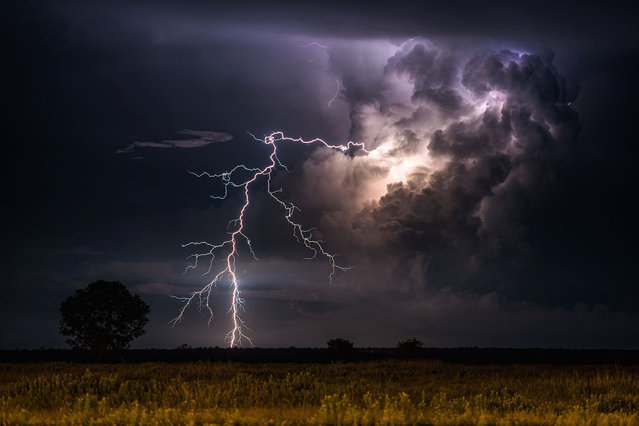
An incredible clear-air lightning display from storms to the east of Noonamah, just outside Darwin on April 6, 2015. (Photo by Jacci Ingham/The Guardian)

An incredible clear-air lightning display from storms to the east of Noonamah, just outside Darwin on April 6, 2015. (Photo by Jacci Ingham/The Guardian)
Details
12 Jun 2017 09:16:00
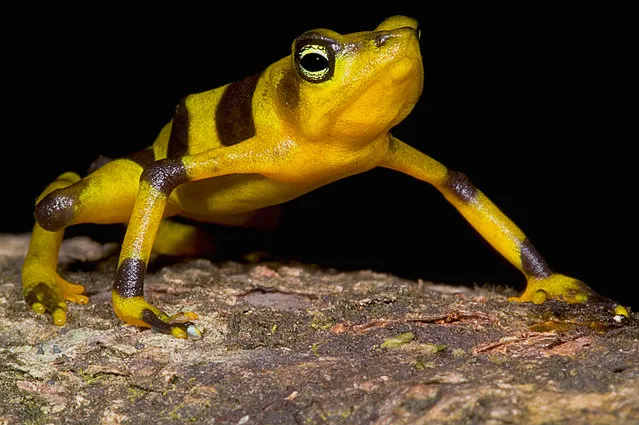
The golden harlequin toad has vanished from the wild, and only a small number live on in captivity. A fungus caused them, and many other amphibians, to die out in their home in Central America. (Photo by Danté Fenolio/The Guardian/Johns Hopkins University Press)

Wildlife photographer Danté Fenolio has headed into areas untouched by sunlight – deep seas, caves and underground – and found creatures that are exploding with colour. Here: The golden harlequin toad has vanished from the wild, and only a small number live on in captivity. A fungus caused them, and many other amphibians, to die out in their home in Central America. (Photo by Danté Fenolio/The Guardian/Johns Hopkins University Press)
Details
20 Jun 2016 12:19:00
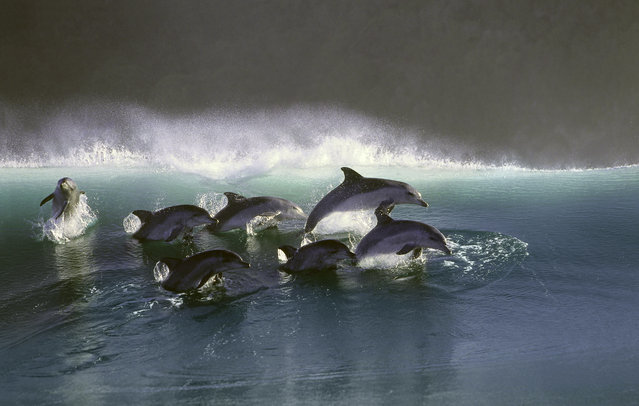
Pod of dolphins surf effortlessly through the waves in the wild traveling at speeds up to 20 mph

Pod of dolphins surf effortlessly through the waves in the wild traveling at speeds up to 20 mph. (Photo by Greg Huglin)
Details
01 May 2012 11:43:00
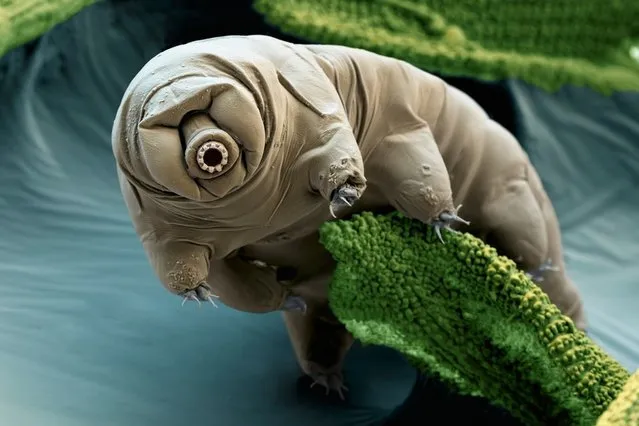
Tardigrades (commonly known as waterbears or moss piglets). (Photo by SPL/East News)

“Tardigrades (commonly known as waterbears or moss piglets) are small, water-dwelling, segmented animals with eight legs. Tardigrades were first discovered in 1773 by Johann August Ephraim Goeze, who called them kleiner Wasserbär, meaning “little water bear” in German. The name Tardigrada means “slow walker” and was given by Lazzaro Spallanzani in 1777. The name water bear comes from the way they walk, reminiscent of a bear's gait. The biggest adults may reach a body length of 1.5 millimetres (0.059 in), the smallest below 0.1 mm. Freshly hatched tardigrades may be smaller than 0.05 mm”. – Wikipedia. Photo: Tardigrades. (Photo by SPL/East News)
Details
26 Sep 2012 09:55:00
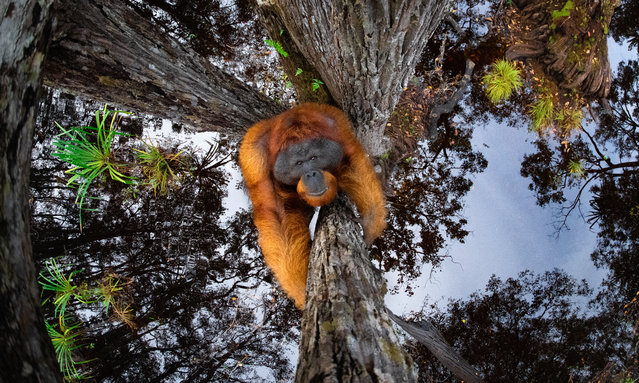
Bornean orangutan (Pongo pygmaeus). Tanjung Puting National Park, Borneo – winner of the gold and grand prizes in the 2020 world nature photography awards. (Photo by Thomas Vijayan/World Nature Photography Awards)

Bornean orangutan (Pongo pygmaeus). Tanjung Puting National Park, Borneo – winner of the gold and grand prizes in the 2020 world nature photography awards. (Photo by Thomas Vijayan/World Nature Photography Awards)
Details
18 Mar 2021 09:28:00
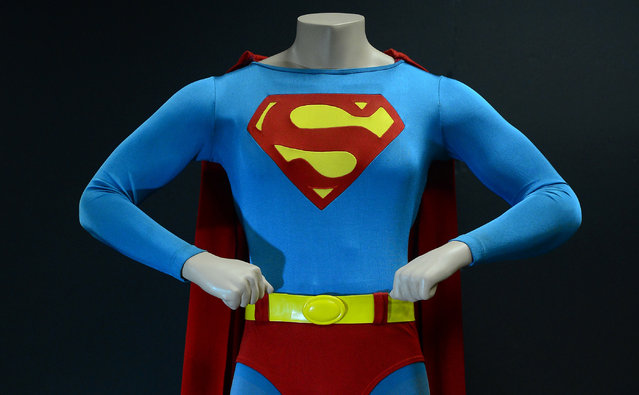
#1: Superman. According to McAfee, 16.50% of Web searches for Superman led to sites with viruses and other malicious software. Pictured here: The Superman costume that was worn by Christopher Reeve in “Superman: The Movie” on display at Profiles In History in Calabasas, northwest of downtown Los Angeles, on July 19, 2012 in California. (Photo by Frederic J. Brown/AFP Photo)

#1: Superman. According to McAfee, 16.50% of Web searches for Superman led to sites with viruses and other malicious software. Pictured here: The Superman costume that was worn by Christopher Reeve in “Superman: The Movie” on display at Profiles In History in Calabasas, northwest of downtown Los Angeles, on July 19, 2012 in California. (Photo by Frederic J. Brown/AFP Photo)
Details
16 Jul 2014 14:04:00
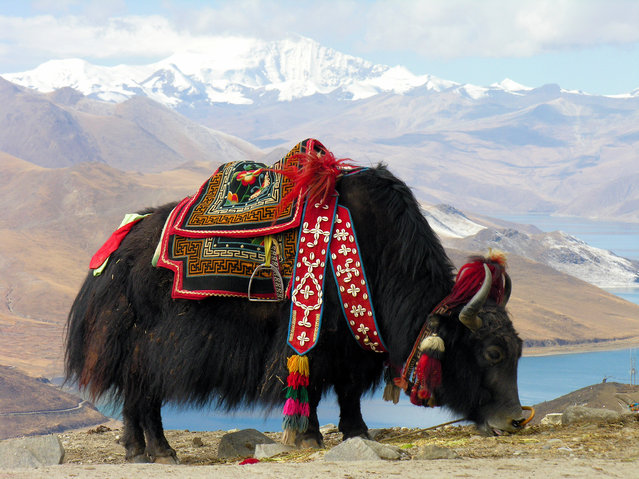
Yak near Yamdrok lake, Tibet. It is a long-haired bovinae found throughout the Himalayan region of south Central Asia, the Tibetan Plateau and as far north as Mongolia and Russia. The Tibetan economy is dominated by subsistence agriculture. Due to limited arable land, the primary occupation of the Tibetan Plateau is raising livestock, such as sheep, cattle, goats, camels, yaks, dzo, and horses. The Tibetan yak is an integral part of Tibetan life. (Photo by Dennis Jarvis)

Yak near Yamdrok lake, Tibet. It is a long-haired bovinae found throughout the Himalayan region of south Central Asia, the Tibetan Plateau and as far north as Mongolia and Russia. The Tibetan economy is dominated by subsistence agriculture. Due to limited arable land, the primary occupation of the Tibetan Plateau is raising livestock, such as sheep, cattle, goats, camels, yaks, dzo, and horses. The Tibetan yak is an integral part of Tibetan life. (Photo by Dennis Jarvis)
Details
10 Jun 2015 10:48:00
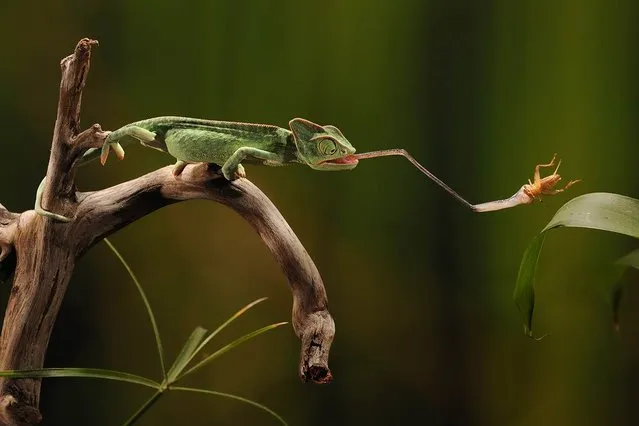
A veiled chameleon extends its tongue to catch a cricket

“Scott Linstead is an internationally published, freelance wildlife photographer/writer. His clients include Natural History Magazine, Hewlett Packard, Ranger Rick Magazine and a number of wildlife publications in North America and Europe. Scott's column on the techniques of bird photography appears in every issue of Outdoor Photography Canada”.

Photo: A veiled chameleon extends its tongue to catch a cricket. Canadian wildlife photographer Scott Linstead, formerly an aerospace engineer and high school teacher, uses a device called Phototrap “to not only photograph the elusive, but also the unimaginably quick”. (Photo by Scott Linstead)
Details
22 May 2012 11:32:00