Loading...
Done
McMurdo Station Antarctic

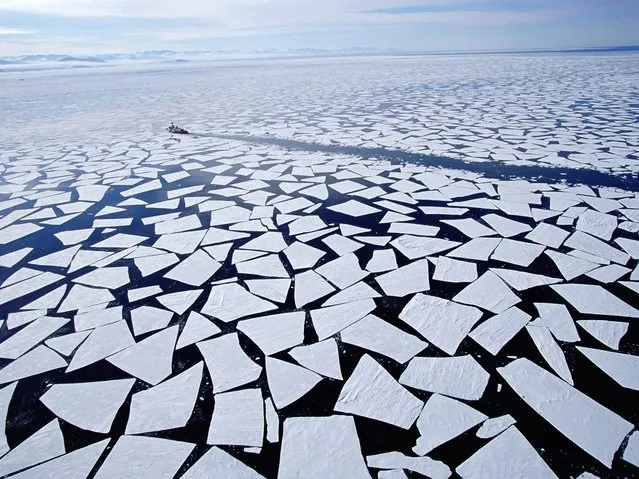
McMurdo Station is a U.S. Antarctic research centre located on the southern tip of Ross Island, which is in the New Zealand-claimed Ross Dependency on the shore of McMurdo Sound in Antarctica. It is operated by the United States through the United States Antarctic Program, a branch of the National Science Foundation. The station is the largest community in Antarctica, capable of supporting up to 1,258 residents, and serves as the United States Antarctic science facility. All personnel and cargo going to or coming from Amundsen–Scott South Pole Station first pass through McMurdo.
Details
05 Sep 2013 10:18:00
Actress Penelope Cruz attends a photocall promoting the film “Chromophobia” at the Palais during the 58th International Cannes Film Festival May 21, 2005 in Cannes, France. (Photo by M. J. Kim/Getty Images)

Actress Penelope Cruz attends a photocall promoting the film “Chromophobia” at the Palais during the 58th International Cannes Film Festival May 21, 2005 in Cannes, France. (Photo by M. J. Kim/Getty Images)
Details
15 Oct 2014 13:09:00
A woman is consoled by her relative as she mourns after seeing her house getting burned during a fire that broke out in one of the houses and got spread in more adjoining houses, in a residential locality in Srinagar, November 21, 2016. (Photo by Danish Ismail/Reuters)

A woman is consoled by her relative as she mourns after seeing her house getting burned during a fire that broke out in one of the houses and got spread in more adjoining houses, in a residential locality in Srinagar, November 21, 2016. (Photo by Danish Ismail/Reuters)
Details
22 Nov 2016 11:08:00
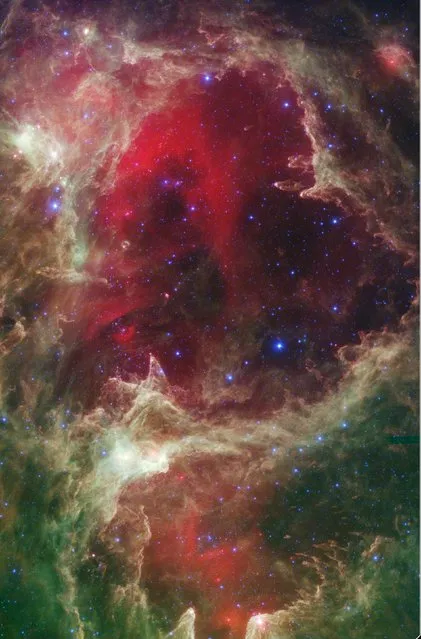
An infrared portrait from NASA's Spitzer Space Telescope which shows generations of stars is seen in this undated NASA handout image released February 14, 2013. In this wispy star-forming region, called W5, the oldest stars can be seen as blue dots in the centers of the two hollow cavities (other blue dots are background and foreground stars not associated with the region). Red shows heated dust that pervades the region's cavities, while green highlights dense clouds. (Photo by NASA/Reuters/JPL-Caltech/Harvard-Smithsonian/Handout)

An infrared portrait from NASA's Spitzer Space Telescope which shows generations of stars is seen in this undated NASA handout image released February 14, 2013. In this wispy star-forming region, called W5, the oldest stars can be seen as blue dots in the centers of the two hollow cavities (other blue dots are background and foreground stars not associated with the region). Red shows heated dust that pervades the region's cavities, while green highlights dense clouds. (Photo by NASA/Reuters/JPL-Caltech/Harvard-Smithsonian/Handout)
Details
03 Mar 2013 08:44:00
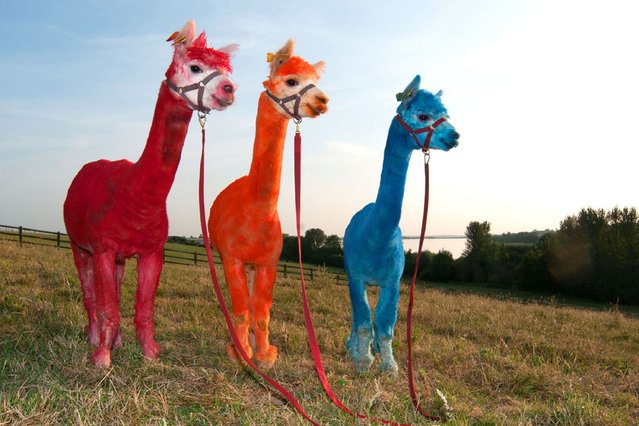
Three very colouful alpacas enjoy the hot weather at Toft Farm, Rugby, on July 19, 2013. (Photo by Caters News)

Three very colouful alpacas enjoy the hot weather at Toft Farm, Rugby, on July 19, 2013. (Photo by Caters News)
Details
20 Jul 2013 12:14:00
The double compound eyes of a male St. Mark's fly (Bibio marci), submitted by Dr. David Maitland from Feltwell, UK

The double compound eyes of a male St. Mark's fly (Bibio marci), submitted by Dr. David Maitland from Feltwell, UK. (Dr. David Maitland)
Details
07 Apr 2012 13:22:00
A Chinese woman wears a mask to protect from particles blown in during a sandstorm as she walks in the street on May 4, 2017 in Beijing, China. Sandstorms are common in northern China during the spring season and are caused when heavy winds from Mongolia in the north brings sand and pollutants that can blanket Chinese cities and cause air quality to deteriorate. (Photo by Kevin Frayer/Getty Images)

A Chinese woman wears a mask to protect from particles blown in during a sandstorm as she walks in the street on May 4, 2017 in Beijing, China. Sandstorms are common in northern China during the spring season and are caused when heavy winds from Mongolia in the north brings sand and pollutants that can blanket Chinese cities and cause air quality to deteriorate. (Photo by Kevin Frayer/Getty Images)
Details
12 May 2017 07:06:00
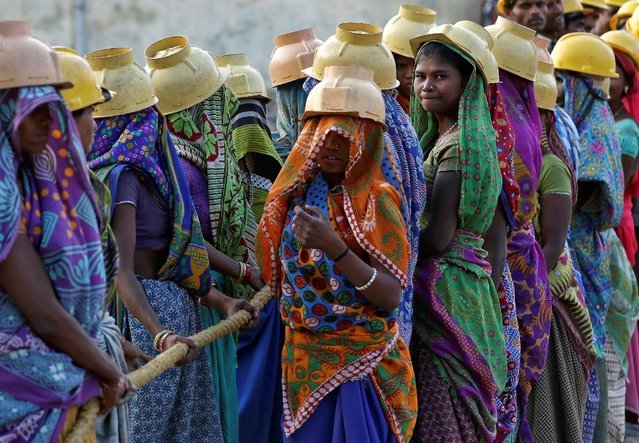
Female labourers wearing helmets take a break from laying underground electricity cables in Ahmedabad, India, March 7, 2016. (Photo by Amit Dave/Reuters)

Female labourers wearing helmets take a break from laying underground electricity cables in Ahmedabad, India, March 7, 2016. (Photo by Amit Dave/Reuters)
Details
01 Jun 2016 12:06:00