Loading...
Done
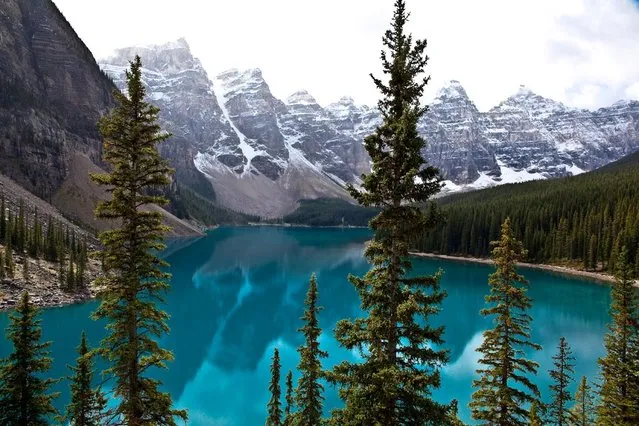
Moraine Lake Canada

Moraine Lake is a glacially-fed lake in Banff National Park, 14 kilometres (8.7 mi) outside the Village of Lake Louise, Alberta, Canada. It is situated in the Valley of the Ten Peaks, at an elevation of approximately 6,183 feet (1,885 m). The lake has a surface area of .5 square kilometres (0.19 sq mi). The lake, being glacially fed, does not reach its crest until mid to late June. When it is full, it reflects a distinct shade of blue. The colour is due to the refraction of light off the rock flour deposited in the lake on a continual basis.
Details
15 Oct 2013 11:56:00
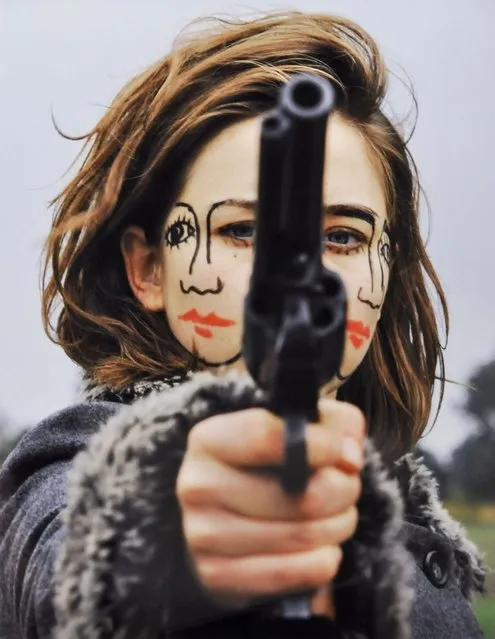
Portraits Of The Double-Faced Girl By Sebastian Bieniek

Berlin-based artist Sebastian Bieniek unfolds the story of a two-faced female in his series of photographs “doublefaced”. Using an eye pencil and lipstick, bieniek simply draws an image of a face onto the side of skin. The sketch includes only one eye: carefully placed hair hides the rest of the face from view, revealing one, moving eye of the model. Blue, brown, awake, and sleeping variations create portraits with unique expressions and an illustrative sensibility. The 22 photographs of the hybrid girl expose her daily routine – drinking coffee, traveling on the train, taking a shower, and smoking cigarettes – capturing the daily life of a female with two faces.
Details
05 Jul 2015 08:07:00
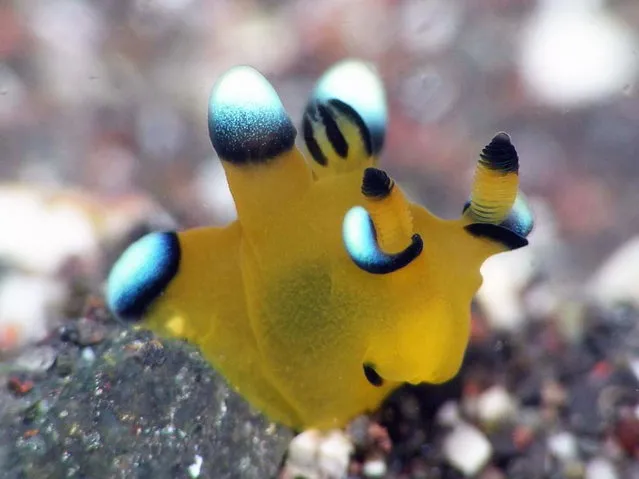
Thecacera Pacifica AKA Pikachu

If you ever wanted to meet a live Pikachu, you might have a hard time finding one. However, there is a creature on this Earth that kind of looks like one. That creature’s name is Thecacera pacifica and it is a species of a sea slug. These little critters can be found in the Indian Ocean from African coast to Indonesia and Vanuatu. Their vibrant orange and blue colors look gorgeous, making it look like some sort of anemone. Also, as you might have guessed from the striking colors of the sea slug, just like most of anemones, this creature is very toxic. Thus, keeping it as a pet isn’t an option.

Details
19 Dec 2014 12:51:00
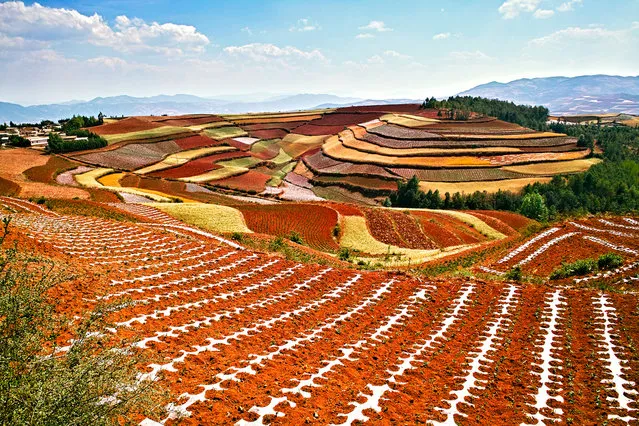
Dongchuan Red Lands, China

Dongchuan is a rural place located in the area of Wumeng Mountains. This place became one of the most favored destination spots for Chinese photographers all because of its red soil. The Wumeng’s scenery was first discovered in mid-90s. The first photographers who came here shot some award-winning photos, which made them keep the location of this place a secret. With time, however, more people found out about this place, making them want to visit these arid mountains. The contrasting red soil, yellow buckwheat, and brilliant blue skies make this place a paradise for photographers.
Details
29 Jan 2015 10:59:00
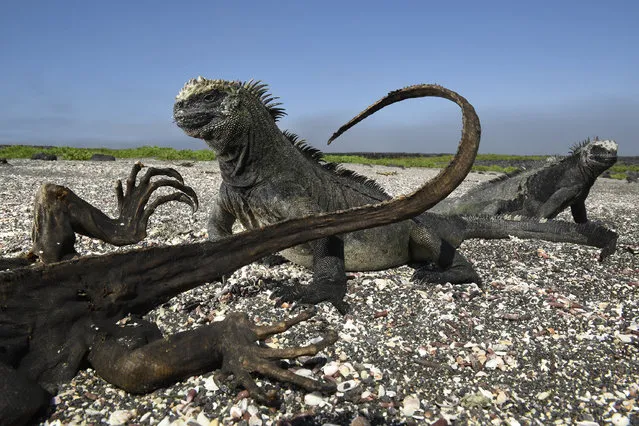
Galapagos – Rocking the Cradle: Four major ocean currents converge along the Galapagos archipelago, creating the conditions for an extraordinary diversity of animal life, April 25, 2016. The islands are home to at least 7,000 flora and fauna species, of which 97 percent of the reptiles, 80 percent of the land birds, 50 percent of the insects and 30 percent of the plants are endemic. The local ecosystem is highly sensitive to the changes in temperature, rainfall and ocean currents that characterize the climatic events known as El Niño and La Niña. These changes cause marked fluctuations in weather and food availability. Many scientists expect the frequency of El Niño and La Niña to increase as a result of climate change, making the Galapagos a possible early-warning location for its effects. (Photo by Thomas P. Peschak for National Geographic/World Press Photo)

Galapagos – Rocking the Cradle: Four major ocean currents converge along the Galapagos archipelago, creating the conditions for an extraordinary diversity of animal life, April 25, 2016. The islands are home to at least 7,000 flora and fauna species, of which 97 percent of the reptiles, 80 percent of the land birds, 50 percent of the insects and 30 percent of the plants are endemic. (Photo by Thomas P. Peschak for National Geographic/World Press Photo)
Details
16 Apr 2018 00:01:00
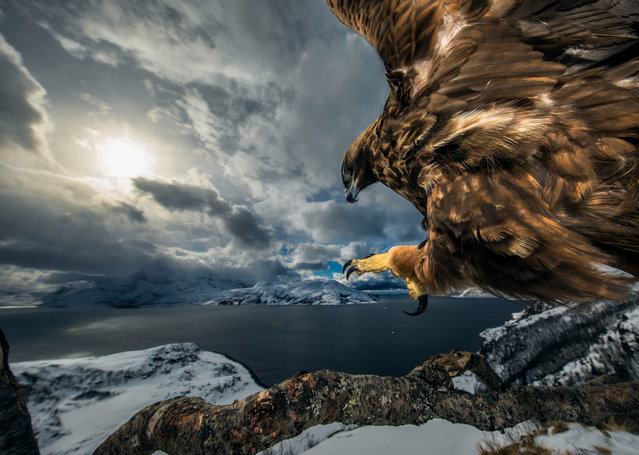
Birds behaviour winner: Land of the Eagle by Audun Rikardsen, Norway. High on a ledge, on the coast near his home in northern Norway, Rikardsen carefully positioned an old tree branch that he hoped would make a perfect golden eagle lookout. To this, he bolted a tripod head with a camera, flashes and motion sensor attached, and built himself a hide a short distance away. From time to time, he left road‑kill carrion nearby. Very gradually – over the next three years – a golden eagle got used to the camera and started to use the branch regularly to survey the coast below. (Photo by Audun Rikardsen/2019 Wildlife Photographer of the Year)

Birds behaviour winner: Land of the Eagle by Audun Rikardsen, Norway. High on a ledge, on the coast near his home in northern Norway, Rikardsen carefully positioned an old tree branch that he hoped would make a perfect golden eagle lookout. To this, he bolted a tripod head with a camera, flashes and motion sensor attached, and built himself a hide a short distance away. From time to time, he left road‑kill carrion nearby. Very gradually – over the next three years – a golden eagle got used to the camera and started to use the branch regularly to survey the coast below. (Photo by Audun Rikardsen/2019 Wildlife Photographer of the Year)
Details
17 Oct 2019 00:03:00
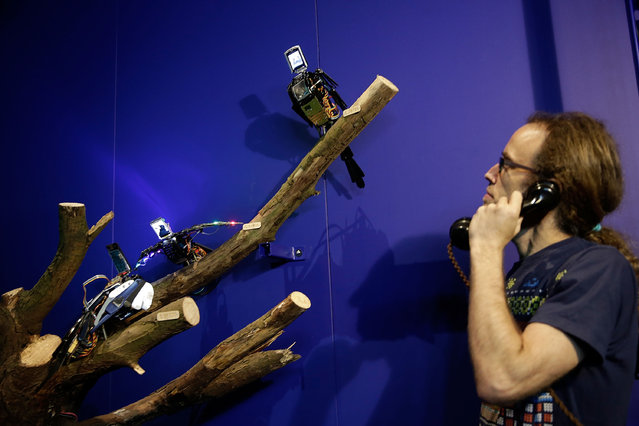
Unwanted phones recreated as interactive birds, part of "Escape III" by Anthony Goh and Neil Mendoza seen on display at the Barbican's Digital Revolution exhibition on July 2, 2014 in London, England. The exhibition brings together artists, designers, film makers, musicians and architects who push the boundaries of creativity that digitial technology can offer, and runs from July 3 until September 14, 2014.  (Photo by Matthew Lloyd/Getty Images for Barbican Art Gallery)

Unwanted phones recreated as interactive birds, part of “Escape III” by Anthony Goh and Neil Mendoza seen on display at the Barbican's Digital Revolution exhibition on July 2, 2014 in London, England. The exhibition brings together artists, designers, film makers, musicians and architects who push the boundaries of creativity that digitial technology can offer, and runs from July 3 until September 14, 2014. (Photo by Matthew Lloyd/Getty Images for Barbican Art Gallery)
Details
04 Jul 2014 10:18:00
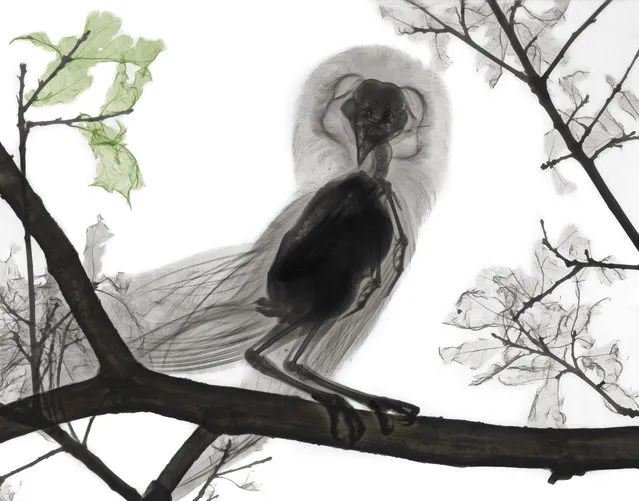
Coloured X-ray of a barn owl. A physicist has used X-ray to create an extraordinary collection of artwork. Arie van't Riets pictures reveal birds, fish, monkeys and flowers in an incredible new light. The 66-year-old, from Bathmen in the Netherlands, began X-raying flowers as a means to teach radiographers and physicians how the machine worked. But after adding a bit of colour to the pictures, the retired medical physicist realised the potential for an exciting new collection of art. (Photo by Arie van't Riet/Barcroft Media)

Coloured X-ray of a barn owl. A physicist has used X-ray to create an extraordinary collection of artwork. Arie van't Riets pictures reveal birds, fish, monkeys and flowers in an incredible new light. The 66-year-old, from Bathmen in the Netherlands, began X-raying flowers as a means to teach radiographers and physicians how the machine worked. But after adding a bit of colour to the pictures, the retired medical physicist realised the potential for an exciting new collection of art. (Photo by Arie van't Riet/Barcroft Media)
Details
08 Jul 2014 13:25:00