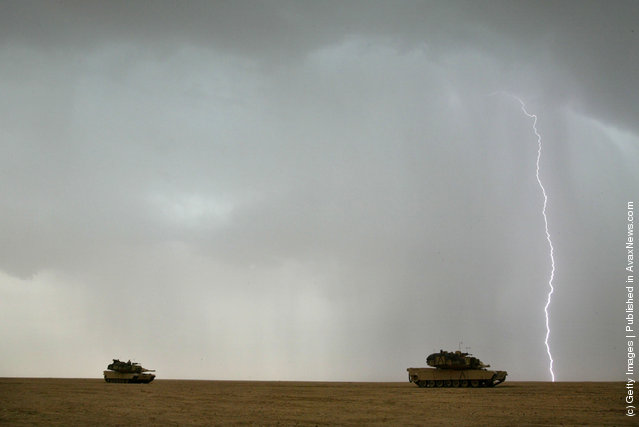
A lighting bolt flashes in the sky as U.S. Army M1A1 Abram tanks roll through the desert December 9, 2002 near the Iraqi border in Kuwait. (Photo by Joe Raedle/Getty Images)
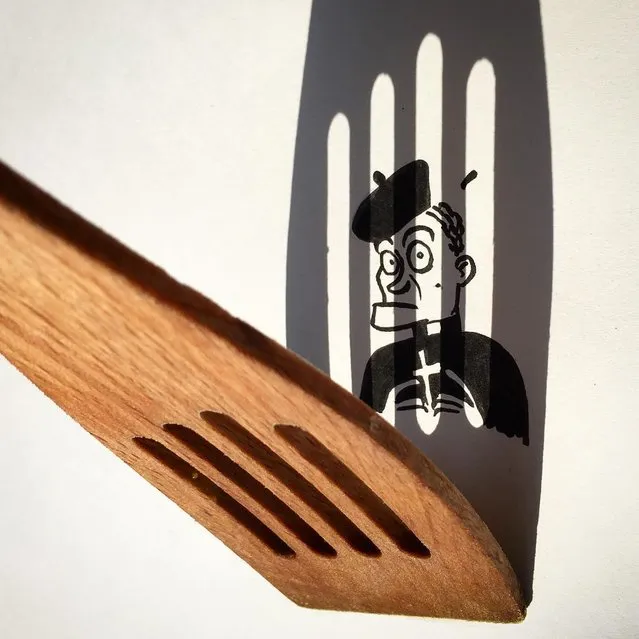
Prince Philip, the Duke of Edinburgh meets members of the cast of “Chicago” during a visit to the Adelphi Theatre in this March 4, 1999 file photo in London, England. (Photo by Anwar Hussein/Getty Images)
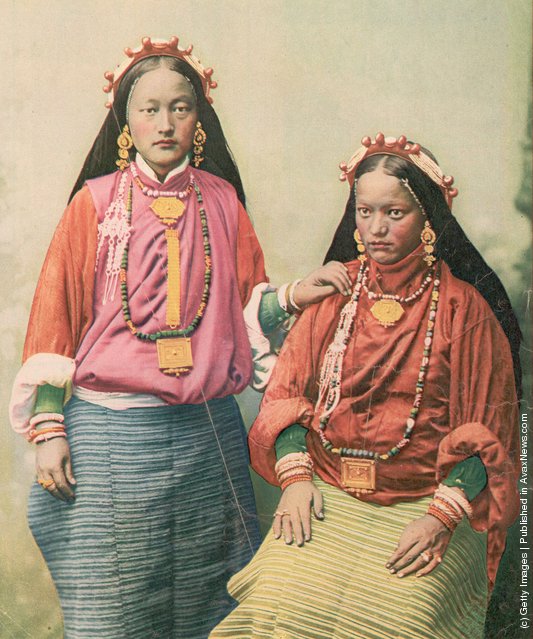
Two Tibetan women wearing traditional striped aprons, elaborate headdresses and abundant jewellery. Original Publication: From a photograph by Shephard. (Photo by Hulton Archive/Getty Images). Circa 1910
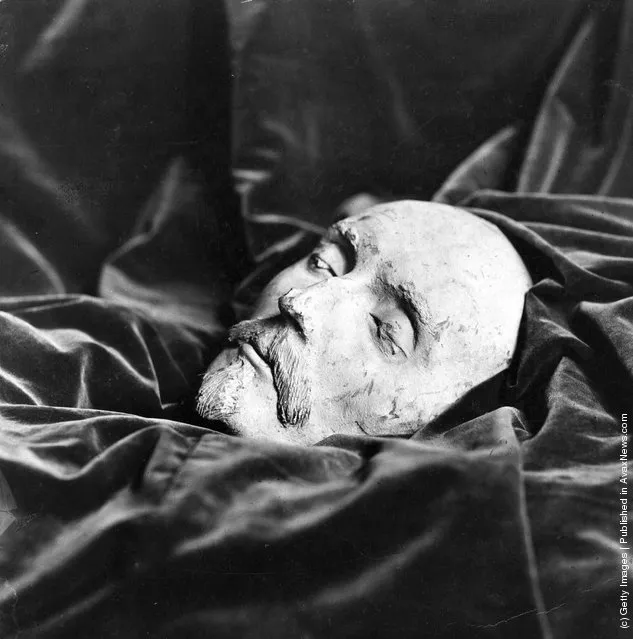
A death mask thought to be that of English dramatist William Shakespeare (1566–1616). Found by Dr. Ludwig Becker in Mainz in 1849, the mask was linked to Shakespeare because of its 1616 date and its supposed facial resemblance to the writer. A rival theory, however, maintains that the mask is more likely to be that of English poet Ben Johnson. (Photo by Hulton Archive/Getty Images). Circa 1900
Susan Lordi's art reflects our relationships with people and the world around us. Her keen observation of the human form is further inspired by dance, art history, nature, and personal experiences with family and friends. These influences are revealed in her Willow Tree® sculptures, from which emotion is communicated through gestures only.
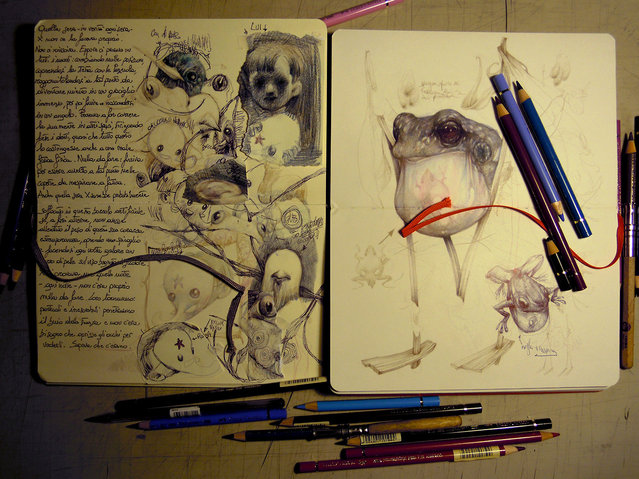
Italian pencil artist Marco Mazzoni‘s work goes far beyond technical perfection. His representation of historical healing women is enigmatic and sublime. Often leaving the eyes blank or covered with an abundance of birds, butterflies and flowers, he gives the impression of a deeper inward focused sight, as well as obscuring the identity of the individual. Many female healers in the past – both medicine woman and midwives – were brutally persecuted by religion, some even burnt as witches… Mazzoni’s work captures their deep connection with nature and their innate power and femininity with delicacy and beautiful detail.