Loading...
Done
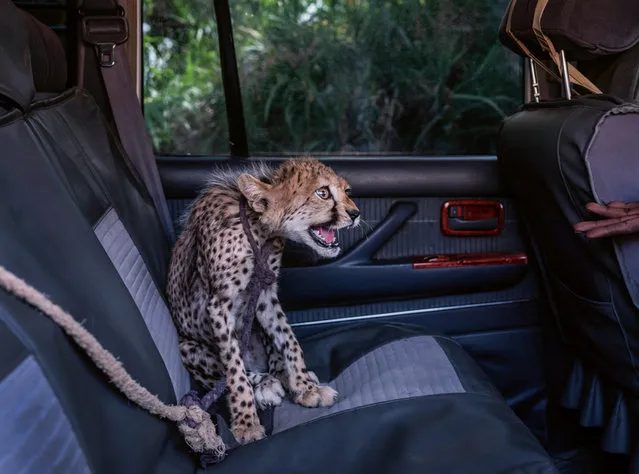
A five-month-old cheetah seated in the back of a Land Cruiser growls at an outstretched hand after being taken from traffickers in Ethiopia and driven to Harirad, Somaliland, in 2020. This photo is part of the work of more than 100 artists in Why We Photograph Animals, a new collection of wildlife photography that aims to help understand why people have photographed animals at different points in history and what it means in the present. (Photo by Nichole Sobecki/Thames & Hudson)

A five-month-old cheetah seated in the back of a Land Cruiser growls at an outstretched hand after being taken from traffickers in Ethiopia and driven to Harirad, Somaliland, in 2020. This photo is part of the work of more than 100 artists in Why We Photograph Animals, a new collection of wildlife photography that aims to help understand why people have photographed animals at different points in history and what it means in the present. (Photo by Nichole Sobecki/Thames & Hudson)
Details
28 Apr 2024 03:15:00
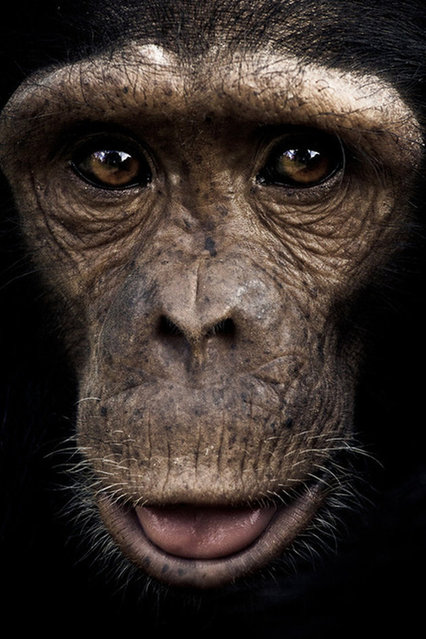
 Chimpanzee Sanctuary By Gabi Guiard

Wildlife photographer Gabi Guiard captured the brilliant set of pictures during a visit to the Chimpanzee Sanctuary in Kenya.
Details
26 Feb 2013 12:39:00
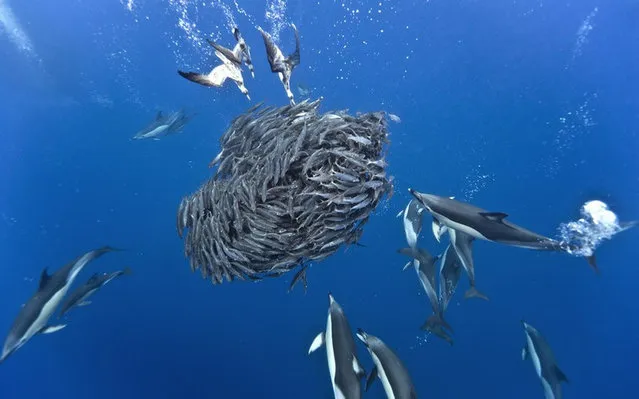
Sharks And Dolphins Preying On Mackerel

British photographer Christopher Swann captures the fascinating underwater action that takes place when sharks and dolphins prey on a school of mackerel. We rarely think about how members of the animal kingdom hunt or defend themselves, but the wildlife photographer gives some perspective on these particular creatures off the coast of Azores.
Details
10 Feb 2013 12:04:00
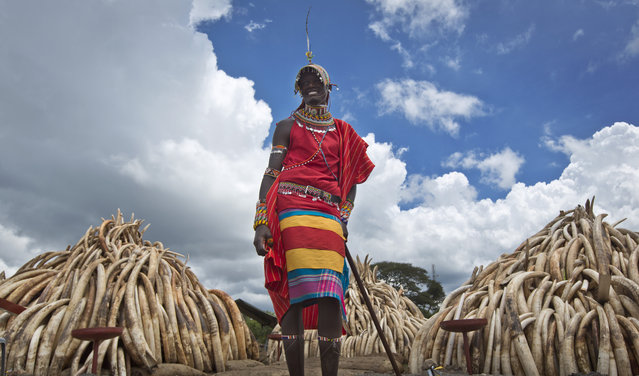
A Maasai man in ceremonial dress poses for visitors to take photographs of him in front of one of around a dozen pyres of ivory, in Nairobi National Park, Kenya Thursday, April 28, 2016. The Kenya Wildlife Service (KWS) has stacked 105 tons of ivory consisting of 16,000 tusks, and 1 ton of rhino horn, from stockpiles around the country, in preparation for it to be torched on Saturday to encourage global efforts to help stop the poaching of elephants and rhinos. (Photo by Ben Curtis/AP Photo)

A Maasai man in ceremonial dress poses for visitors to take photographs of him in front of one of around a dozen pyres of ivory, in Nairobi National Park, Kenya Thursday, April 28, 2016. The Kenya Wildlife Service (KWS) has stacked 105 tons of ivory consisting of 16,000 tusks, and 1 ton of rhino horn, from stockpiles around the country, in preparation for it to be torched on Saturday to encourage global efforts to help stop the poaching of elephants and rhinos. (Photo by Ben Curtis/AP Photo)
Details
29 Apr 2016 11:58:00
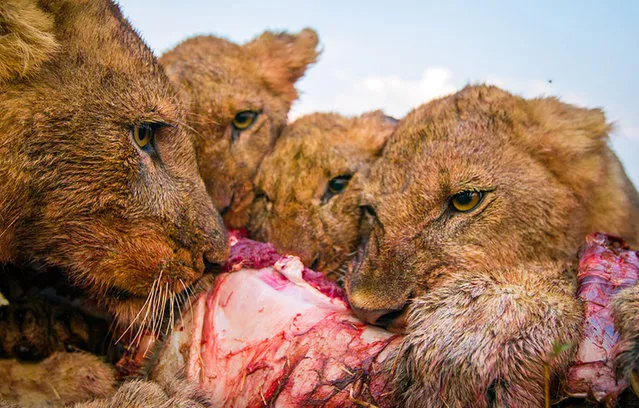
The Adventures of BeetleCam

In 2009 we embarked on a project to get unique close-up, ground level photographs of African wildlife. To achieve this I built BeetleCam; a remote controlled buggy with a DSLR camera mounted on top. Matt and I travelled to Tanzania and used the buggy to get groundbreaking photographs of elephants and buffalo. However, we lost a camera and BeetleCam was almost destroyed in our only encounter with a lion.

We returned home and published “The Adventures of BeetleCam”. The story quickly went viral, appearing all over the web, in print and on television networks worldwide. However, we weren’t entirely satisfied… just imagine what we could get with a lion-proof BeetleCam!
Details
09 Nov 2012 10:01:00
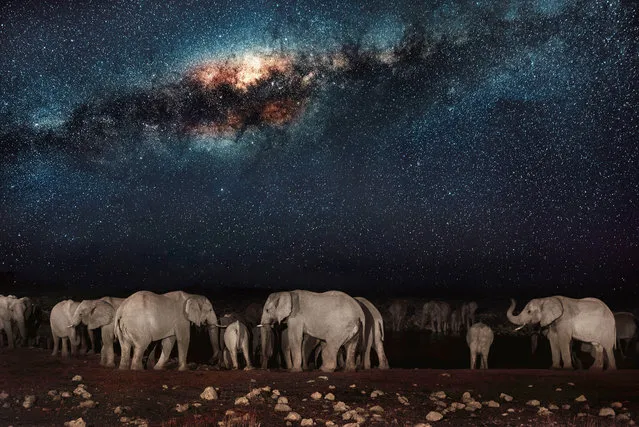
This watering hole is the social hub of the veldt; the scrubby grasslands that stretch across Namibia. The scorched earth supports sometimes fragile populations of magnificent wildlife – from endangered predators to plentiful herds of game. But these gentle giraffes and elephants need to be careful: lions don’t sleep at night, they hunt! The spectacular starscape above southern Africa is unchanged since explorers first mapped the continent. The photographer, Pietro Olivetta from Italy, said he had to be patient to capture these shots – but it was worth the wait. (Photo by Pietro Olivetta/Caters News)

This watering hole is the social hub of the veldt; the scrubby grasslands that stretch across Namibia. The scorched earth supports sometimes fragile populations of magnificent wildlife – from endangered predators to plentiful herds of game. But these gentle giraffes and elephants need to be careful: lions don’t sleep at night, they hunt! The spectacular starscape above southern Africa is unchanged since explorers first mapped the continent. The photographer, Pietro Olivetta from Italy, said he had to be patient to capture these shots – but it was worth the wait. (Photo by Pietro Olivetta/Caters News)
Details
20 Feb 2017 00:05:00
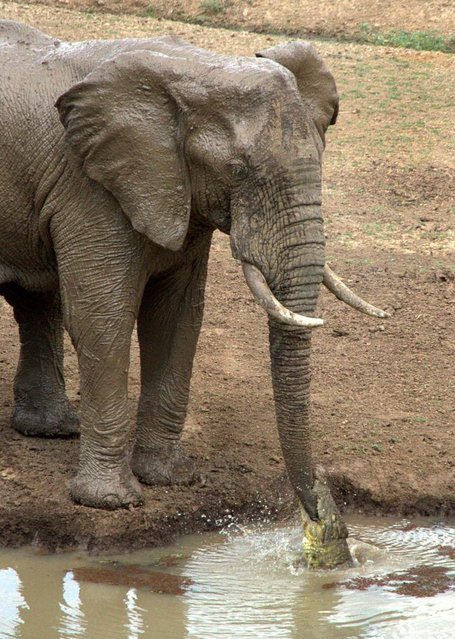
The remarkable scene was captured by amateur wildlife photographer Ian Salisbury, 62, at the South Luangwa National park in Zambia. The crocodile grabs hold of the elephant's trunk, but it soon becomes clear that he has bitten off a lot more than he can chew by grabbing the huge beast. Mr Salisbury said the elephant ‘fled rapidly into the bush’ after the attack. (Photo by Ian Salisbury/Caters News)

The remarkable scene was captured by amateur wildlife photographer Ian Salisbury, 62, at the South Luangwa National park in Zambia. The crocodile grabs hold of the elephant's trunk, but it soon becomes clear that he has bitten off a lot more than he can chew by grabbing the huge beast. Mr Salisbury said the elephant “fled rapidly into the bush” after the attack. (Photo by Ian Salisbury/Caters News)
Details
16 Nov 2013 12:55:00
Amazon Tribe By David Lazar (Video)

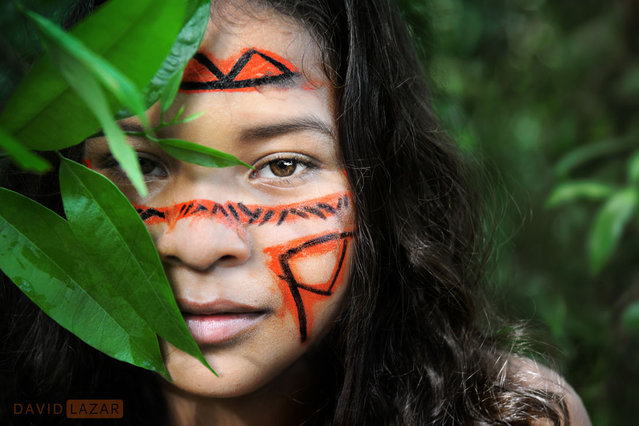
Photographer David Lazar captured photos of native Dessana tribe, nearly 3,000 miles away from Brazil's capital. Tribe is only accessible by boat from city of Manaus. Surrounded by trees, waterfalls and tropical wildlife, this Amazon tribe is a world away from the beaches of Rio.
Details
27 Oct 2016 21:46:00