Loading...
Done
A combination photo shows various popular street foods under $6 from various hawker food stalls and eateries in Singapore, taken between July 28 to 31, 2016. Top row (L to R) bak chor mee, soya sauce chicken; Middle row (L to R) laksa, hokkien mee, nasi lemak, ice kachang; Bottom row (L to R) rojak, roti prata and satay. (Photo by Edgar Su/Reuters)

A combination photo shows various popular street foods under $6 from various hawker food stalls and eateries in Singapore, taken between July 28 to 31, 2016. Top row (L to R) bak chor mee, soya sauce chicken; Middle row (L to R) laksa, hokkien mee, nasi lemak, ice kachang; Bottom row (L to R) rojak, roti prata and satay. (Photo by Edgar Su/Reuters)
Details
27 Aug 2016 10:55:00
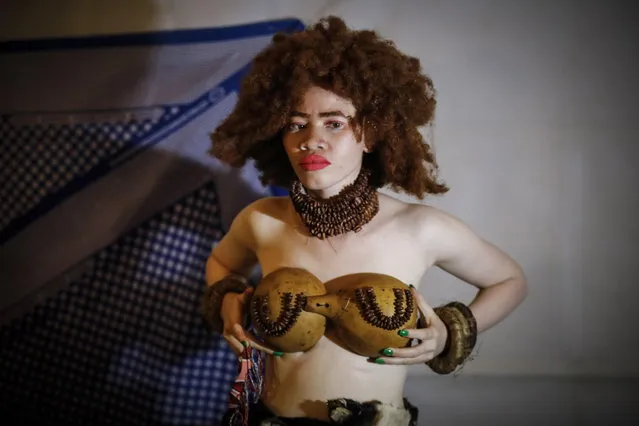
An albino woman adjusts her costume backstage as she and others wait for their fashion show during the Mr. & Miss Albinism East Africa contest in Nairobi, Kenya, 30 November 2018. (Photo by Dai Kurokawa/EPA/EFE)

An albino woman adjusts her costume backstage as she and others wait for their fashion show during the Mr. & Miss Albinism East Africa contest in Nairobi, Kenya, 30 November 2018. Hudreds of abino men, women and children participated in the contest to raise awareness on discrimination and stigma against albinism in the region. (Photo by Dai Kurokawa/EPA/EFE)
Details
03 Dec 2018 00:05:00
A woman with a snake on her body, taken in Rio de Janeiro, Brazil, April 2017. A holistic therapist uses snakes to massage her clients – claiming it cures depression and even helps victims of abuse. Instead of traditional massaging techniques, Sarah Zaad uses up to six pythons and boa constrictors on brave customers who want to relax or be treated for mental disorders. The flamboyant therapist from Rio de Janeiro, Brazil believes her snakes have a magic touch, which can benefit people by massaging their bodies. (Photo by Kadeh Ferreira/Barcroft Images)

A woman with a snake on her body, taken in Rio de Janeiro, Brazil, April 2017. A holistic therapist uses snakes to massage her clients – claiming it cures depression and even helps victims of abuse. Instead of traditional massaging techniques, Sarah Zaad uses up to six pythons and boa constrictors on brave customers who want to relax or be treated for mental disorders. The flamboyant therapist from Rio de Janeiro, Brazil believes her snakes have a magic touch, which can benefit people by massaging their bodies. (Photo by Kadeh Ferreira/Barcroft Images)
Details
15 Apr 2017 09:14:00
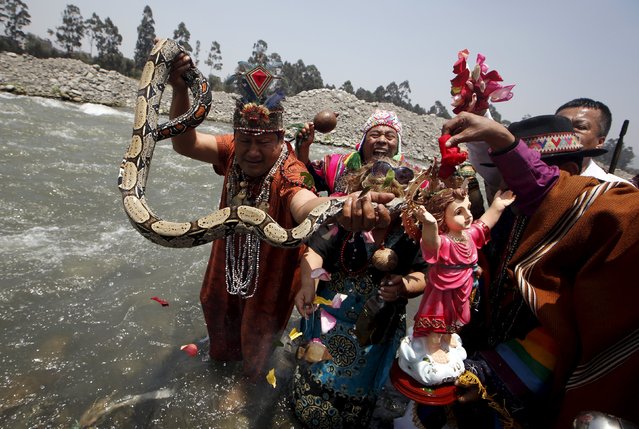
Peruvian shamans holding a figure of a Nino Jesus (Child Jesus) and a snake perform a ritual at the Rimac river to fight the negative effects of the Nino weather phenomena over Nature, in Lima, October 1, 2015. (Photo by Mariana Bazo/Reuters)

Peruvian shamans holding a figure of a Nino Jesus (Child Jesus) and a snake perform a ritual at the Rimac river to fight the negative effects of the Nino weather phenomena over Nature, in Lima, October 1, 2015. (Photo by Mariana Bazo/Reuters)
Details
03 Oct 2015 08:07:00
Chinelos (traditional costumed dancers) perform in front of San Andres Ocotlan church as part of continuing festivities to welcome the new year in Calimaya, Mexico on January 4, 2016. (Photo by Arturo Hernandez/Demotix/Corbis)

Chinelos (traditional costumed dancers) perform in front of San Andres Ocotlan church as part of continuing festivities to welcome the new year in Calimaya, Mexico on January 4, 2016. (Photo by Arturo Hernandez/Demotix/Corbis)
Details
05 Jan 2016 12:31:00
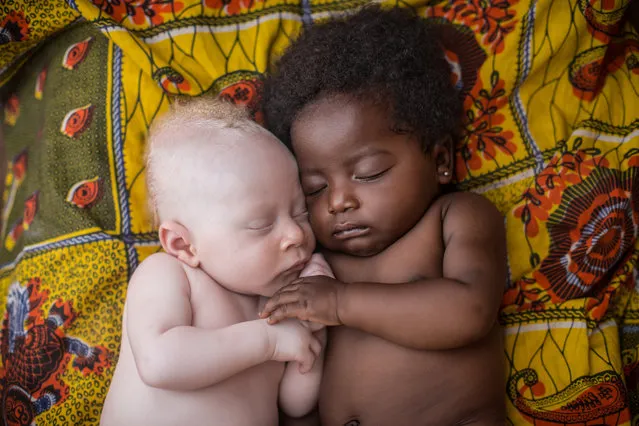
“Basunga”. Basunga (3 weeks-old newborn with albinism) is happily sleeping with his cousin. For now, he does not yet realize the difficulties he will face to integrate into the Congolese society as a PWA. The success of his integration will greatly depends of how he accepts himself and his skin condition a and how educated he will be. Photo location: Kinshasa, Congo RDC. (Photo and caption by Patricia Willocq/National Geographic Photo Contest)

“Basunga”. Basunga (3 weeks-old newborn with albinism) is happily sleeping with his cousin. For now, he does not yet realize the difficulties he will face to integrate into the Congolese society as a PWA. The success of his integration will greatly depends of how he accepts himself and his skin condition a and how educated he will be. Photo location: Kinshasa, Congo RDC. (Photo and caption by Patricia Willocq/National Geographic Photo Contest)
Details
09 Dec 2013 06:38:00
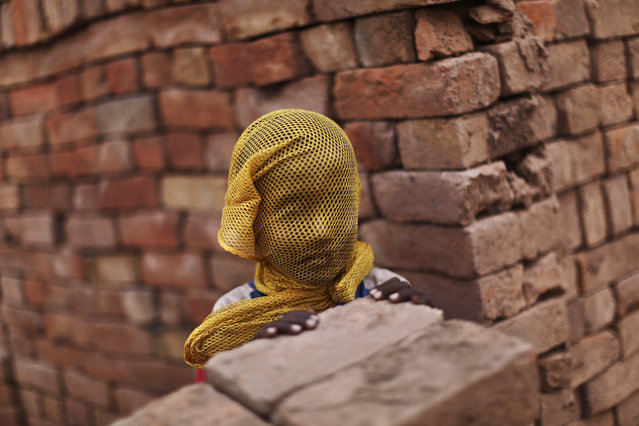
A Pakistani boy who lives near by a brick factory, covers his face with a scarf to avoid a sand storm, on the outskirts of Islamabad, Pakistan, Wednesday, June 6, 2012. (Photo by Muhammed Muheisen/AP Photo)

“Muhammed’s work has received many international awards, among others Breaking News Pulitzer Prize of 2005 for covering war in Iraq, POYI, Picture of the year 2007, of Saudi Arabia of the Annual Muslim pilgrimage, best Multimedia of the Annual Israeli photo contest of 2007, honorable mention Atlanta photojournalism seminar of 2008 and photo of the year of the Annual Israeli photo contest of 2008 with two first prizes and two second prizes in different categories, two prizes in the Atlanta photojournalism seminar of 2009, 6 prizes in the Annual Israeli photo contest of 2009”. – Associated Press
Details
11 Aug 2014 11:22:00
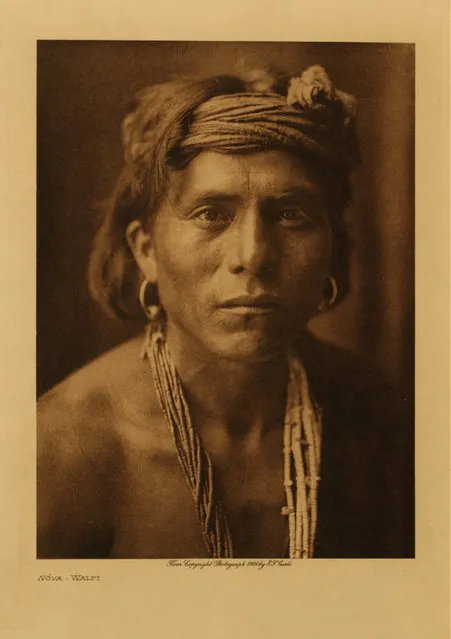
Nova, a Walpi, in 1906. (Photo by Edward S. Curtis)

At the beginning of the 20th century, Edward S. Curtis set out to document what he saw as a disappearing race: the Native American. From 1907 to 1930, Curtis took more than 2,000 photos of 80 tribes stretching from the Great Plains to the Pacific Northwest and Alaska. He then published and sold these photos, along with narrative text, in 20 volumes of work known as “The North American Indian”. It is one of the most significant collections of its kind, “probably the most important photographic document of its age and its topic,” said Jeffrey Garrett, associate university librarian for Special Libraries at Northwestern University. (Photo by Edward S. Curtis)
Details
07 Sep 2014 12:57:00