Loading...
Done
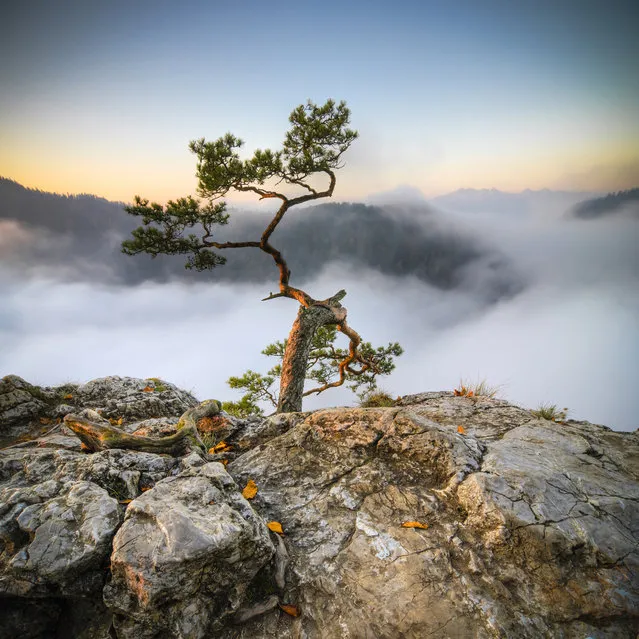
“Sokolica”. Sokolica, Poland. (Photo and caption by Marcin Kęsek/National Geographic Traveler Photo Contest)

“Sokolica”. Sokolica, Poland. (Photo and caption by Marcin Kęsek/National Geographic Traveler Photo Contest)

ATTENTION! All pictures are presented in high resolution. To see Hi-Res images – just TWICE click on any picture. In other words, click small picture – opens the BIG picture. Click BIG picture – opens VERY BIG picture.
Details
25 Jun 2013 09:13:00
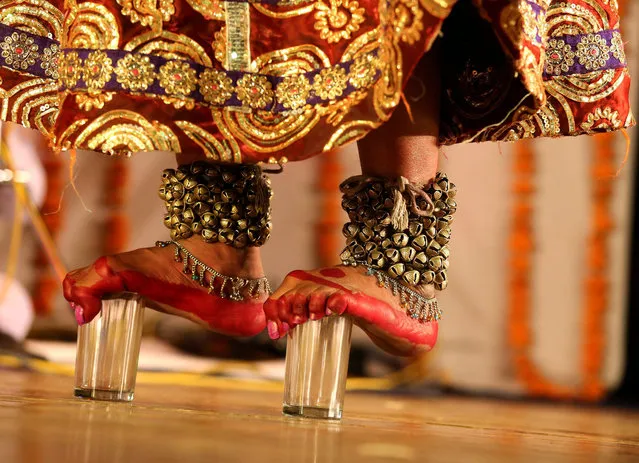
A Rajasthani folk dance artist performs while standing on two glasses during the “Dhora Ri Mahak” festival in Bhopal, India, 07 January 2015. The event is being organised by the 'Indira Gandhi Rashtriya Manav Sangrahalaya' anthropology museum. (Photo by Sanjeev Gupta/EPA)

A Rajasthani folk dance artist performs while standing on two glasses during the “Dhora Ri Mahak” festival in Bhopal, India, 07 January 2015. The event is being organised by the “Indira Gandhi Rashtriya Manav Sangrahalaya” anthropology museum. (Photo by Sanjeev Gupta/EPA)
Details
10 Jan 2015 13:51:00
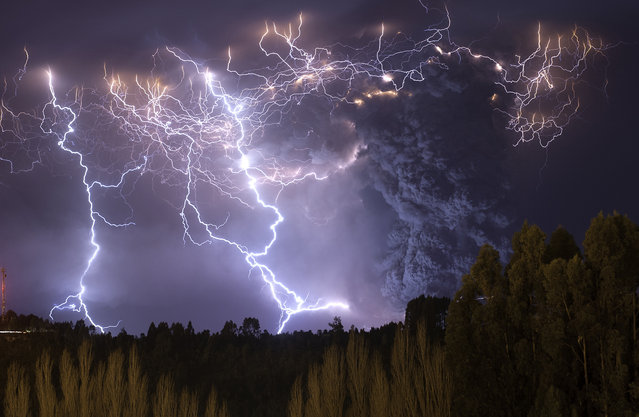
The eruption of Cordon Caulle began on June 4, 2011, located in the Region of Los Rios in Chile. For about 12 months, people and animals became accustomed to living with the daily fall of ash, which also caused problems in the air traffic in South America. The explosions and lightning during first days of the eruption could be seen from hundreds of miles around. This photograph was taken on the second night of eruption from the town of Lago Ranco. (Photo and caption by Francisco Negroni/National Geographic Traveler Photo Contest)

The eruption of Cordon Caulle began on June 4, 2011, located in the Region of Los Rios in Chile. For about 12 months, people and animals became accustomed to living with the daily fall of ash, which also caused problems in the air traffic in South America. The explosions and lightning during first days of the eruption could be seen from hundreds of miles around. This photograph was taken on the second night of eruption from the town of Lago Ranco. (Photo and caption by Francisco Negroni/National Geographic Traveler Photo Contest)

ATTENTION! All pictures are presented in high resolution. To see Hi-Res images – just TWICE click on any picture. In other words, click small picture – opens the BIG picture. Click BIG picture – opens VERY BIG picture.
Details
23 Jun 2013 11:24:00
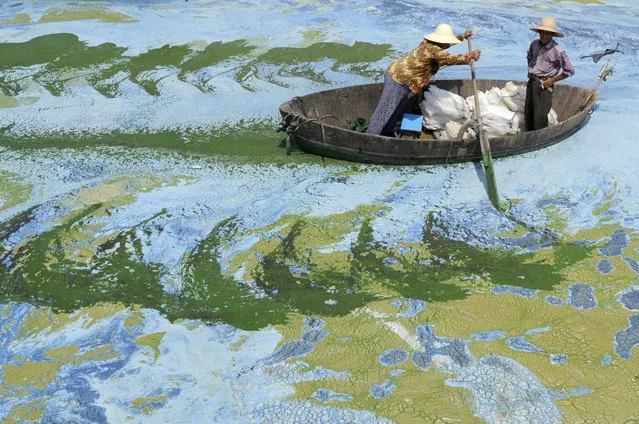
Fishermen row a boat in the algae-filled Chaohu Lake in Hefei, Anhui province, June 19, 2009. The country has invested 51 billion yuan ($7.4 billion) towards the construction of 2,712 projects for the treatment of eight rivers and lakes including Huaihe River, Haihe River, Liaohe River, Chaohu Lake, Dianchi Lake, Songhua River, the Three Gorges region of the Yangtze River and its upstream area, Xinhua News Agency reported. (Photo by Jianan Yu/Reuters)

Growing cities, overuse of fertilizers and factory wastewater have degraded China's water supplies to the extent that half the nation's rivers and lakes are severely polluted. China aims to spend $850 billion to improve filthy water supplies over the next decade, but even such huge outlays may do little to reverse damage caused by decades of pollution and overuse in Beijing's push for rapid economic growth. Photo: Fishermen row a boat in the algae-filled Chaohu Lake in Hefei, Anhui province, June 19, 2009. (Photo by Jianan Yu/Reuters)
Details
03 Aug 2014 08:01:00
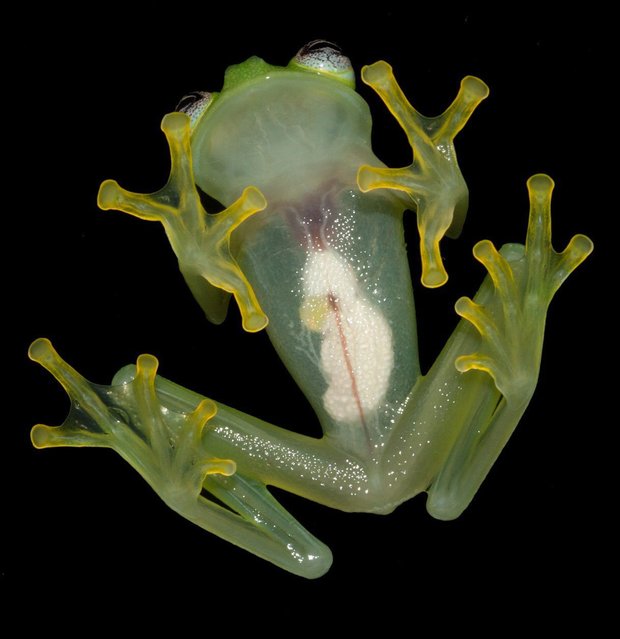
A handout photograph provided by Brian Kubicki of Costa Rican Amphibian Research Center on 26 April 2016 shows a “Crystal frog”, Hyalinobatrachium dianae (H. diane). This frog was discovered by US biologist Brian Kubicki and Costa Ricans Stanley Salazar and Robert Puschendorf in a rainy forest of Costa Rican caribbean after 40 years without notice of any new example of this kind. (Photo by Brian Kubicki/EPA/Costa Rican Amphibian Research Center)

A handout photograph provided by Brian Kubicki of Costa Rican Amphibian Research Center on 26 April 2016 shows a “Crystal frog”, Hyalinobatrachium dianae (H. diane). This frog was discovered by US biologist Brian Kubicki and Costa Ricans Stanley Salazar and Robert Puschendorf in a rainy forest of Costa Rican caribbean after 40 years without notice of any new example of this kind. (Photo by Brian Kubicki/EPA/Costa Rican Amphibian Research Center)
Details
02 May 2015 15:23:00
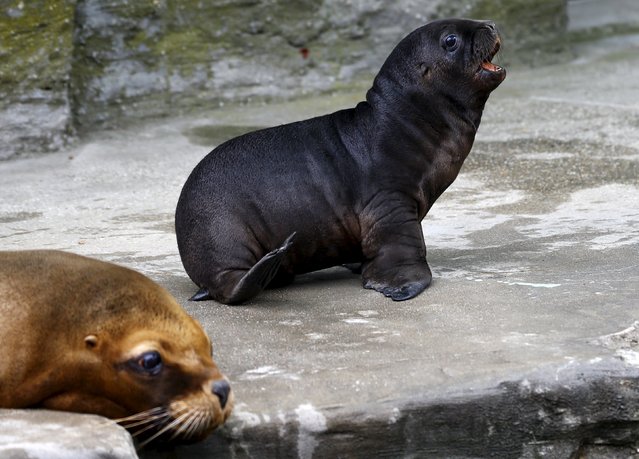
A ten days old South American sea lion pup sits next to its mother Lunita at the “Tiergarten Schoenbrunn” Zoo in Vienna, Austria, July 28, 2015. (Photo by Leonhard Foeger/Reuters)

A ten days old South American sea lion pup sits next to its mother Lunita at the “Tiergarten Schoenbrunn” Zoo in Vienna, Austria, July 28, 2015. The pup was born in the zoo and weighs about 14 kilograms (30 pounds). (Photo by Leonhard Foeger/Reuters)
Details
29 Jul 2015 10:54:00
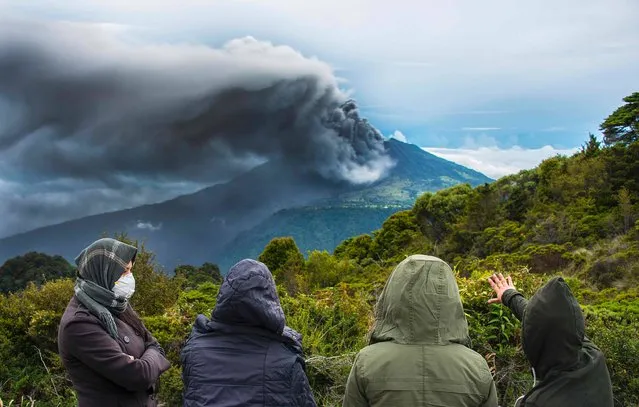
People look at the Turrialba volcano as it spewes ashes on May 20, 2016, in Cartago, Costa Rica. The Turrialba volcano started erupting columns of smoke and ash that the wind extended towards the Costa Rican capital, in what according to experts is the strongest eruption in the past six years. (Photo by Ezequiel Becerra/AFP Photo)

People look at the Turrialba volcano as it spewes ashes on May 20, 2016, in Cartago, Costa Rica. The Turrialba volcano started erupting columns of smoke and ash that the wind extended towards the Costa Rican capital, in what according to experts is the strongest eruption in the past six years. (Photo by Ezequiel Becerra/AFP Photo)
Details
22 May 2016 07:31:00
Participants enjoy the “Color Me Run” festival in Hanoi, Vietnam, 28 May 2016. The festival which was inspired by the Holi Festival from India, attracted thousands of teenagers this year. (Photo by Luong Thai Linh/EPA)

Participants enjoy the “Color Me Run” festival in Hanoi, Vietnam, 28 May 2016. The festival which was inspired by the Holi Festival from India, attracted thousands of teenagers this year. (Photo by Luong Thai Linh/EPA)
Details
29 May 2016 10:39:00