Loading...
Done
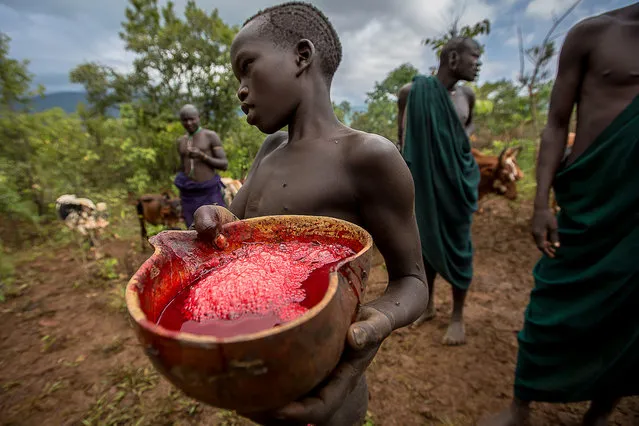
Surma tribe at a blood drinking ritual

“Suri tribes boys are collecting the blood of a cow in a calabash the vein of the animal was opened with a bow and an arrow. Like most pastoralists the Surma people are drinking fresh blood which is from the cow vein. Only some minutes after the wound at the vein is closed again the animals are back with their herd”. (Photo and caption by Anthony Pappone)
Details
17 Nov 2013 11:12:00


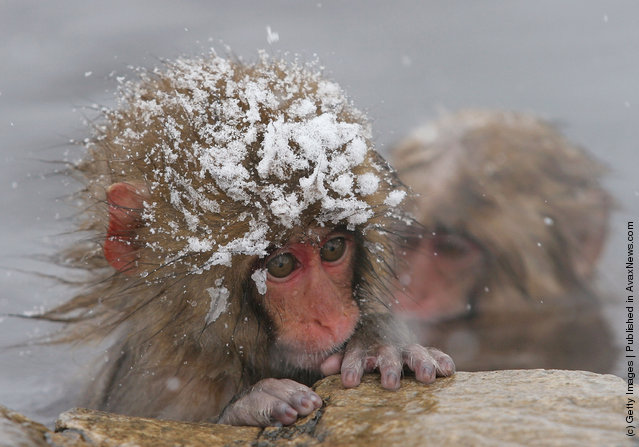
Japanese macaque monkeys enjoy sitting in the hot springs at Jigokudani-Onsen (Hell Valley) on January 23, 2005 in Jigokudani, Nagano-Prefecture, Japan. Japanese Macaques, also known as snow monkeys are the most northerly nonhuman primate in the world. In 1963 a female Macaque ventured into the hot springs to retrieve some soybeans. This behaviour was adopted by other monkeys, and eventually by the entire troop. This Macaque troop regularly visits the Jigokudani-Onsen springs to escape the cold. The hot springs are said to help relieve nerve pain and fatigue. (Photo by Koichi Kamoshida/Getty Images)
Details
20 May 2011 08:04:00
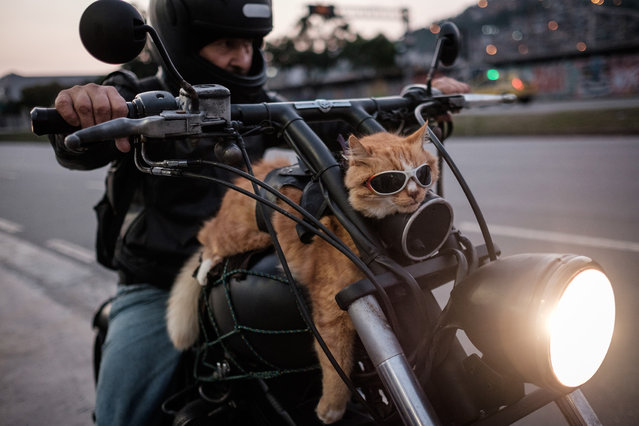
A biker shows his 12-year-old cat “Chiquinho” – which always rides with him on his motorbike – in Rio de Janeiro, Brazil, on June 19, 2016. (Photo by Yasuyoshi Chiba/AFP Photo)

A biker shows his 12-year-old cat “Chiquinho” – which always rides with him on his motorbike – in Rio de Janeiro, Brazil, on June 19, 2016. (Photo by Yasuyoshi Chiba/AFP Photo)
Details
21 Jun 2016 07:35:00
Drivers push cars to gas station during “oil crisis”, Roslindale, Boston, Massachusetts, 1973. (Photo by Spencer Grant/Getty Images)

Drivers push cars to gas station during “oil crisis”, Roslindale, Boston, Massachusetts, 1973. (Photo by Spencer Grant/Getty Images)
Details
18 Nov 2021 08:30:00
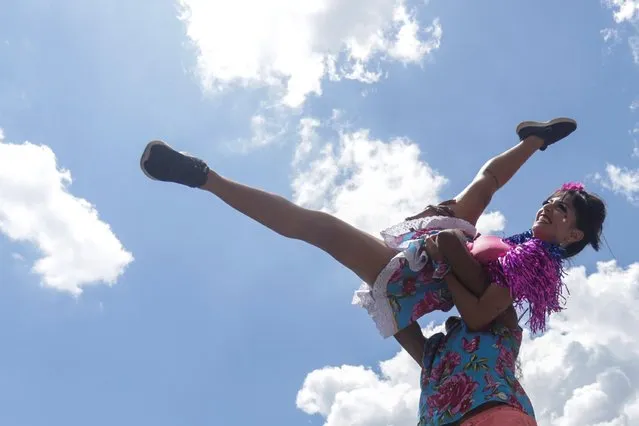
Revellers take part in the annual block party known as “Casa Comigo” (Marry Me), during carnival festivities in Sao Paulo, Brazil on February 15, 2020. (Photo by Rahel Patrasso/Reuters)

Revellers take part in the annual block party known as “Casa Comigo” (Marry Me), during carnival festivities in Sao Paulo, Brazil on February 15, 2020. (Photo by Rahel Patrasso/Reuters)
Details
24 Feb 2020 00:05:00
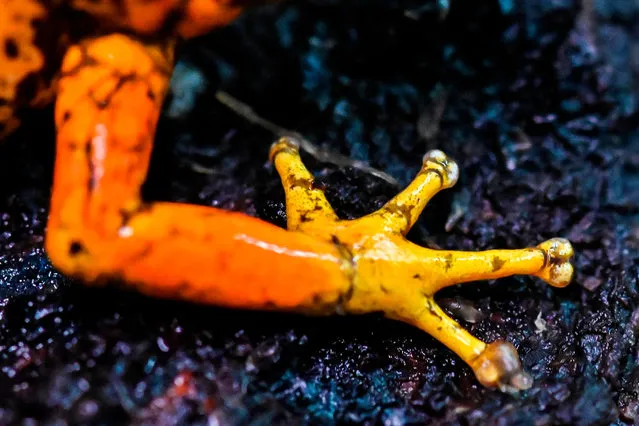
A leg of a “diablito” frog (Oophaga sylvatica) is photographed in a laboratory at a laboratory in the zoo of Cali, Colombia, on July 19, 2019. Colombia is the second country with the largest number of amphibians in the world after Brazil. More than 40% of amphibian species worldwide are in danger of extinction. (Photo by Luis Robayo/AFP Photo)

A leg of a “diablito” frog (Oophaga sylvatica) is photographed in a laboratory at a laboratory in the zoo of Cali, Colombia, on July 19, 2019. Colombia is the second country with the largest number of amphibians in the world after Brazil. More than 40% of amphibian species worldwide are in danger of extinction. (Photo by Luis Robayo/AFP Photo)
Details
28 Nov 2020 00:03:00
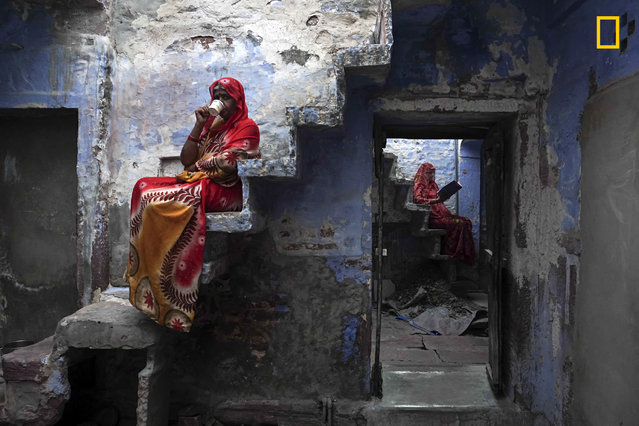
“These Rajasthani sisters were sitting on the staircase inside their house relaxing and enjoy a cup of masala chai”. (Photo by Firdaus Hadzri/National Geographic Travel Photographer of the Year Contest)

“These Rajasthani sisters were sitting on the staircase inside their house relaxing and enjoy a cup of masala chai”. (Photo by Firdaus Hadzri/National Geographic Travel Photographer of the Year Contest)
Details
13 Apr 2018 00:01:00
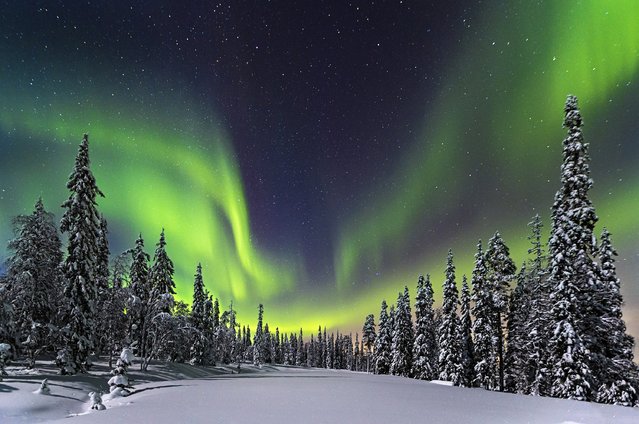
“Forest lights”. Aurora Borealis over the forest of the Pyhae Luosto National Park, Finland. (Photo and caption by Nicholas Roemmelt/National Geographic Traveler Photo Contest)

The 26th annual National Geographic Traveler Photo Contest is now accepting submissions. Official categories include: “Travel Portraits”, “Outdoor Scenes”, “Sense of Place” and “Spontaneous Moments”. The contest is accepting entries until June 30. Photo: “Forest lights”. Aurora Borealis over the forest of the Pyhae Luosto National Park, Finland. (Photo and caption by Nicholas Roemmelt/National Geographic Traveler Photo Contest)
Details
30 Mar 2014 08:02:00