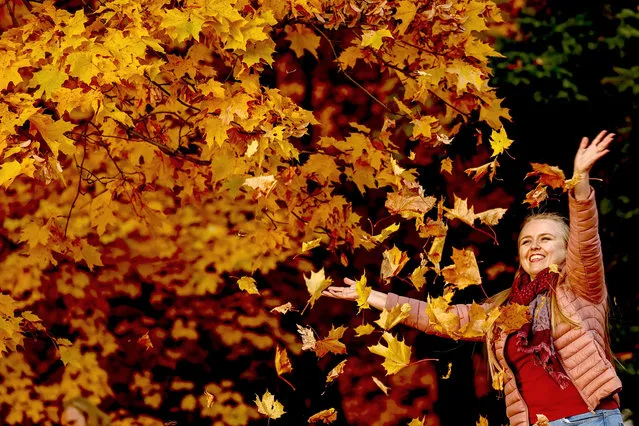
People walk among yellowish trees at Kolomenskoye Park during autumn season in Moscow, Russia on October 03, 2021. (Photo by Sefa Karacan/Anadolu Agency via Getty Images)
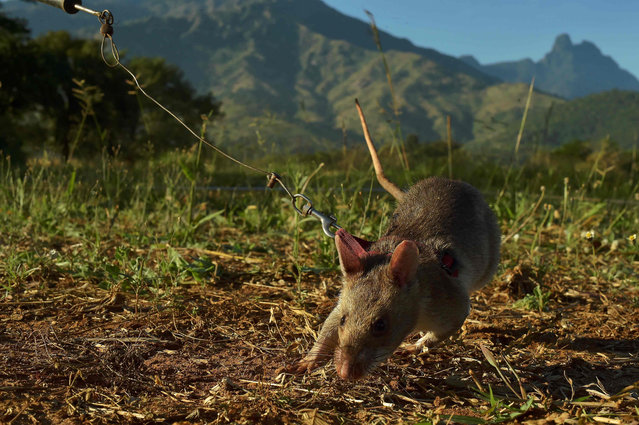
An African giant pouched rat sniffs for traces of landmine explosives at APOPO's training facility in Morogoro on June 17, 2016. APOPO trains the rats to detect both tuberculosis and landmines at its facility. Every year landmines kill or maim thousands of people worldwide. The trained rats sniff for explosive and so are able to detect the presence of landmines far faster than conventional methods which involve metal detection. (Photo by Carl De Souza/AFP Photo)
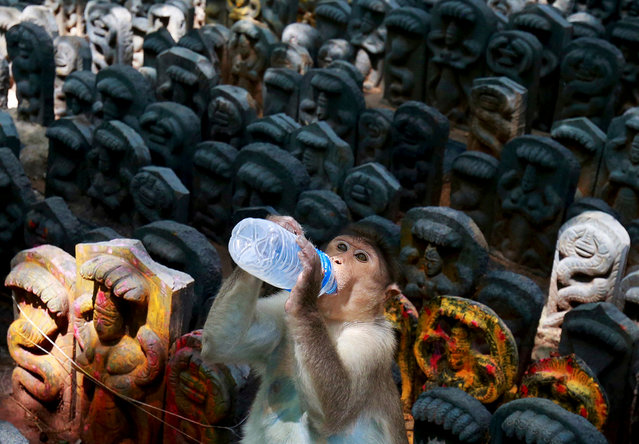
A bonnet macaque sits on consecrated idols of snakes as it drinks milk offered by a devotee during the Hindu festival of Nag Panchami, which is celebrated by worshipping snakes to honour the serpent god, inside a temple on the outskirts of Bengaluru, India, July 27, 2017. (Photo by Abhishek N. Chinnappa/Reuters)
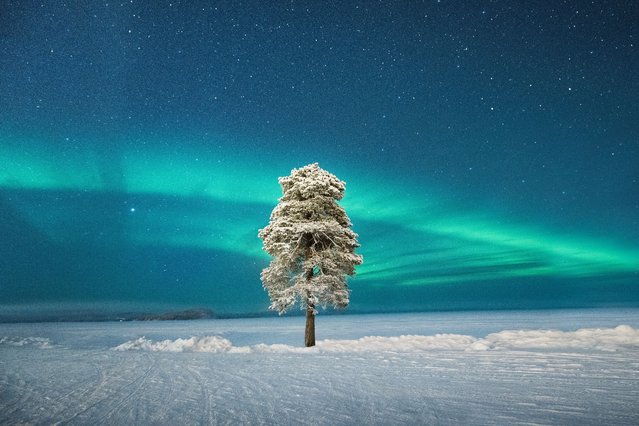
Aurorae category runner-up: Lone Tree under a Scandinavian Aurora by Tom Archer (UK). The photographer decided to explore the area around the hotel on a very crisp -35C evening in Finnish Lapland. When he found this tree, he decided to wait for the misty conditions to change and could not believe his luck when the sky cleared and the aurora came out in the perfect spot. Archer spent about an hour photographing it before his camera started to lock up because of the harsh conditions, but by then he was happy to call it a night. (Photo by Tom Archer/2020 Astronomy Photographer of the Year)
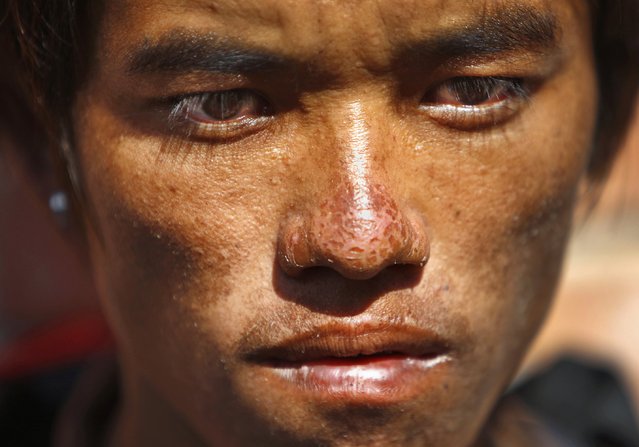
Sete Tamang, 20, avalanche survivor, waits to receive the bodies of his colleagues outside a morgue at Teaching Hospital in Katmandu, Nepal, Monday, October 20, 2014. Nepal was wrapping up rescue operations in its northern mountains Monday, saying all the hikers believed to have been stranded on a trekking route by a series of deadly blizzards are now safe. (Photo by Niranjan Shrestha/AP Photo)
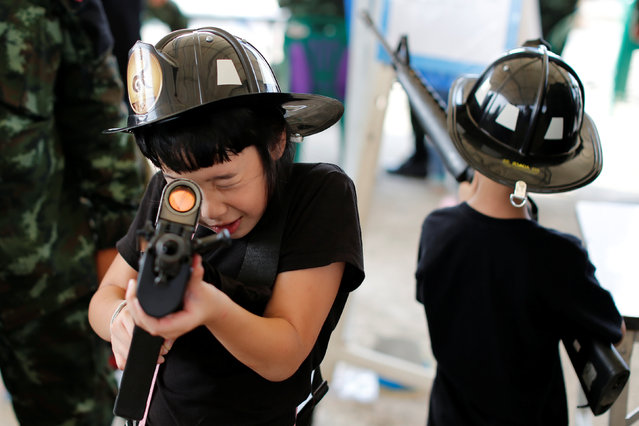
Children play with weapons during Children's Day celebration at a military facility in Bangkok, Thailand January 14, 2017. (Photo by Jorge Silva/Reuters)
A fighter of Libyan forces allied with the U.N.-backed government fires a shell with Soviet made T-55 tank at Islamic State fighters in Sirte, Libya, August 2, 2016. (Photo by Goran Tomasevic/Reuters)
On August 31, 2012, a long filament of solar material that had been hovering in the sun's atmosphere, the corona, erupted out into space at 4:36 p.m. EDT. The coronal mass ejection, or CME, traveled at over 900 miles per second. The CME did not travel directly toward Earth, but did connect with Earth's magnetic environment, or magnetosphere, causing aurora to appear on the night of Monday, September 3. (Photo by NASA/GSFC/SDO via The Atlantic)