Loading...
Done
Egg Sculptures By Franc Grom

Slovenian artist Franc Grom, aged 72, makes unbelievably intricate egg sculptures using just a tiny electric drill and enormous patience. According to National Geographic, when finished, each egg contains approximately 2,500 to 3,500 holes. While Slovene artisans usually paint their eggs using a technique called drsanka by lightly scratching intricate patterns into the surfaces of colored eggs, carving them was solely Grom’s idea.
Details
24 Nov 2016 08:00:00
The Merchant Seamans War Memorial Society

Some lost at sea memorials are touched by genius. The images they convey are timeless and universal – like all great art. The designer and sculptor of this unforgettable memorial in Wales is Brian Fell.
Details
10 Sep 2015 09:14:00
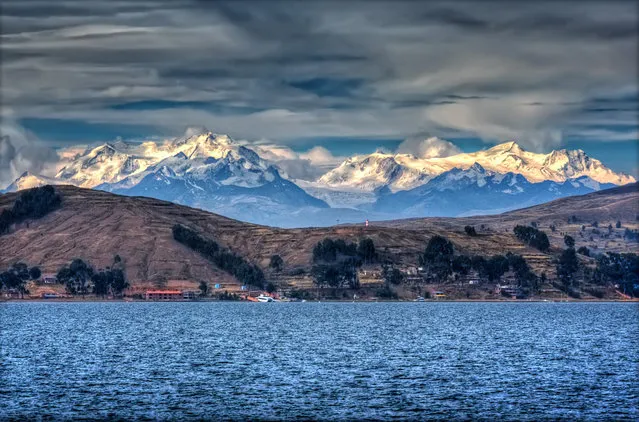
Lake Titicaca

Titicaca or Titiqaqa is a large, deep lake in the Andes on the border of Peru and Bolivia. By volume of water, it is the largest lake in South America. Lake Maracaibo has a larger surface area, though some consider it to be a large brackish bay due to its direct connection with the sea.
Details
22 Jul 2015 12:20:00


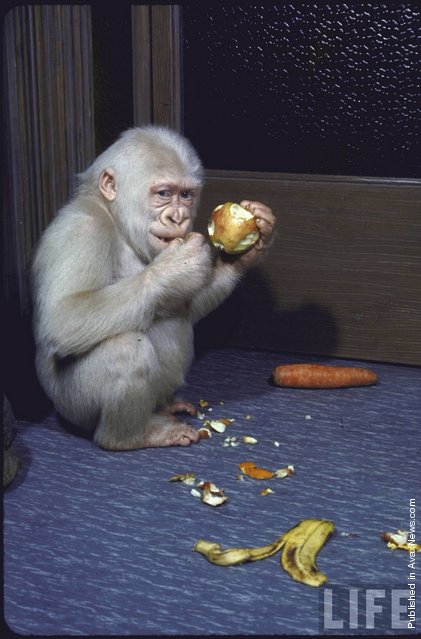
“Snowflake (c. 1964 – November 24, 2003) was an albino gorilla. He was the only known albino gorilla so far, and the most popular resident of the Barcelona Zoo in Catalonia, Spain. Originally named Nfumu Ngui in Fang language ("white gorilla") by his captor, he was then nicknamed Floquet de Neu (Catalan for little snowflake) by his keeper Jordi Sabater Pi. On his arrival to Barcelona where he was given an official reception by the then Mayor of Barcelona, Josep Maria de Porcioles, in November 1966, he was called Blancanieves (“Snow White”) in the newspaper Tele/Exprés. But he became famous with the name given to him by Sabater when National Geographic Magazine featured him on the main page in March 1967, with the English name Snowflake. This name spread among the press (Stern, Life, Paris-Match) and was later translated to Spanish as Copito de Nieve. Sabater himself called the gorilla Floquet or Copi, and in the later years Nfumu. The asteroid 95962 Copito, discovered by Catalan astronomer J. Manteca, is named in his honour”.

Details
07 Mar 2011 15:50:00
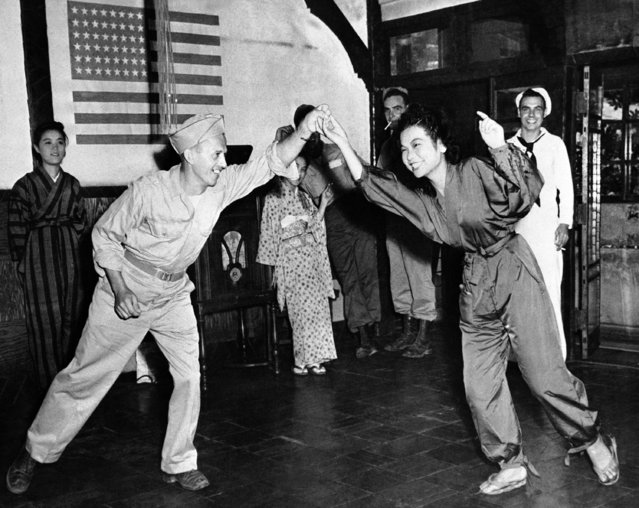
U.S. Corporal Stanley Suski, left, and Miss Tamako, a Geisha girl, whirl a bit of Jitterbug, in a bar, in Tokyo, Japan, on October 1, 1945. (Photo by AP Photo)

U.S. Corporal Stanley Suski, left, and Miss Tamako, a Geisha girl, whirl a bit of Jitterbug, in a bar, in Tokyo, Japan, on October 1, 1945. (Photo by AP Photo)
Details
06 Oct 2015 08:07:00
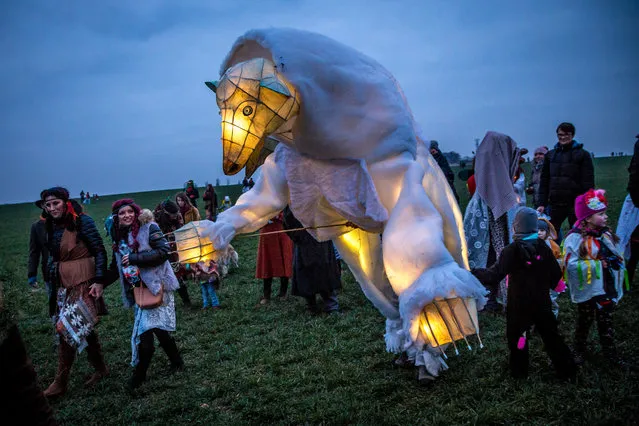
Parade participants during the traditional “Masopust Carnival” festival on February 13, 2018 in Roztoky near Prague, Czech Republic. Known as Masopust (literally, “giving up meat”), the festival was traditionally the last chance to eat and drink in excess before the austerity of Lent. (Photo by Margot Buff/RFE/RL)

Parade participants during the traditional “Masopust Carnival” festival on February 13, 2018 in Roztoky near Prague, Czech Republic. Known as Masopust (literally, “giving up meat”), the festival was traditionally the last chance to eat and drink in excess before the austerity of Lent. (Photo by Margot Buff/RFE/RL)
Details
14 Feb 2018 08:44:00
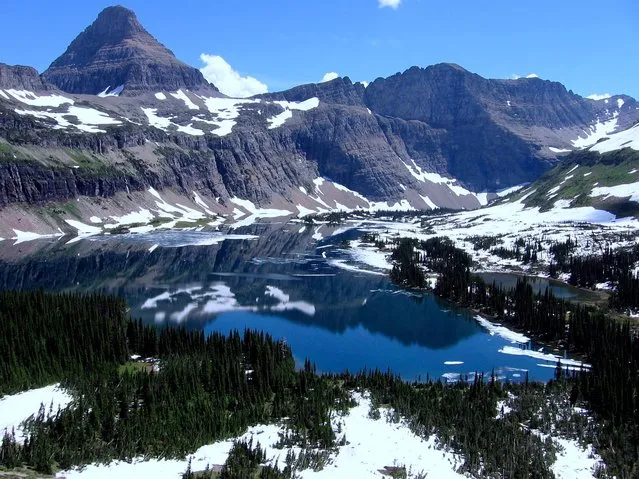
Glacier National Park Montana

Glacier National Park is a national park located in the U.S. state of Montana, on the Canada–United States border with the Canadian provinces of Alberta and British Columbia. The park encompasses over 1,000,000 acres (4,000 km2) and includes parts of two mountain ranges (sub-ranges of the Rocky Mountains), over 130 named lakes, more than 1,000 different species of plants and hundreds of species of animals. This vast pristine ecosystem is the centerpiece of what has been referred to as the "Crown of the Continent Ecosystem", a region of protected land encompassing 16,000 square miles (41,000 km2).
Details
29 Oct 2013 11:13:00
Rabbit Island in Japan

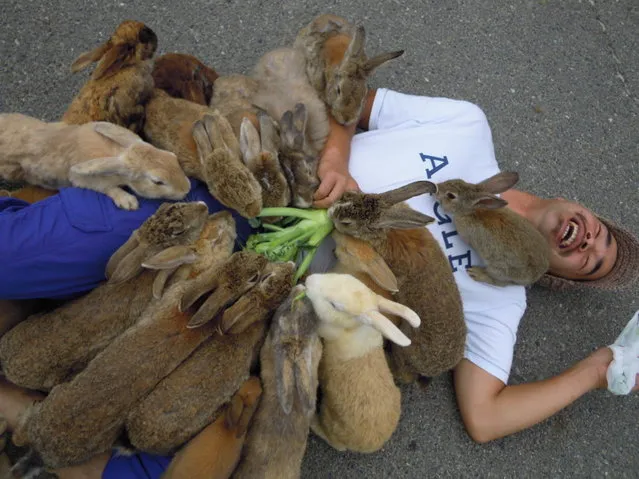
Only after World War II did the secret spill: Ōkunoshima, located in the Inland Sea of Japan between Hiroshima and Shikoku, was the top-secret site for manufacturing chemical warfare. When the factories were closed down, a number of exotic wild rabbits were seen freely roaming the island. They were assumed to have been the test subjects for the chemical weapons, which the military failed to eradicate when the factory was demolished.
Details
17 Feb 2014 12:23:00