Loading...
Done
Afghans shout anti-U.S. slogans as they burn tires and block a highway during a protest in reaction to a small American church's plan to burn copies of the Quran, at Jalalabad, east of Kabul, Afghanistan, Friday, September 10, 2010. Religious and political leaders across the Muslim world welcomed a decision by the church to suspend its plans to torch copies of their holy book but some said Friday the damage has already been done. (Photo by Rahmat Gul/AP Photo)

Afghans shout anti-U.S. slogans as they burn tires and block a highway during a protest in reaction to a small American church's plan to burn copies of the Quran, at Jalalabad, east of Kabul, Afghanistan, Friday, September 10, 2010. Religious and political leaders across the Muslim world welcomed a decision by the church to suspend its plans to torch copies of their holy book but some said Friday the damage has already been done. (Photo by Rahmat Gul/AP Photo)
Details
07 Apr 2016 14:52:00
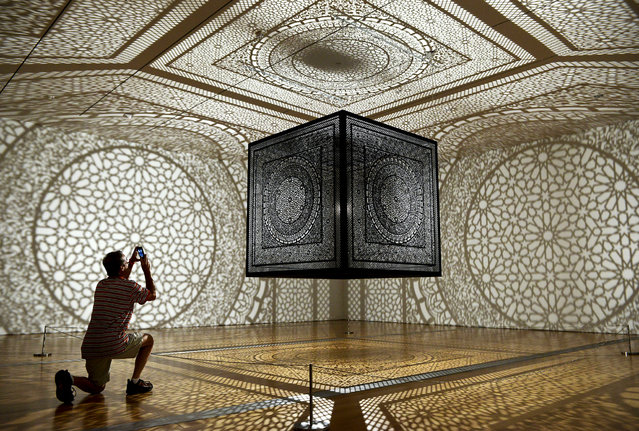
A man photographs Anila Quayyum Agha's “Intersections” art work on the first day of ArtPrize at the Grand Rapids Art Museum in Grand Rapids, Mich. on Wednesday, September 24, 2014. (Photo by Emily Rose Bennett/AP Photo/The Grand Rapids Press)

A man photographs Anila Quayyum Agha's “Intersections” art work on the first day of ArtPrize at the Grand Rapids Art Museum in Grand Rapids, Mich. on Wednesday, September 24, 2014. (Photo by Emily Rose Bennett/AP Photo/The Grand Rapids Press)
Details
27 Sep 2014 12:04:00
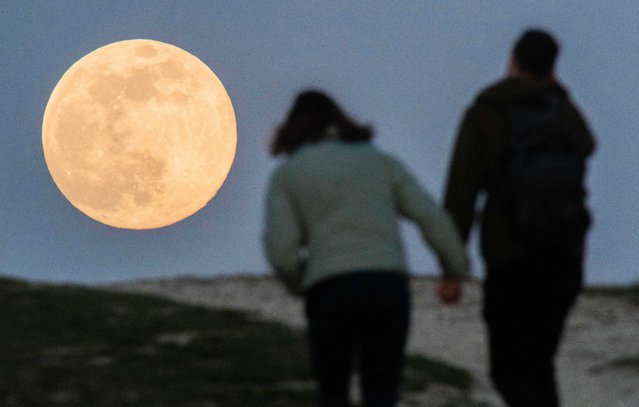
A couple is walking hand-held up Kronsberg, just outside Hanover, Germany on April 7, 2020, when the moon rises on the horizon as the so-called supermoon. The moon reaches its perigee, i.e. the point closest to the Earth's orbit, on the night of 7-8 April as a full moon and therefore appears particularly large to the human observer. (Photo by Julian Stratenschulte/dpa via ZUMA Press)

A couple is walking hand-held up Kronsberg, just outside Hanover, Germany on April 7, 2020, when the moon rises on the horizon as the so-called supermoon. The moon reaches its perigee, i.e. the point closest to the Earth's orbit, on the night of 7-8 April as a full moon and therefore appears particularly large to the human observer. (Photo by Julian Stratenschulte/dpa via ZUMA Press)
Details
09 Apr 2020 00:07:00
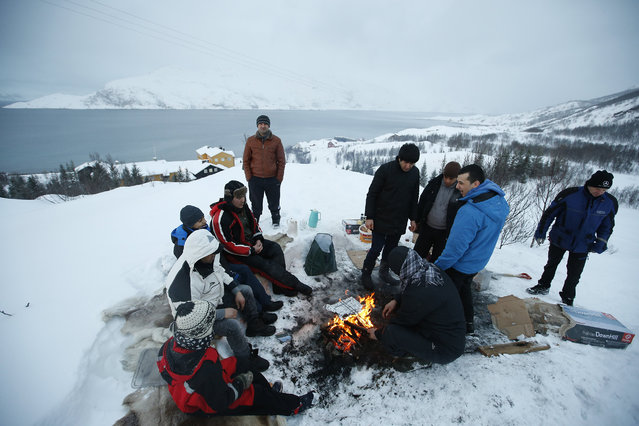
In this photo taken Tuesday, February 2, 2016, asylum seekers gather round a fire as they cook a meal overlooking the temporary Altnes camp refugee camp on the island of Seiland, northern Norway. (Photo by Alastair Grant/AP Photo)

In this photo taken Tuesday, February 2, 2016, asylum seekers gather round a fire as they cook a meal overlooking the temporary Altnes camp refugee camp on the island of Seiland, northern Norway. Waiting for their asylum claims to be processed, hundreds of people in emergency shelters in Hammerfest and neighboring towns are slowly getting used to the extreme climate and unfamiliar customs of the High North. They say they have adapted to the cold – the temperature rarely drops below minus 10 degrees C (14 F) along the coast, though it gets much colder further inland. It’s the darkness that throws them off. (Photo by Alastair Grant/AP Photo)
Details
18 Feb 2016 13:22:00
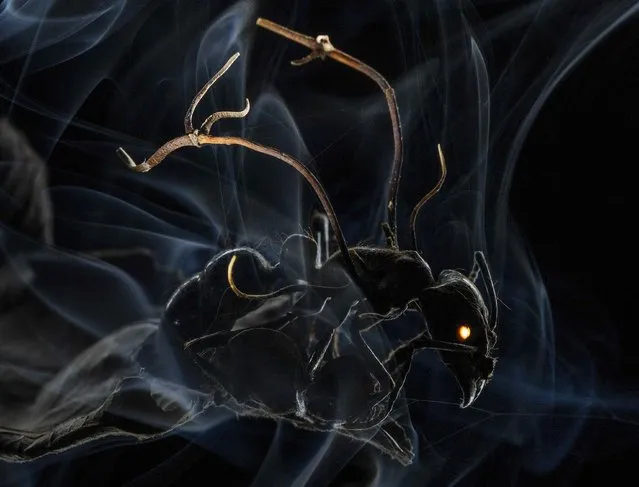
Anand Varma, a U.S. photographer working for the National Geographic, won the First Prize in the Nature Category, Stories, of the 2015 World Press Photo contest with his series of pictures, which includes this one of spores of a fungus landing on an ant, penetrating its exoskeleton and entering its brain, compelling the host to leave its normal habitat on the forest floor and scale a nearby tree, in this picture taken January 22, 2014 and released by the World Press Photo on February 12, 2015. (Photo by Anand Varma/Reuters/National Geographic/World Press Photo)

Anand Varma, a U.S. photographer working for the National Geographic, won the First Prize in the Nature Category, Stories, of the 2015 World Press Photo contest with his series of pictures, which includes this one of spores of a fungus landing on an ant, penetrating its exoskeleton and entering its brain, compelling the host to leave its normal habitat on the forest floor and scale a nearby tree, in this picture taken January 22, 2014 and released by the World Press Photo on February 12, 2015. (Photo by Anand Varma/Reuters/National Geographic/World Press Photo)
Details
15 Feb 2015 15:21:00
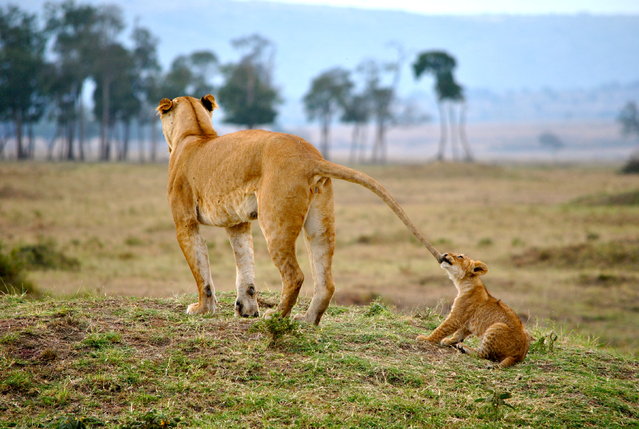
“A Mothers Tail”. A baby cub pulls on his mother's tail to get attention. Photo location: Masai Mara, Kenya. (Photo and caption by Tori Marsh/National Geographic Photo Contest)

“A Mothers Tail”. A baby cub pulls on his mother's tail to get attention. Photo location: Masai Mara, Kenya. (Photo and caption by Tori Marsh/National Geographic Photo Contest)
Details
21 Oct 2014 12:40:00
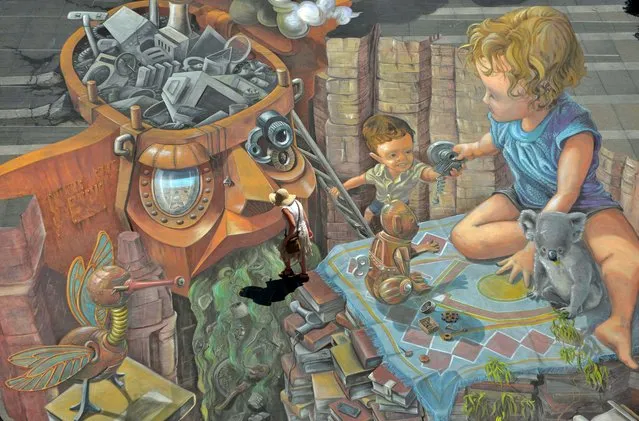
A visitor walks on a giant chalk artwork called “Wasting Time” at the Chalk Urban Arts Festival in Sydney on October 25, 2014. The picture is the biggest 3-D artwork created in Australia by two artists, Leon Keer from Holland and Jenny McCracken from Australia. (Photo by Peter Parks/AFP Photo)

A visitor walks on a giant chalk artwork called “Wasting Time” at the Chalk Urban Arts Festival in Sydney on October 25, 2014. The picture is the biggest 3-D artwork created in Australia by two artists, Leon Keer from Holland and Jenny McCracken from Australia. (Photo by Peter Parks/AFP Photo)
Details
25 Oct 2014 13:58:00
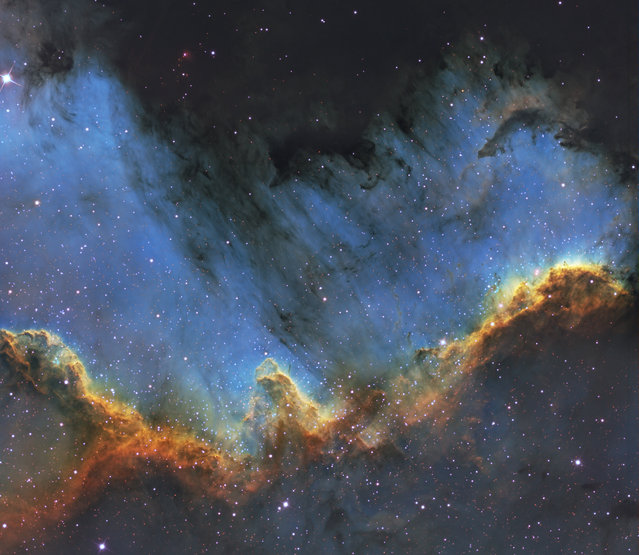
The Cygnus Wall is in the southern  area of NGC7000 also known as the North America Nebula. It is approximately 1800 light years from Earth, and is in the constellation Cygnus. The Wall is an energized shock front and contains the most concentrated star formations in the nebula. The size of the North America Nebula is about 4 full moons. (Bill Snyder)

Amateur astronomer Bill Snyder has been involved with astrophotography since 2007. Photo: The Cygnus Wall is in the southern area of NGC7000 also known as the North America Nebula. It is approximately 1800 light years from Earth, and is in the constellation Cygnus. The Wall is an energized shock front and contains the most concentrated star formations in the nebula. The size of the North America Nebula is about 4 full moons. (Photo and caption by Bill Snyder)
Details
30 Oct 2013 09:15:00