Loading...
Done
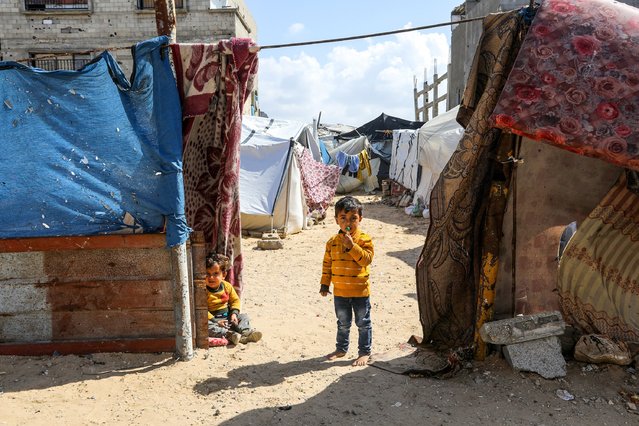
Palestinians living in the rubble of destroyed houses or in makeshift tents in the city of Khan Yunis, which suffered great destruction during the 15-month-long attacks of the Israeli army, continue their daily life despite all the negativities on February 16, 2025 in Khan Yunis, Gaza. (Photo by Abed Rahim Khatib/Anadolu via Getty Images)

Palestinians living in the rubble of destroyed houses or in makeshift tents in the city of Khan Yunis, which suffered great destruction during the 15-month-long attacks of the Israeli army, continue their daily life despite all the negativities on February 16, 2025 in Khan Yunis, Gaza. (Photo by Abed Rahim Khatib/Anadolu via Getty Images)
Details
08 Mar 2025 04:02:00
On the morning of February 14, 2025, the arrival of spring was celebrated in a festive atmosphere under the Bakul tree at the Faculty of Fine Arts, University of Dhaka. Dressed in vibrant shades of yellow and orange, people welcomed the season with music, dance, and traditional attire, embracing the warmth and joy of new beginnings. (Photo by Rubel Karmaker/ZUMA Press Wire/Alamy Live News)

On the morning of February 14, 2025, the arrival of spring was celebrated in a festive atmosphere under the Bakul tree at the Faculty of Fine Arts, University of Dhaka. Dressed in vibrant shades of yellow and orange, people welcomed the season with music, dance, and traditional attire, embracing the warmth and joy of new beginnings. (Photo by Rubel Karmaker/ZUMA Press Wire/Alamy Live News)
Details
15 Mar 2025 02:01:00
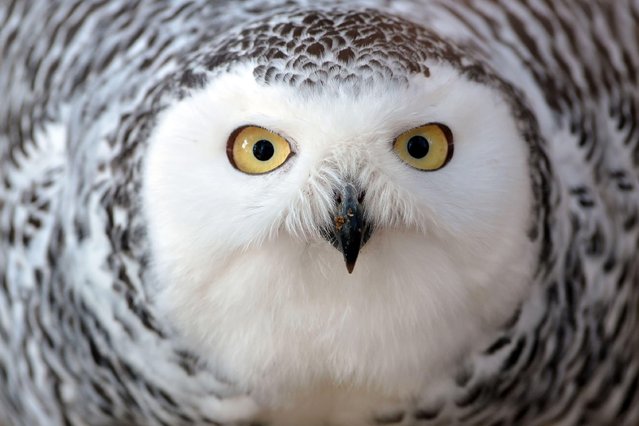
A snowy owl (Bubo scandiacus) raised by a falconer as part of a captive-breeding program, pictured in its enclosure in Vysocina, Czech Republic on October 22, 2025. (Photo by Slavek Ruta/ZUMA Press Wire via Alamy Live News)

A snowy owl (Bubo scandiacus) raised by a falconer as part of a captive-breeding program, pictured in its enclosure in Vysocina, Czech Republic on October 22, 2025. (Photo by Slavek Ruta/ZUMA Press Wire via Alamy Live News)
Details
02 Nov 2025 05:16:00
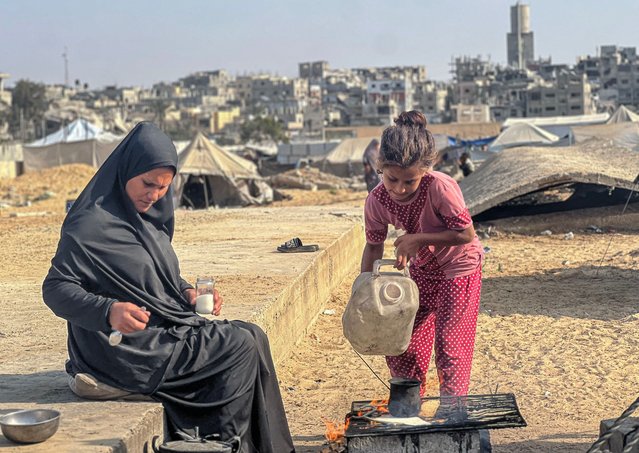
Alaa Shabat lives with her six children in a tent erected inside the Austrian cemetery in Khan Younis, southern Gaza Strip, on November 13, 2025, after her husband became ill and unable to work. (Photo by Tariq Mohammad/APAImages/Rex Features/Shutterstock)

Alaa Shabat lives with her six children in a tent erected inside the Austrian cemetery in Khan Younis, southern Gaza Strip, on November 13, 2025, after her husband became ill and unable to work. (Photo by Tariq Mohammad/APAImages/Rex Features/Shutterstock)
Details
28 Nov 2025 04:01:00


“Sektor gaza” (Russian: Сектор газа) was a Russian rock band formed on 5 December 1987 in the city of Voronezh, Russia. Despite only semi-officially existing (due to obscene lyrics), the group remains popular in Russia today. The group name was taken from an eponymous industrial district of Voronezh (itself named for high levels of environmental contamination). Their music style could be defined as Russian punk, integrated with elements of different musical genres such as rock, rap, and Russian folk. On 4 July 2000, group leader Yuri “Hoy” Klinskih complained of strong pains in his stomach and the left side of his chest. He suffered heart failure shortly thereafter. Klinskikh died in Voronezh (Russia)at the age of 35. He is buried in the Levoberezhniy Cemetery. The group ceased to exist.

About the music video: The First Chechen War, also known as the War in Chechnya, was a conflict between the Russian Federation and the Chechen Republic of Ichkeria, fought from December 1994 to August 1996. After the initial campaign of 1994 – 1995, culminating in the devastating Battle of Grozny, Russian federal forces attempted to seize control of the mountainous area of Chechnya but were set back by Chechen guerrilla warfare and raids on the flatlands in spite of Russia's overwhelming manpower, weaponry, and air support...

Details
24 May 2012 14:38:00


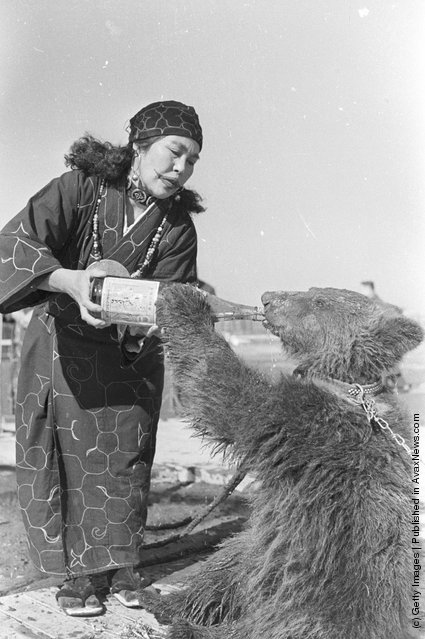
“The Ainu (アイヌ?), also called Aynu, Aino (アイノ), and in historical texts Ezo (蝦夷), are indigenous people or groups in Japan and Russia. Historically they spoke the Ainu language and related varieties and lived in Hokkaidō, the Kuril Islands, and much of Sakhalin. Most of those who identify themselves as Ainu still live in this same region, though the exact number of living Ainu is unknown. This is due to ethnic issues in Japan resulting in those with Ainu backgrounds hiding their identities and confusion over mixed heritages. In Japan, because of intermarriage over many years with Japanese, the concept of a 'pure Ainu' ethnic group is no longer feasible. Official estimates of the population are of around 25,000, while the unofficial number is upwards of 200,000 people”. – Wkipedia

Photo: A captive bear drinking from a large bottle held by an Ainu tribeswoman. (Photo by Evans/Three Lions/Getty Images). Circa 1955
Details
24 Mar 2011 14:01:00
Dog photos by Jessica Trinh

I am 17 years old and an aspiring photographer. Ever since I set my hands on a camera, I knew I had unlocked a new dimension. One where you can expand your imagination and run for endless miles. Photography makes you look at things differently. You notice rain drops and the way the sun kisses the Earth. You breath in every moment of your life. You love to live and live to love. There is no time to waste because there is an urgency to capture each loving gesture, smile, and laugh in both humans and animals. Then every photograph becomes timeless and you smile, knowing that you hold a few split seconds in your hands. I live in a box called a camera with the lens as my window and everyday I sit on my couch watching the world outside through a different perspective. No worries, my dogs are right beside me looking at it the same way.

Jessica Trinh
Details
17 Dec 2012 13:46:00
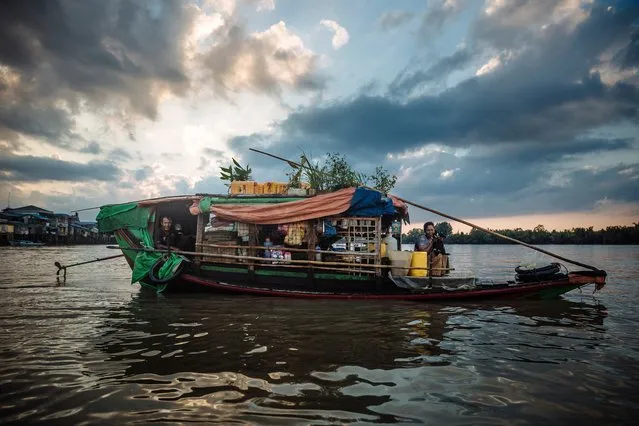
Tin and Naing win live on a small boat which they sail throughout the Delta region in Myanmar. The former gardeners once had a home on land but it was destroyed when a powerful cyclone ravaged the area in 2008. Since then, the couple have not been able to afford to rebuild their home, so they live on the boat from which they sell fish paste to make a living. (Photo by Muse Mohammed/IOM)

The ferocity of crises worldwide is forcing a record number of people to flee their homes, seeking some form of safety within their own country or across international borders. There are 65.3 million displaced people worldwide, including 21.3 million refugees. Most have lost their homes to armed conflict or natural disasters but other factors, such as extreme poverty and climate change, also drive displacement. The International Organisation for Migration commissioned photojournalist Muse Mohammed to document the plight of the displaced. (Photo by Muse Mohammed/IOM)
Details
02 Jan 2017 12:04:00