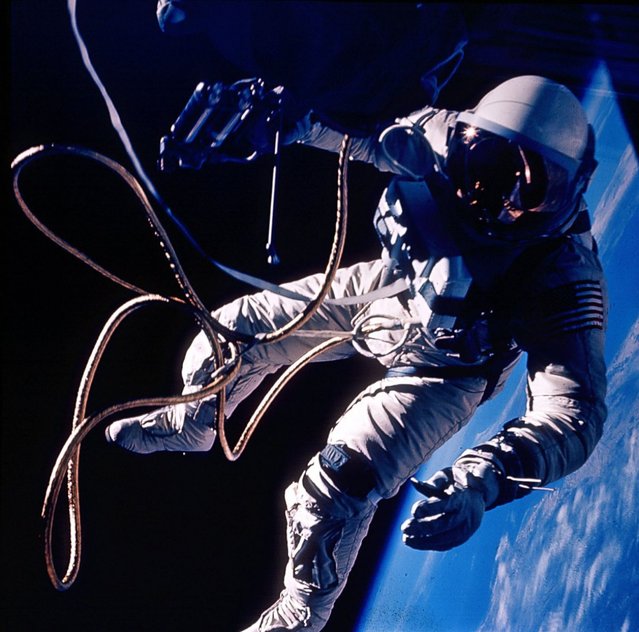
The First U.S. Spacewalk – Gemini 4 Ed White made the United States' first spacewalk on June 3, 1965 during the Gemini 4 mission. The extra-vehicular activity (EVA) started at 19:45 UT (3:45 p.m. EDT) on the third orbit when White opened his hatch and used the hand-held manuevering oxygen-jet gun to push himself out of the capsule. (Photo by NASA)
Swimmers take part in the annual Christmas Day swim in Porthcawl, Wales, England on December 25, 2019. (Photo by Ben Birchall/PA Images via Getty Images)
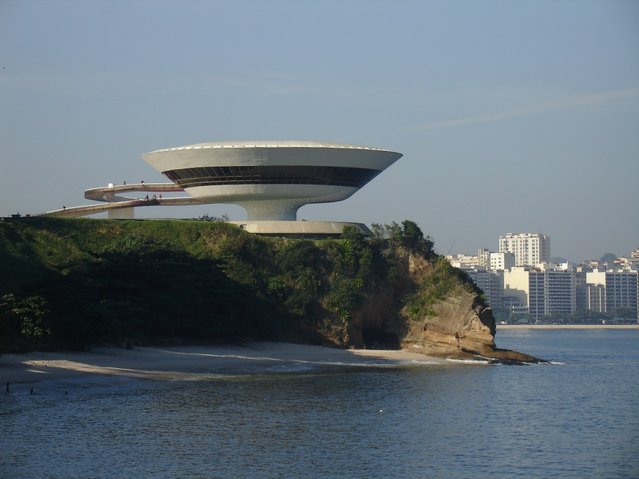
The Niterói Contemporary Art Museum (Museu de Arte Contemporânea de Niterói — MAC) is situated in the city of Niterói, Rio de Janeiro, Brazil, and is one of the city’s main landmarks. It was completed in 1996.
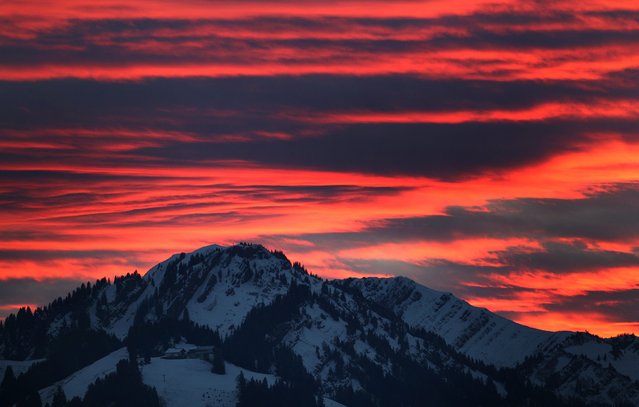
A colorful sky at sunset over the snowy mountains in Immenstadt, Bavaria, Germany, 20 November 2014. Cloudy weather is forecast in the region on 21 November. (Photo by Karl-Josef Hildenbrand/EPA)
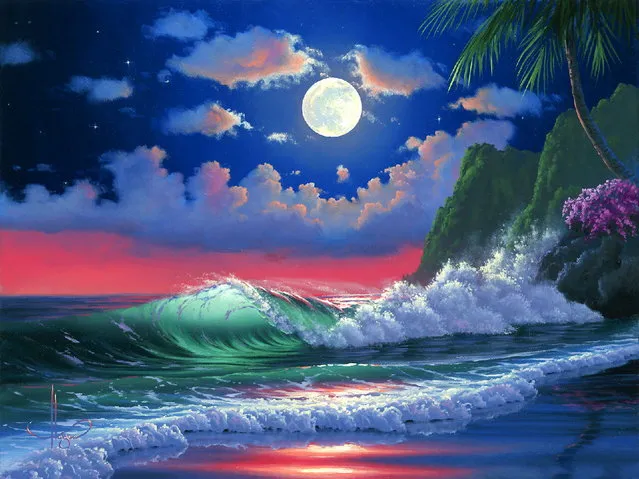
Light is the sole reason why life exists. It provides us with warmth; it allows us to see; it nourishes all the living things on this planet. Many painters, especially the masters of Old Renaissance Period, have recognized the importance of light and its intimate connection with nature and life itself. In their paintings they gave tribute to light, giving the impression that their paintings had a light source hidden within them. Al Hogue, the artist who created the paintings that you see before you, has studied their techniques for many years. As time went by, light permeated not only his paintings by also his life, becoming his sole philosophy.
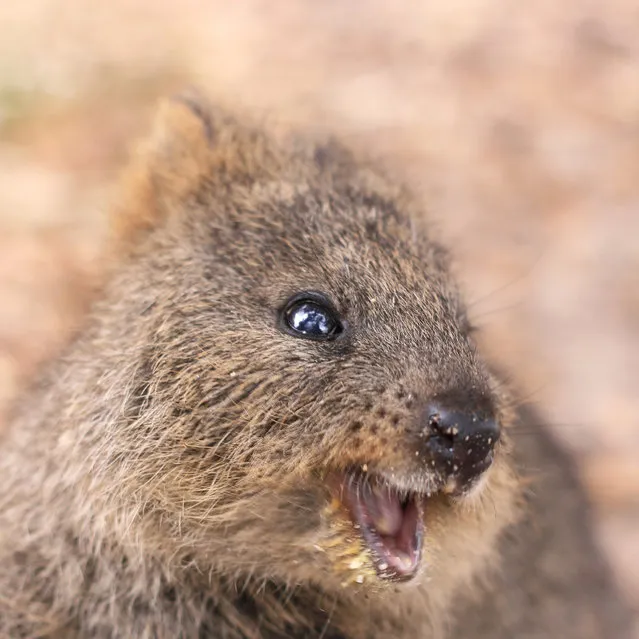
The quokka the only member of the genus Setonix, is a small macropod about the size of a domestic cat. Like other marsupials in the macropod family (such as the kangaroos and wallabies), the quokka is herbivorous and mainly nocturnal.
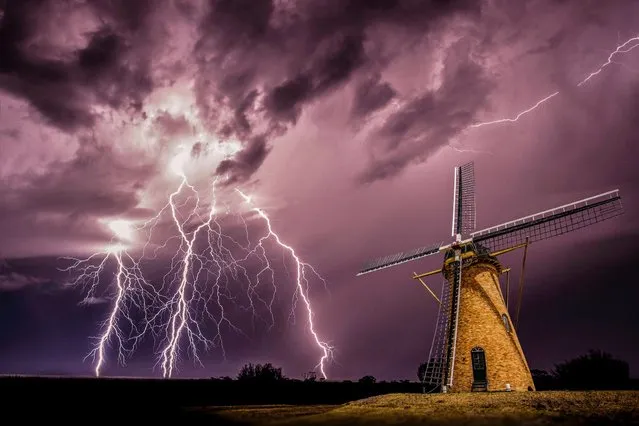
A thrill-seeking storm chaser captured the precise moment these giant lightning bolts lit up dark skies in a series of incredible storms. (Photo by Craig Eccles/Solent News & Photo Agency)