Loading...
Done
Tridacna Gigas, or Giant Clams

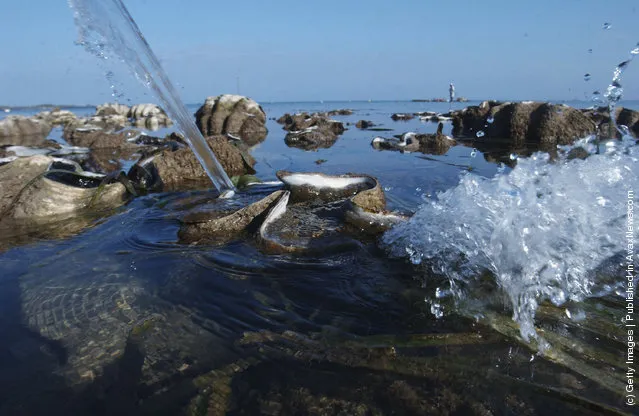
“The giant clam, Tridacna gigas (known as pā’ua in Cook Islands Māori), is the largest living bivalve mollusc. T. gigas is one of the most endangered clam species. It was mentioned as early as 1825 in scientific reports. One of a number of large clam species native to the shallow coral reefs of the South Pacific and Indian oceans, they can weigh more than 200 kilograms (440 lb) measure as much as 120 cm (47 in) across, and have an average lifespan in the wild of 100 years or more”. – Wikipedia

Photo: Tridacna Gigas, or Giant Clams spew water as a traditional fisherman passes by a small sanctuary on January 23, 2004 near Bolinao in the Northern Philippines. The clams, prime builders for coral reefs and providing shelter for spawning fish and other marine life, are exposed by low tides in the sanctuary. Overfishing and pollution throughout the country are not only threatening food security, but are also starting to choke one of the few working clam sanctuaries in the world. (Photo by David Greedy/Getty Images)
Details
01 Oct 2011 13:10:00
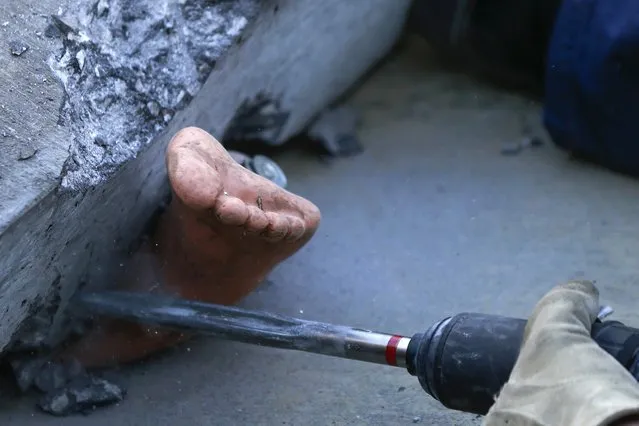
Rescue specialists for USA-1 drill through a concrete slab to rescue a victim from the scene of a mock disaster area during a training exercise at the Guardian Center in Perry, Georgia, March 25, 2014. (Photo by Shannon Stapleton/Reuters)

Rescue specialists for USA-1 drill through a concrete slab to rescue a victim from the scene of a mock disaster area during a training exercise at the Guardian Center in Perry, Georgia, March 25, 2014. A week of field training, the first of its kind at the 830-acre training site, to be open to the media, began Monday with the arrival of USA-1 from Fairfax, Virginia along with its sister team in Los Angeles, California. USA-1 has been deployed by the U.S. Agency for International Development to 30 foreign disasters, including earthquakes in Haiti, Armenia and Iran, the tsunami in Japan and the typhoon in the Philippines. (Photo by Shannon Stapleton/Reuters)
Details
27 Mar 2014 07:05:00
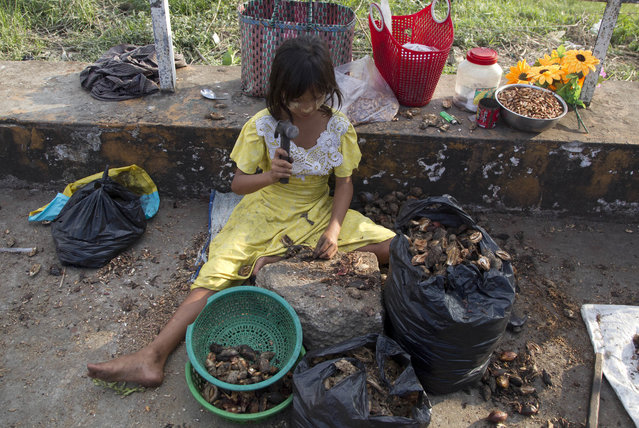
In this Thursday, November 1, 2018, photo, a girl uses a hammer to crack open shells for edible seeds to sell as snacks in Yangon, Myanmar. A United Nations report says some 486 million people are malnourished in Asia and the Pacific, and progress in alleviating hunger is stalling. (Photo by Thein Zaw/AP Photo)

In this Thursday, November 1, 2018, photo, a girl uses a hammer to crack open shells for edible seeds to sell as snacks in Yangon, Myanmar. A United Nations report says some 486 million people are malnourished in Asia and the Pacific, and progress in alleviating hunger is stalling. (Photo by Thein Zaw/AP Photo)
Details
20 Jul 2019 00:01:00
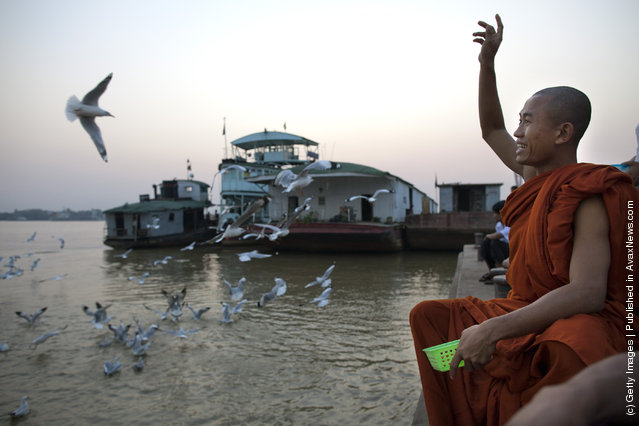
A Burmese monk feeds the seagulls at a Yangon river jetty

A Burmese monk feeds the seagulls at a Yangon river jetty February 8, 2012 in Yangon, Myanmar. (Photo by Paula Bronstein/Getty Images)
Details
09 Feb 2012 11:57:00
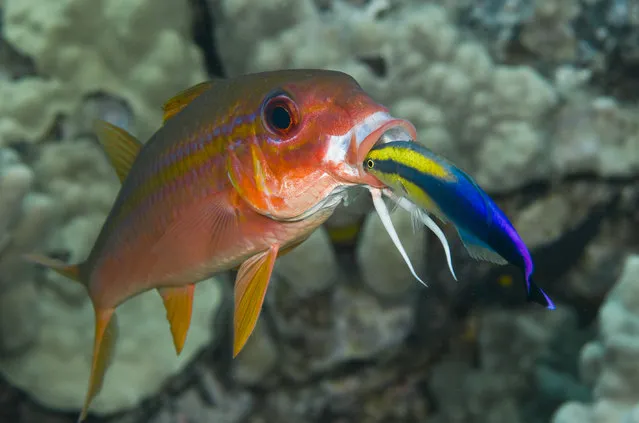
A Hawaiian cleaner wrasse provides its cleaning services to a yellowfin goatfish in a reef community off the Big Island in Hawaii. Cleaner species help rid their hosts of ectoparasites, dead tissue, bacteria and fungi. Studies have shown cleaning to play a vital role in keeping many reef ecosystems healthy. (Photo by Marty Snyderman/Caters News Agency)

A Hawaiian cleaner wrasse provides its cleaning services to a yellowfin goatfish in a reef community off the Big Island in Hawaii. Cleaner species help rid their hosts of ectoparasites, dead tissue, bacteria and fungi. Studies have shown cleaning to play a vital role in keeping many reef ecosystems healthy. (Photo by Marty Snyderman/Caters News Agency)
Details
21 Mar 2018 00:05:00
Chilean police officers march with the puppies of future police dogs during the annual military parade at the Bernardo O'Higgins park in Santiago, Chile, September 19, 2018. (Photo by Rodrigo Garrido/Reuters)

Chilean police officers march with the puppies of future police dogs during the annual military parade at the Bernardo O'Higgins park in Santiago, Chile, September 19, 2018. (Photo by Rodrigo Garrido/Reuters)
Details
21 Sep 2018 10:13:00
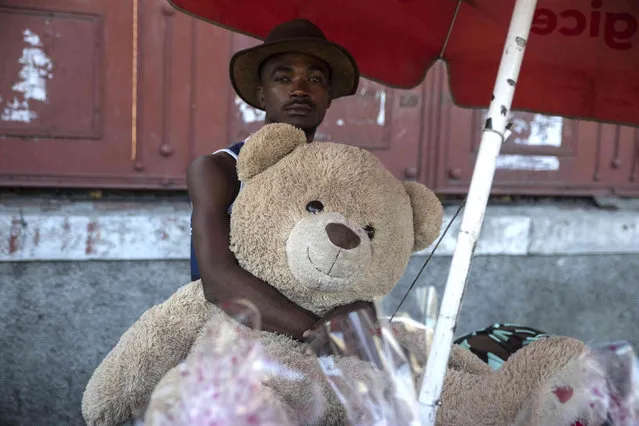
A vendor holds a teddy bear for sale on Valentine's Day in Port-au-Prince, Haiti, Monday, February 14, 2022. (Photo by Joseph Odelyn/AP Photo)

A vendor holds a teddy bear for sale on Valentine's Day in Port-au-Prince, Haiti, Monday, February 14, 2022. (Photo by Joseph Odelyn/AP Photo)
Details
26 Feb 2022 04:49:00
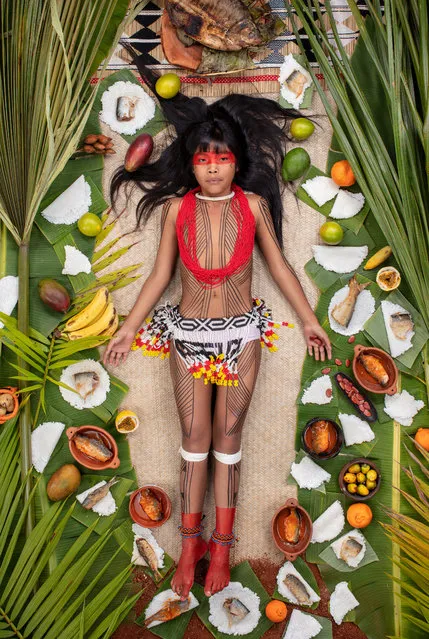
Kawakanih Yawalapiti, 9, Upper Xingu region of Mato Grosso, Brazil, 2018: Kawakanih lives with her tribe, the Yawalapiti, in Xingu national park, a preserve in the Amazon basin of Brazil. The Yawalapiti collect seeds to preserve species unique to their ecosystem, which lies between the rain forest and savannah. Kawakanih’s diet is simple, consisting mainly of fish, cassava, porridge, fruit and nuts. “It takes five minutes to catch dinner”, says Kawakanih. “When you’re hungry, you just go to the river with your net”. (Photo by Gregg Segal/The Guardian)

Photographer Gregg Segal travelled the world to document children and the food they eat in a week. Partly inspired by the increasing problems of childhood obesity, he tracked traditional regional diets as yet unaffected by globalisation, and ironically, found that the healthiest diets were often eaten by the least well off. (Photo by Gregg Segal/The Guardian)
Details
03 Jul 2019 00:03:00