Loading...
Done
A woman wearing a four-leaf clover-like hairpin takes a selfie nearby Nanluoguxiang street in Beijing, China, September 16, 2015. (Photo by Kim Kyung-Hoon/Reuters)

A woman wearing a four-leaf clover-like hairpin takes a selfie nearby Nanluoguxiang street in Beijing, China, September 16, 2015. Wearing antenna styled hairpins in the shape of various flowers and plants at scenic spots has become a new trend in Beijing. (Photo by Kim Kyung-Hoon/Reuters)
Details
18 Sep 2015 15:08:00
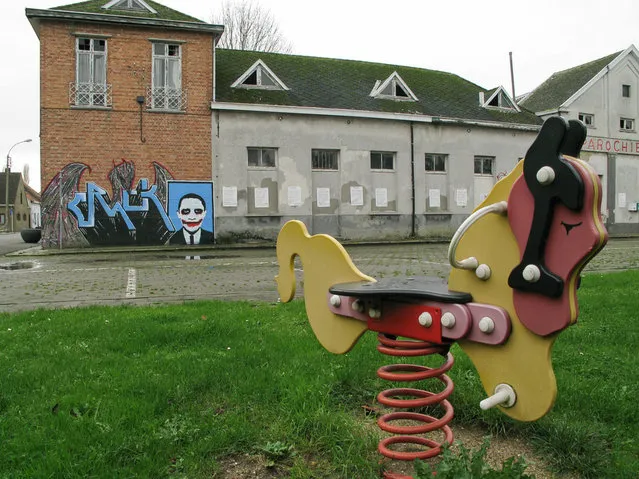
Abandon Village: Doel, Belgium

Doel is a 700 year old village on the river Scheldt in Belgium. Near to the local nuclear power plant, with its two giant cooling towers, it became the target for demolition not once but twice in order to make way for the ever expanding harbor. The successful protest groups of the seventies could not compete in the 90's and as residents began to leave, the government refused to rent out the properties again and instead let them fall into disrepair. On the 23rd of March 2007, the government decided that the village would be demolished by 2009 and in June 2008, residents received a letter informing them that they were to vacate their homes by the 1st of September 2009.
Details
20 Mar 2013 11:33:00
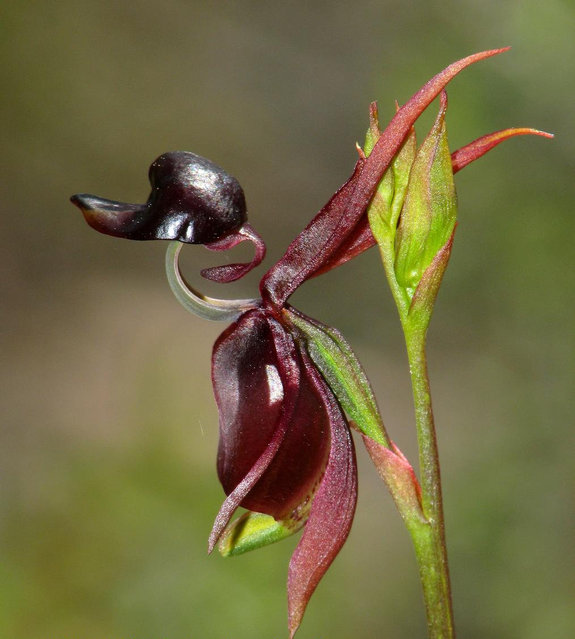
The Flying Duck Orchid

Caleana major, the Flying Duck Orchid is a small orchid found in eastern and southern Australia. This terrestrial plant features a remarkable flower, resembling a duck in flight. The flower is an attractant to insects, such as male sawflies which pollinate the flower in a process known as pseudocopulation. In 1986 this orchid was featured on an Australian postage stamp.


See Also: Monkey Orchid
Details
22 Apr 2013 10:56:00
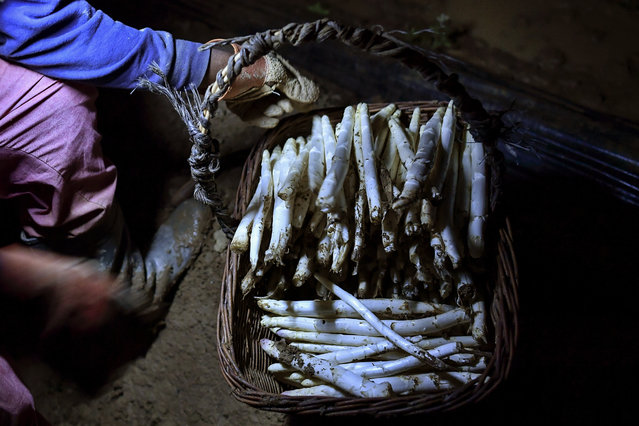
In this Thursday, May 31, 2018 photo, a temporary worker using a lantern collects white asparagus from a field in Caparroso, around 85 km (52 miles) from Pamplona, northern Spain. (Photo by Alvaro Barrientos/AP Photo)

In this Thursday, May 31, 2018 photo, a temporary worker using a lantern collects white asparagus from a field in Caparroso, around 85 km (52 miles) from Pamplona, northern Spain. Dubbed the “white gold” of these northern Spanish farms because of their color and the high price they fetch in markets and restaurants around the world, the stringy delicacy is planted every fall and picked each year between April and June, at the height of the spring. (Photo by Alvaro Barrientos/AP Photo)
Details
09 Jun 2018 00:03:00
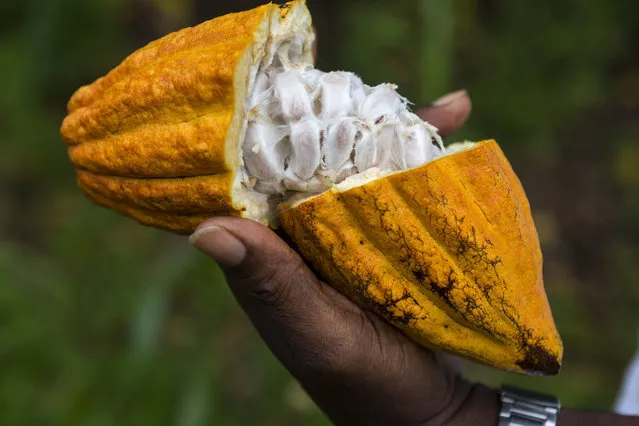
Farmer holding a freshly cut cocoa bean pod, revealing the pulp and seed inside on a rainforest farm. (Photo by Doug McKinlay/Getty Images)

Chocolate is the greatest gift the Earth has given us. The dessert table would be a sad sight without it. It’s so beloved, so appreciated, that the Swedish scientist who named the cocoa plant that gives us chocolate called it Theobroma cacao, which means “food of the gods”. Here: Farmer holding a freshly cut cocoa bean pod, revealing the pulp and seed inside on a rainforest farm. (Photo by Doug McKinlay/Getty Images)
Details
10 Aug 2016 10:20:00
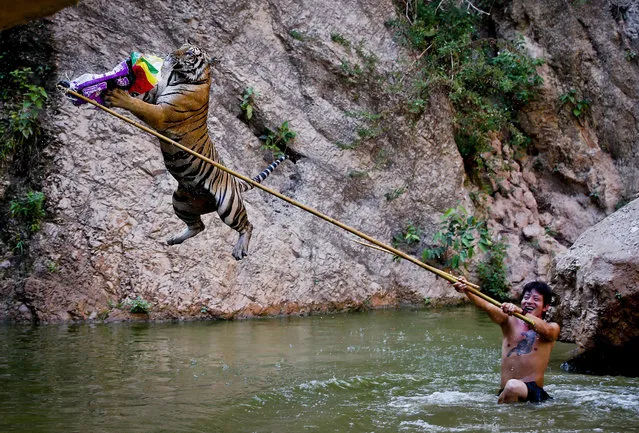
A picture made available 26 April 2016 shows a tiger playing in the water with a trainer nicknamed “Super Tiger Man” at the Tiger Temple in Kanchanaburi province, Thailand, 24 April 2016. The site known in Thai as “Wat Pa Luangta Maha Bua Yannasampanno” has been the focus of a dispute with the Department of National Parks, Wildlife and Plant Conservation (DNP) after the DNP asked in 2015 that the temple hands over its 147 tigers since it was not licensed to keep them. The temple has requested for a zoo license according to its managing director. (Photo by Diego Azubel/EPA)

A picture made available 26 April 2016 shows a tiger playing in the water with a trainer nicknamed “Super Tiger Man” at the Tiger Temple in Kanchanaburi province, Thailand, 24 April 2016. The site known in Thai as “Wat Pa Luangta Maha Bua Yannasampanno” has been the focus of a dispute with the Department of National Parks, Wildlife and Plant Conservation (DNP) after the DNP asked in 2015 that the temple hands over its 147 tigers since it was not licensed to keep them. The temple has requested for a zoo license according to its managing director. (Photo by Diego Azubel/EPA)
Details
01 Jun 2016 12:44:00
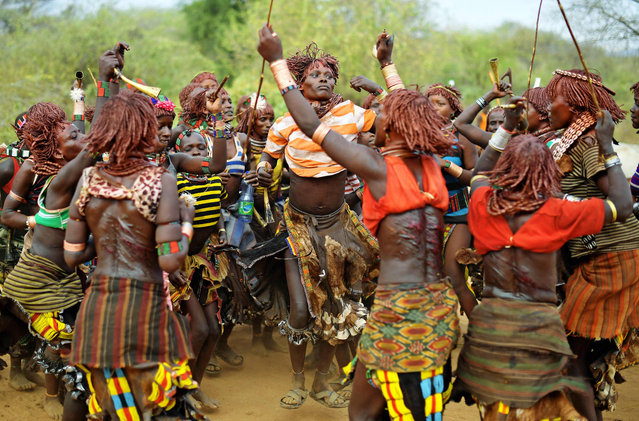
Hamar women dance before a bull jumping ceremony in Ethiopia's southern Omo Valley region near Turmi on September 19, 2016. The Hamar are a Nilotic ethnic group in Ethiopia. The construction of the Gibe III dam, the third largest hydroelectric plant in Africa, and large areas of very “thirsty” cotton and sugar plantations and factories along the Omo river are impacting heavily on the lives of tribes living in the Omo Valley who depend on the river for their survival and way of life. Human rights groups fear for the future of the tribes if they are forced to scatter, give up traditional ways through loss of land or ability to keep cattle as globalisation and development increases. (Photo by Carl De Souza/AFP Photo)

Hamar women dance before a bull jumping ceremony in Ethiopia's southern Omo Valley region near Turmi on September 19, 2016. The Hamar are a Nilotic ethnic group in Ethiopia. The construction of the Gibe III dam, the third largest hydroelectric plant in Africa, and large areas of very “thirsty” cotton and sugar plantations and factories along the Omo river are impacting heavily on the lives of tribes living in the Omo Valley who depend on the river for their survival and way of life. (Photo by Carl De Souza/AFP Photo)
Details
02 Oct 2016 08:45:00
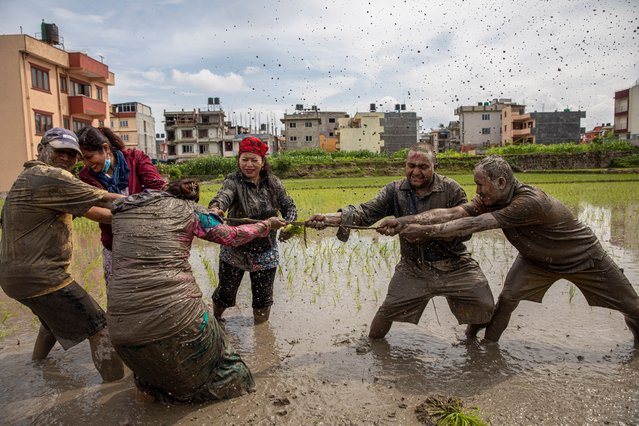
Farmers play tug of war in a paddy field on National Paddy Day in Tokha village, on the outskirt of capital Kathmandu, Nepal, 29 June 2021. Nepal is celebrating National Paddy Day with various events on 29 June. On this day, known as Asar Pandra, farmers begin the annual rice planting season and mark the day with various festivities such as preparing rice meals with muddy water, mud being a symbol for a prosperous season. Sixty percent of Nepal's agriculture industry relies on monsoon rain while 40 percent is carried out through irrigation. Agriculture is a major contributor to the country's GDP. (Photo by Narendra Shrestha/EPA/EFE)

Farmers play tug of war in a paddy field on National Paddy Day in Tokha village, on the outskirt of capital Kathmandu, Nepal, 29 June 2021. Nepal is celebrating National Paddy Day with various events on 29 June. On this day, known as Asar Pandra, farmers begin the annual rice planting season and mark the day with various festivities such as preparing rice meals with muddy water, mud being a symbol for a prosperous season. Sixty percent of Nepal's agriculture industry relies on monsoon rain while 40 percent is carried out through irrigation. Agriculture is a major contributor to the country's GDP. (Photo by Narendra Shrestha/EPA/EFE)
Details
26 Feb 2022 04:53:00