Loading...
Done
Baby Flamingoes

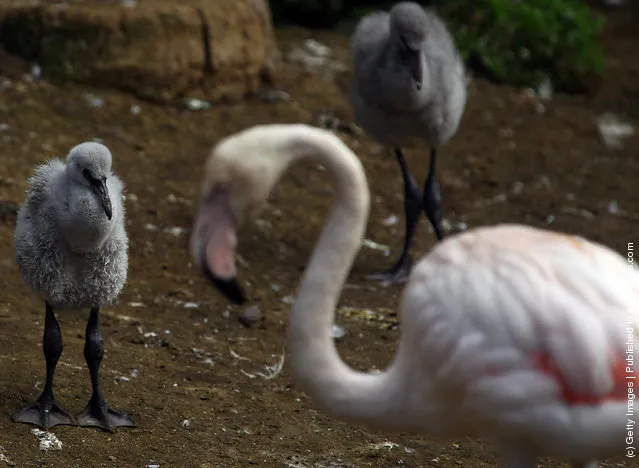
One of the nine baby flamingos born at Bristol Zoo stands with the adults as they feed together on August 19, 2011 in Bristol, England. Nine flamingo chicks have hatched at Bristol Zoo Gardens in the last three months – the biggest number the Zoo has ever had. The chicks, which are Greater Flamingoes from Africa and southern Europe and range in age from four weeks to three months old, take the Zoo's total flock to 38 birds. (Photo by Matt Cardy/Getty Images)
Details
21 Aug 2011 11:09:00
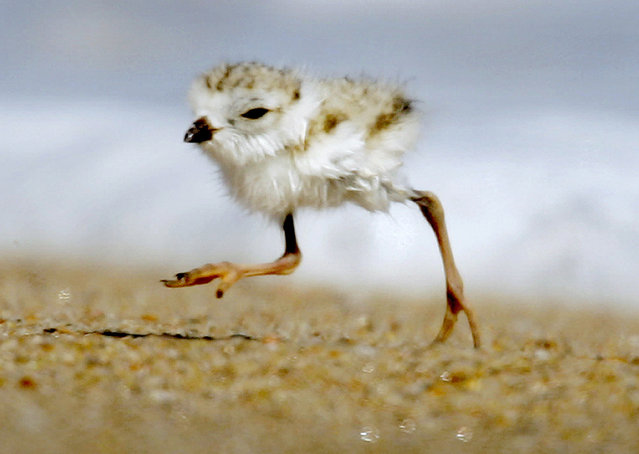
In this July 12, 2007 file photo, a two-day-old piping plover runs along a beach in the Quonochontaug Conservation Area in Westerly, R.I. A court fight to protect the piping plover, a bird listed as “threatened” under the federal Endangered Species Act, is holding up a $207 million plan to replenish sand along a 19-mile stretch of shoreline on New York's Fire Island. The sand was eroded during Superstorm Sandy. (Photo by Steven Senne/AP Photo)

In this July 12, 2007 file photo, a two-day-old piping plover runs along a beach in the Quonochontaug Conservation Area in Westerly, R.I. (Photo by Steven Senne/AP Photo)
Details
25 Nov 2014 11:28:00
A Sumatran Tiger looks at visiting children from it's enclosure during the ZSL London Zoo's annual stocktake of animals on January 5, 2015 in London, England. (Photo by Dan Kitwood/Getty Images)

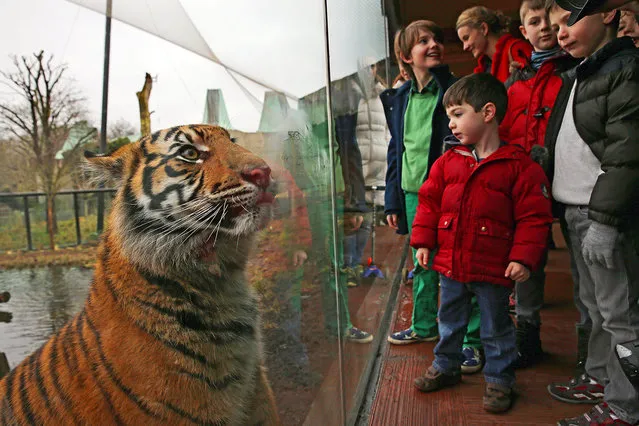
A Sumatran Tiger looks at visiting children from it's enclosure during the ZSL London Zoo's annual stocktake of animals on January 5, 2015 in London, England. The zoo's annual stocktake requires keepers to check on the numbers of every one of the 800 different animal species, including every invertebrate, bird, fish, mammal, reptile, and amphibian. (Photo by Dan Kitwood/Getty Images)
Details
06 Jan 2015 12:08:00
An aerial view of a livestock enclosure of the Himba people, in October, 2014, in the Namib Desert, Namibia. (Photo by Theo Allofs/Barcroft Media)

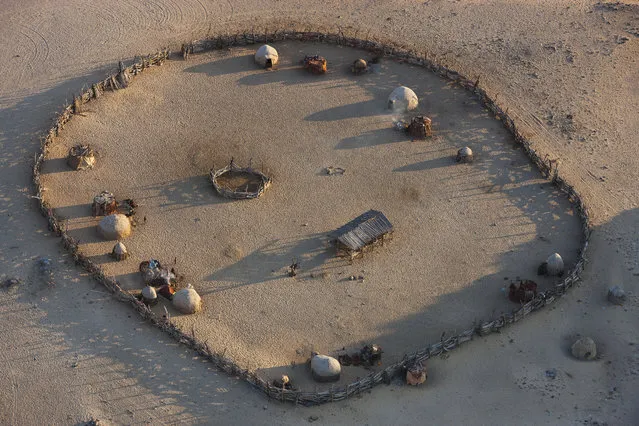
An aerial view of a livestock enclosure of the Himba people, in October, 2014, in the Namib Desert, Namibia. A photographer has captured a bird's eye view of the stunning Namib Desert from a paraglider. Theo Allofs travels the world taking stunning pictures of untouched landscapes from a unique perspective. Soaring 300 metres above ground, Theo shot the yellow sand dunes, dry red river beds and remote townships in Namibia. (Photo by Theo Allofs/Barcroft Media)
Details
24 Apr 2015 11:06:00
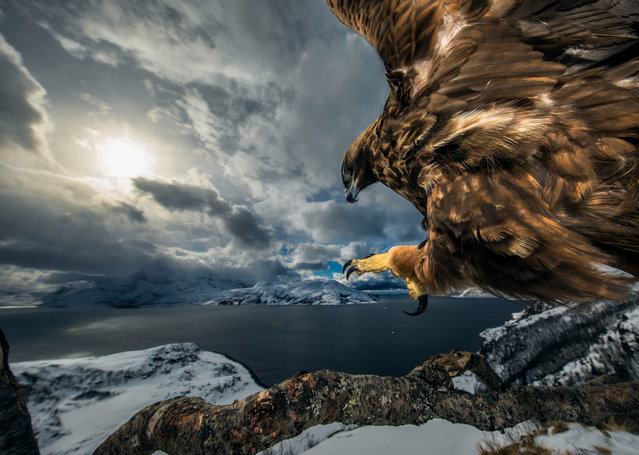
Birds behaviour winner: Land of the Eagle by Audun Rikardsen, Norway. High on a ledge, on the coast near his home in northern Norway, Rikardsen carefully positioned an old tree branch that he hoped would make a perfect golden eagle lookout. To this, he bolted a tripod head with a camera, flashes and motion sensor attached, and built himself a hide a short distance away. From time to time, he left road‑kill carrion nearby. Very gradually – over the next three years – a golden eagle got used to the camera and started to use the branch regularly to survey the coast below. (Photo by Audun Rikardsen/2019 Wildlife Photographer of the Year)

Birds behaviour winner: Land of the Eagle by Audun Rikardsen, Norway. High on a ledge, on the coast near his home in northern Norway, Rikardsen carefully positioned an old tree branch that he hoped would make a perfect golden eagle lookout. To this, he bolted a tripod head with a camera, flashes and motion sensor attached, and built himself a hide a short distance away. From time to time, he left road‑kill carrion nearby. Very gradually – over the next three years – a golden eagle got used to the camera and started to use the branch regularly to survey the coast below. (Photo by Audun Rikardsen/2019 Wildlife Photographer of the Year)
Details
17 Oct 2019 00:03:00
Galapagos – Rocking the Cradle: Four major ocean currents converge along the Galapagos archipelago, creating the conditions for an extraordinary diversity of animal life, April 25, 2016. The islands are home to at least 7,000 flora and fauna species, of which 97 percent of the reptiles, 80 percent of the land birds, 50 percent of the insects and 30 percent of the plants are endemic. The local ecosystem is highly sensitive to the changes in temperature, rainfall and ocean currents that characterize the climatic events known as El Niño and La Niña. These changes cause marked fluctuations in weather and food availability. Many scientists expect the frequency of El Niño and La Niña to increase as a result of climate change, making the Galapagos a possible early-warning location for its effects. (Photo by Thomas P. Peschak for National Geographic/World Press Photo)

Galapagos – Rocking the Cradle: Four major ocean currents converge along the Galapagos archipelago, creating the conditions for an extraordinary diversity of animal life, April 25, 2016. The islands are home to at least 7,000 flora and fauna species, of which 97 percent of the reptiles, 80 percent of the land birds, 50 percent of the insects and 30 percent of the plants are endemic. (Photo by Thomas P. Peschak for National Geographic/World Press Photo)
Details
16 Apr 2018 00:01:00
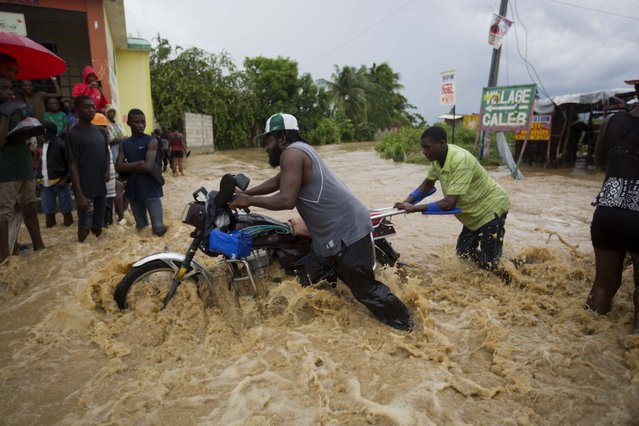
Men push a motorbike through a street flooded by a river that overflowed from heavy rains caused by Hurricane Matthew in Leogane, Haiti, Wednesday, October 5, 2016. Rescue workers in Haiti struggled to reach cutoff towns and learn the full extent of the death and destruction caused by Hurricane Matthew as the storm began battering the Bahamas on Wednesday and triggered large-scale evacuations along the U.S. East Coast. (Photo by Dieu Nalio Chery/AP Photo)

Men push a motorbike through a street flooded by a river that overflowed from heavy rains caused by Hurricane Matthew in Leogane, Haiti, Wednesday, October 5, 2016. Rescue workers in Haiti struggled to reach cutoff towns and learn the full extent of the death and destruction caused by Hurricane Matthew as the storm began battering the Bahamas on Wednesday and triggered large-scale evacuations along the U.S. East Coast. (Photo by Dieu Nalio Chery/AP Photo)
Details
06 Oct 2016 09:46:00
A 10-year-old boy living on the streets of New Delhi lies down on cascading water of a fountain in the gardens of the India Gate monument on May 20, 2016. The Indian Meteorological Department issued warnings of “severe heat wave” conditions across large parts of India's north and west, including the capital Delhi, where temperatures hit 47 degrees Celsius. (Photo by Roberto Schmidt/AFP Photo)

A 10-year-old boy living on the streets of New Delhi lies down on cascading water of a fountain in the gardens of the India Gate monument on May 20, 2016. The Indian Meteorological Department issued warnings of “severe heat wave” conditions across large parts of India's north and west, including the capital Delhi, where temperatures hit 47 degrees Celsius. (Photo by Roberto Schmidt/AFP Photo)
Details
28 May 2016 12:06:00