Loading...
Done
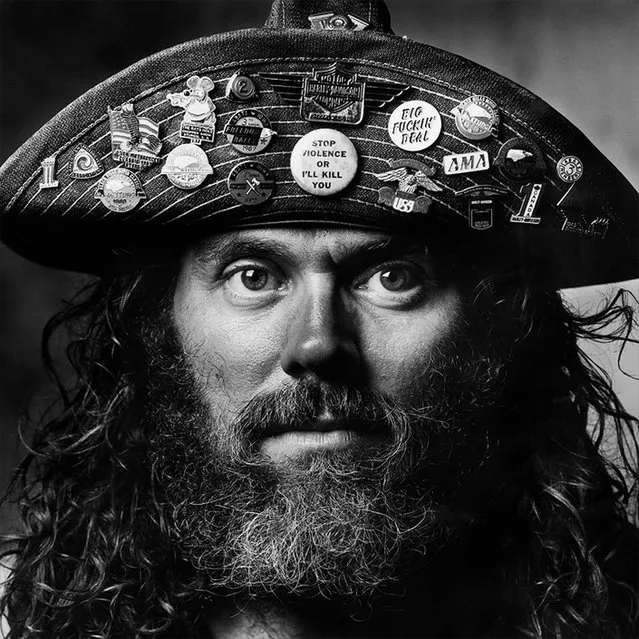
American Bikers By Sandro Miller

Bikers are the knights of the modern times. They ride their steel horses; they drink and brawl and have their own strict code of honor. Some people view them as land-dwelling pirates; however, they are so much more than that. Photographer Sandro Miller is one of the few people who decided to look deeper than their rugged exterior, realizing that it takes more than a Harley Davidson bike and a leather jacket to make a biker. A true biker cannot be chained to a single place. The spirit of the true biker demands change, it seeks adventure, and it thirsts for freedom! (Photo by Sandro Miller)
Details
26 Nov 2014 14:50:00
This picture taken on March 16, 2017 shows a crew member introducing the dining car of the Train Suite Shiki- Shima, operated by East Japan Railway, in Tokyo during a press preview. (Photo by AFP Photo/JIJI Press)

This picture taken on March 16, 2017 shows a crew member introducing the dining car of the Train Suite Shiki- Shima, operated by East Japan Railway, in Tokyo during a press preview. The luxury sleeper Shiki- Shima, which can accommodate up to 34 passengers, has 10 cars, including a lounge car, a dining car and two observatory cars. The train has only 17 cabins, all suites, and the most expensive room, known as Shiki- Shima Suite, is priced at 950,000 yen (8480 USD) per person when shared by two people. (Photo by AFP Photo/JIJI Press)
Details
04 May 2017 09:35:00


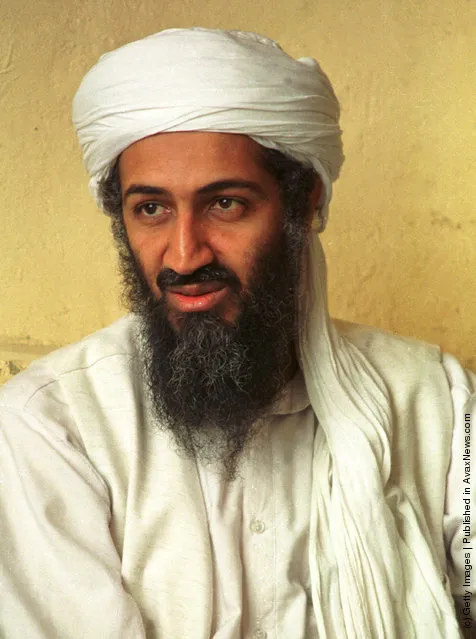
“Osama bin Laden has been killed in an American operation in Pakistan, President Obama announced from the White House on Sunday, calling his death “the most significant achievement to date in our nation's effort to defeat al-Qaida”. In a statement delivered from the East Room, Obama said a small team of U.S. personnel attacked a compound in Pakistan's Abbottabad Valley, where bin Laden had been hiding since late last summer. The U.S. team killed the 54-year-old al-Qaida leader after a firefight and “took custody of his body”, Obama said.” – Nwsource.com

Photo: Saudi dissident Osama bin Laden in an undated photo. October 10, 2001. Afghanistan's ruling Taliban lifted restrictions on Bin Laden, giving him permission to conduct “Jihad”, or holy war, against Afghanistan's enemies. (Photo by Getty Images)
Details
02 May 2011 07:36:00


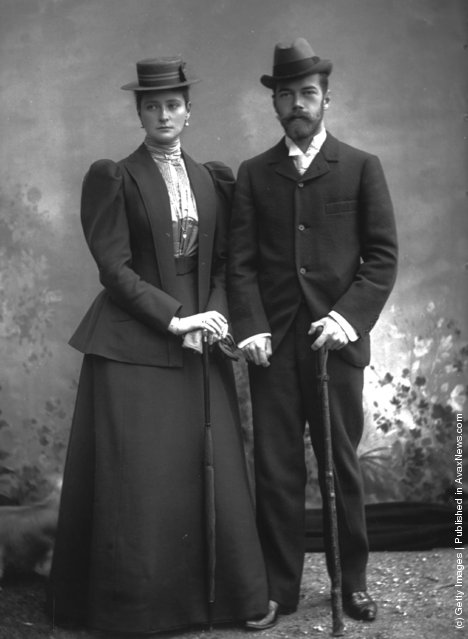
“Nicholas II (Russian: Николай II, Николай Александрович Романов, tr. Nikolay II, Nikolay Alexandrovich Romanov) (18 May [O.S. 6 May] 1868 – 17 July 1918) was the last Emperor of Russia, Grand Prince of Finland, and titular King of Poland. His official title was Nicholas II, Emperor and Autocrat of All the Russias and he is known as Saint Nicholas the Passion-Bearer by the Russian Orthodox Church. Nicholas II, his wife, his son, his four daughters, the family's medical doctor, the Tsar's valet, the Empress' lady-in-waiting and the family's cook were murdered in the same room by the Bolsheviks on the night of 16/17 July 1918”. – Wikipedia

Photo: Tsar Nicholas II (1868–1918) with his wife. (Photo by W. & D. Downey/Getty Images). Circa 1900
Details
12 May 2011 07:26:00
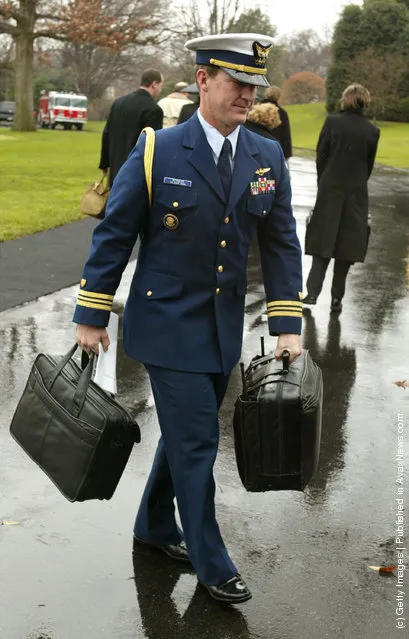
Nuclear Football

“The nuclear football (also known as the atomic football, the president's emergency satchel, the button, the black box, or just the football) is a briefcase, the contents of which are to be used by the President of the United States of America to authorize a nuclear attack while away from fixed command centers, such as the White House Situation Room. It functions as a mobile hub in the strategic defense system of the United States. It is a metallic Zero Halliburton briefcase carried in a black leather “jacket”. The package weighs around 45 pounds (20 kilograms). A small antenna protrudes from the bag near the handle”. – Wikipedia

Photo: A U.S. Military officer carries the “football”, which carries nuclear launch codes, on South Lawn after returning with U.S. President George W. Bush to the White House January 7, 2002 in Washington, DC. (Photo by Mark Wilson/Getty Images)
Details
06 Aug 2011 12:53:00
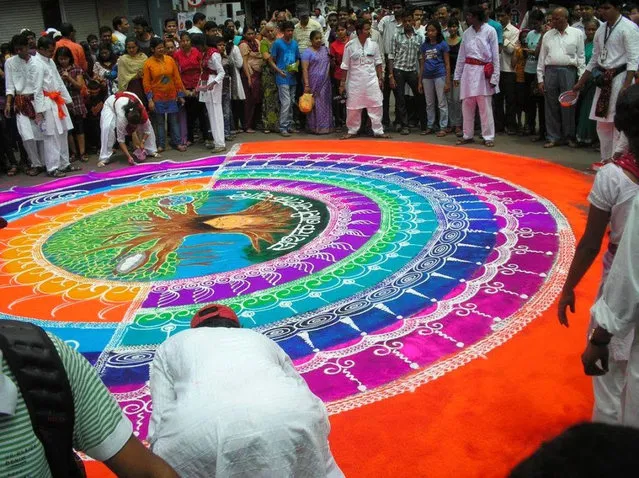
Rangoli Folk Art From India

Rangoli, also known as kolam or Muggu, is a folk art from India in which patterns are created on the floor in living rooms or courtyards using materials such as colored rice, dry flour, colored sand or flower petals. It is usually made during Diwali, Onam, Pongal and other Indian festivals. They are meant to be sacred welcoming areas for the Hindu deities. The ancient symbols have been passed down through the ages, from each generation to the next, keeping both the art form and the tradition alive. Similar practices are followed in different Indian states: in Tamil Nadu, there is Kolam in Tamil Nadu; Mandana in Rajasthan; Chaookpurna in Chhattisgarh; Alpana in West Bengal; Aripana in Bihar; Chowk pujan in Uttar Pradesh; Muggu in Andhra Pradesh and others.
Details
16 Jun 2014 10:37:00
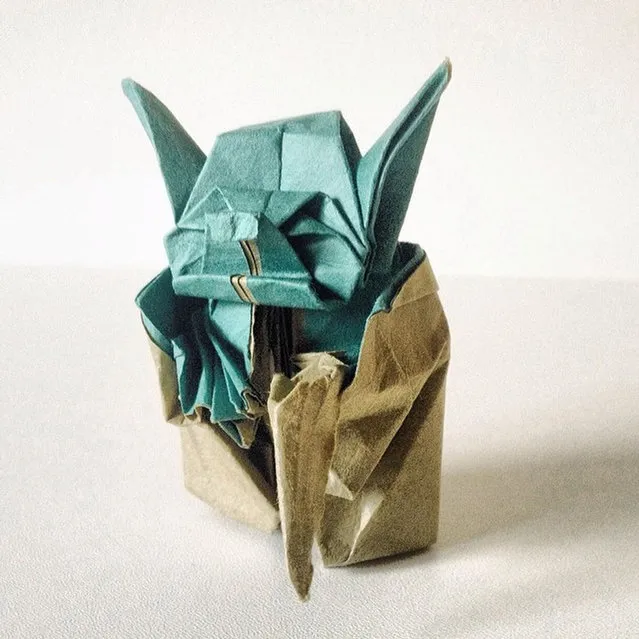
Origami By Ross Symons

As kids we have the natural desire to explore and to create. Whenever our parents would make for us a paper plane, we would become overjoyed seeing it fly across the room. However, planes are not the only thing that can be made from paper, and not only kids are fascinated by it. Some people master the art of origami and are able to create pretty much anything. You never know what’s going to come out when the artist twists and turns a piece of paper in meticulous ways. Finally, the figurine is complete, and you immediately see the striking resemblance of this piece of paper with an animal or some other creature. Ross Symons is one of those artists. He creates his figurines simply for the joy it brings him. Maybe, he uses this as a medium to enter his childhood, or maybe he has other motifs – we will never know. (Photo by Ross Symons)
Details
31 Oct 2014 12:12:00
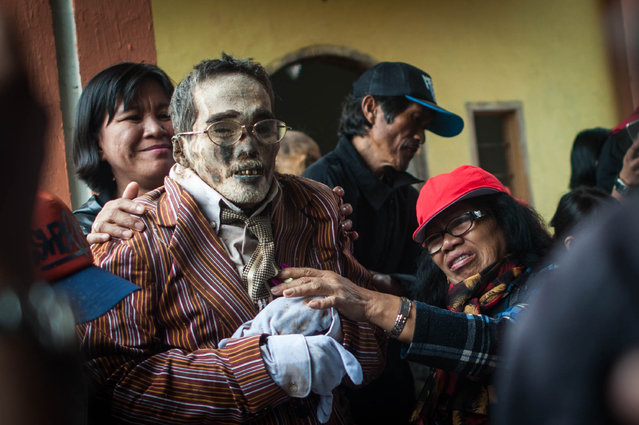
Relatives clean the body of Paul Sampe Lumba who has been dead for seven yeas during the Ma'nene ritual at Panggala Village on August 26, 2016 in Toraja, Indonesia. (Photo by Sijori Images/Barcroft Images)

Relatives clean the body of Paul Sampe Lumba who has been dead for seven yeas during the Ma'nene ritual at Panggala Village on August 26, 2016 in Toraja, Indonesia. The Ma'nene ritual in performed during a ceremony every three years, where the dead are exhumed for a change of clothes, among the people of Toraja as an expression of the love of the surviving family. (Photo by Sijori Images/Barcroft Images)
Details
09 Sep 2016 09:12:00