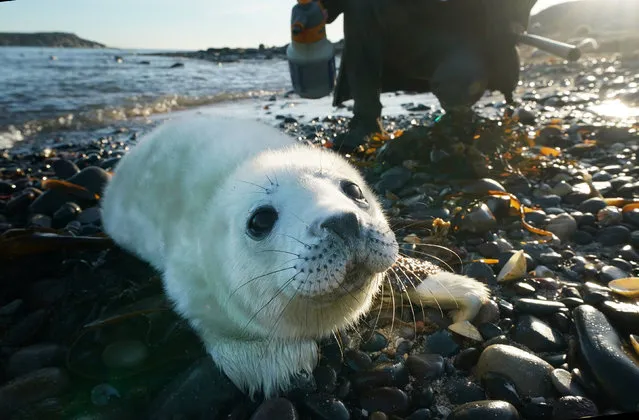
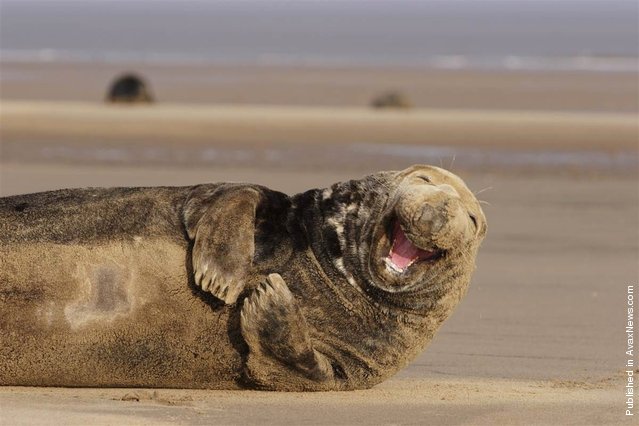
A ranger watches a seal pup near the Northumberland coast, Farne Islands, UK on December 19, 2018, where the National Trust says the number of Atlantic grey seal pups has reached a record high thanks to an abundance of food and a lack of predators. (Photo by Owen Humphreys/PA Wire Press Association)
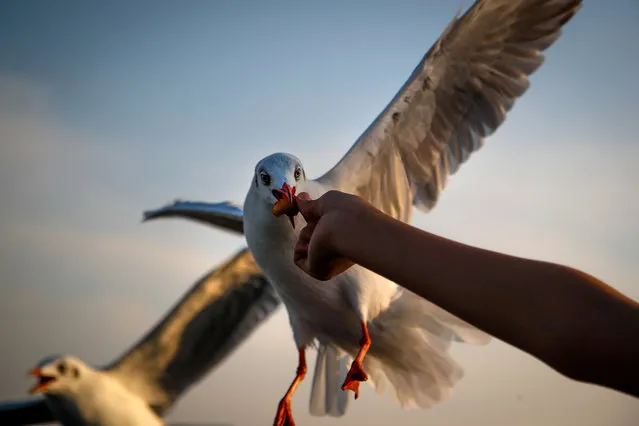
A seagull eats a piece of dried fish of a man's hand during sunset at Bang Pu seaside resort in Samut Prakan province on the outskirts of Bangkok, Thailand, 13 January 2019. Every year during the cold winter months between October to March thousands of seagulls migrate to Bang Pu seaside from Siberia to escape the harsh winter. (Photo by Diego Azubel/EPA/EFE)
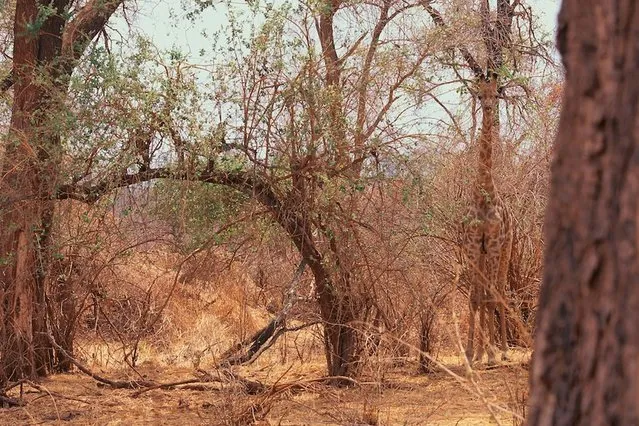
These snaps show a series of crafty critters camouflaged out of view. Many adventurous animals love to stand out from a crowd, but there are times when they need to blend in a bit more too. Photo: Tall story – can you spot the giraffe? (Photo by Caters News)
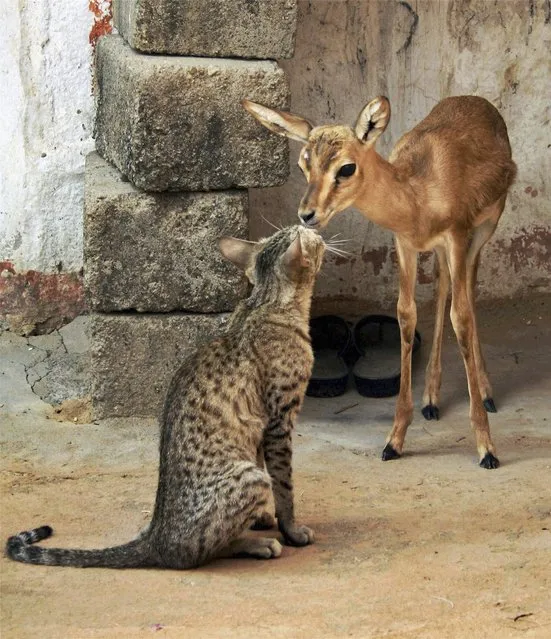
In this Wednesday, May 23, 2012 photograph, a young deer and a cat share a moment in Feench village near Jodhpur, Rajasthan state, India. (Photo by AP Photo)
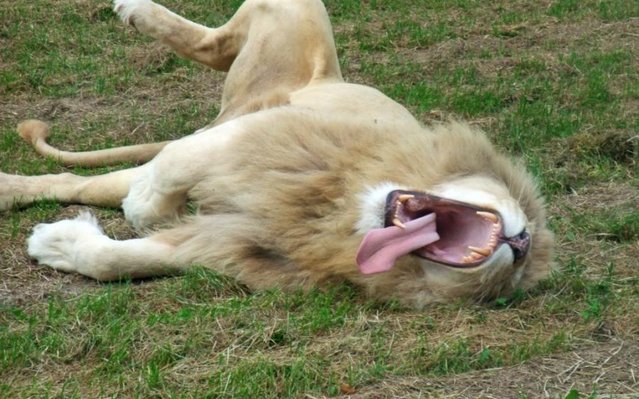
In animals, yawning can serve as a warning signal. For example, Charles Darwin, in his book The Expression of the Emotions in Man and Animals, mentioned that baboons yawn to threaten their enemies, possibly by displaying large canine teeth. Similarly, Siamese fighting fish yawn only when they see a conspecific (same species) or their own mirror-image, and their yawn often accompanies aggressive attack. Guinea pigs also yawn in a display of dominance or anger, displaying their impressive incisor teeth. This is often accompanied by teeth chattering, purring and scent marking.