Loading...
Done
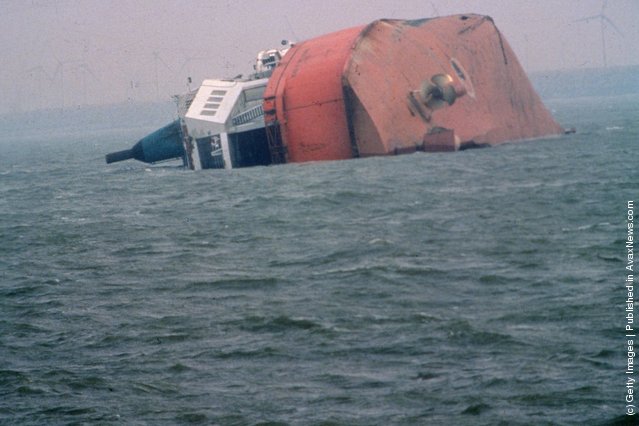
The wreck of the Herald of Free Enterprise, which capsized near Zeebrugge on the 6th of March 1987

“MS Herald of Free Enterprise was a roll-on roll-off (RORO) car and passenger ferry owned by Townsend Thoresen. She was one of three ships commissioned by the company to operate on the Dover–Calais route across the English Channel. The ferry capsized on the night of 6 March 1987, moments after leaving the Belgian port of Zeebrugge, killing 193 passengers and crew. This was the deadliest maritime disaster involving a British ship in peacetime since the sinking of the Iolaire in 1919”. – Wikipedia

Photo: The wreck of the Herald of Free Enterprise, which capsized near Zeebrugge on the 6th of March 1987. (Photo by Hulton Archive/Getty Images). 1987
Details
06 Mar 2012 13:26:00
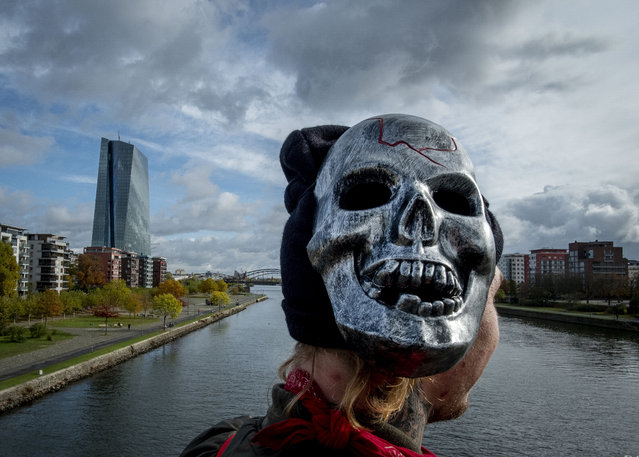
A young man wears a mask on the right side of his head as he stands on a bridge with the European Central Bank at left in Frankfurt, Germany, Thursday, October 29, 2020. (Photo by Michael Probst/AP Photo)

A young man wears a mask on the right side of his head as he stands on a bridge with the European Central Bank at left in Frankfurt, Germany, Thursday, October 29, 2020. (Photo by Michael Probst/AP Photo)
Details
31 Oct 2020 00:05:00
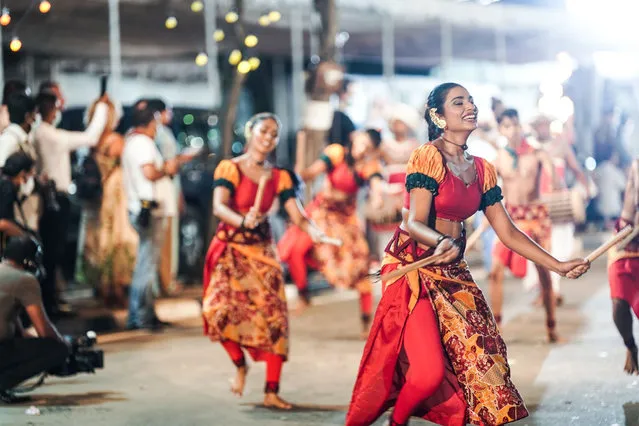
Dancers perform during the Navam Perahera at the Gangaramaya Temple in Colombo, Sri Lanka, on February 15, 2022. (Photo by Xinhua News Agency/Rex Features/Shutterstock)

Dancers perform during the Navam Perahera at the Gangaramaya Temple in Colombo, Sri Lanka, on February 15, 2022. (Photo by Xinhua News Agency/Rex Features/Shutterstock)
Details
06 Apr 2022 05:21:00
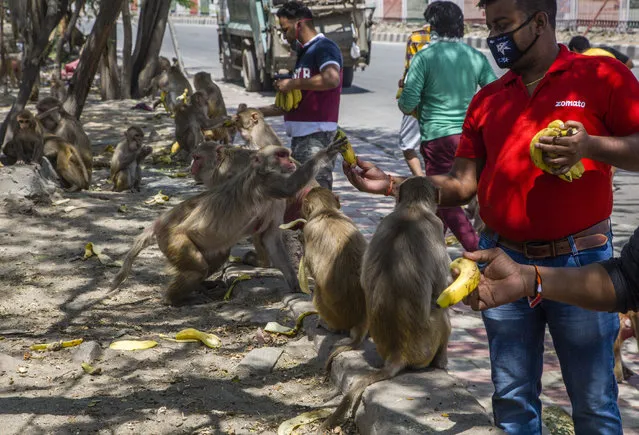
Men give bananas to monkeys gathered on the side of the road as India remains under an unprecedented lockdown over the highly contagious coronavirus (COVID-19) on April 08, 2020 in New Delhi, India. Wild animals, including monkeys, are roaming human settlements in India as people are staying indoors due to the 21-day lockdown. With India's 1.3 billion population and tens of millions of cars off the roads, wildlife is moving towards areas inhabited by humans. Wild animals in many countries have been seen roaming streets. A study says some 60 percent of the new diseases found around the globe every year are zoonotic, meaning they originate in animals and are passed on to humans. COVID-19 is a zoonotic disease that is suspected to have come from the wet markets of Wuhan, China. (Photo by Yawar Nazir/Getty Images)

Men give bananas to monkeys gathered on the side of the road as India remains under an unprecedented lockdown over the highly contagious coronavirus (COVID-19) on April 08, 2020 in New Delhi, India. Wild animals, including monkeys, are roaming human settlements in India as people are staying indoors due to the 21-day lockdown. (Photo by Yawar Nazir/Getty Images)
Details
12 Apr 2020 00:05:00
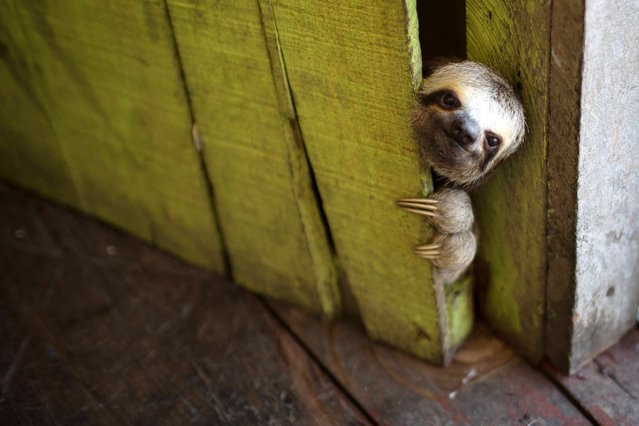
A sloth peeks out from behind a door on a floating house in the “Lago do Janauari” near Manaus, Brazil, Tuesday, May 20, 2014. Manaus is one of the host cities for the 2014 World Cup in Brazil. (Photo by Felipe Dana/AP Photo)

A sloth peeks out from behind a door on a floating house in the “Lago do Janauari” near Manaus, Brazil, Tuesday, May 20, 2014. Manaus is one of the host cities for the 2014 World Cup in Brazil. (Photo by Felipe Dana/AP Photo)
Details
24 May 2014 13:25:00
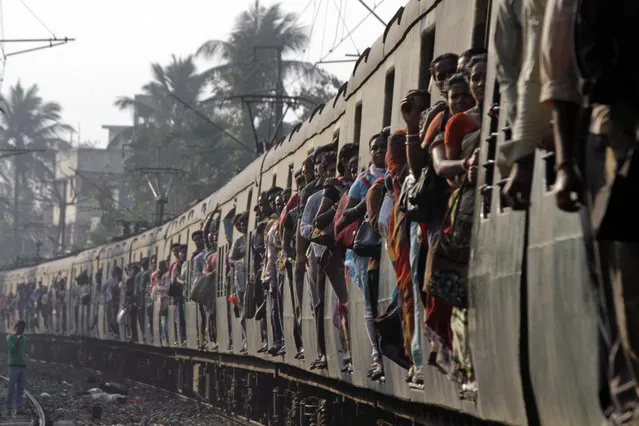
Indian commuters travel in a local train in Kolkata, India, Tuesday, Feb. 26, 2013. Indian Railway Minister Pawan Kumar Bansal is presenting the country's rail budget for next fiscal year in the parliament Tuesday, Feb. 26, 2013. Indian railway network is one of the world's largest, with some 14 million passengers daily and some 64,000 kilometers (40,000 miles) of railway track cut through some of the most densely populated cities. (Photo by Bikas Das/AP Photo)

Indian commuters travel in a local train in Kolkata, India, Tuesday, February 26, 2013. Indian Railway Minister Pawan Kumar Bansal is presenting the country's rail budget for next fiscal year in the parliament Tuesday, Feb. 26, 2013. Indian railway network is one of the world's largest, with some 14 million passengers daily and some 64,000 kilometers (40,000 miles) of railway track cut through some of the most densely populated cities. (Photo by Bikas Das/AP Photo)
Details
05 Mar 2013 12:57:00
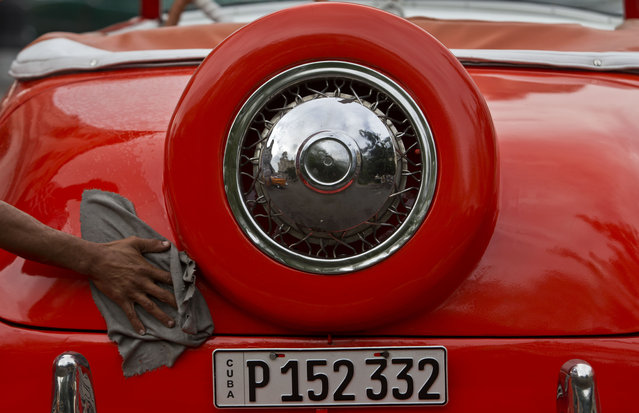
In this October 16, 2014 photo, a man cleans his American classic car before going to work in Havana, Cuba. While the U.S. embargo that took effect in 1961 stopped the flow of new cars, and most parts, a few Cubans now manage to bring in replacement parts when friends or family visit from the U.S. (Photo by Franklin Reyes/AP Photo)

In this October 16, 2014 photo, a man cleans his American classic car before going to work in Havana, Cuba. While the U.S. embargo that took effect in 1961 stopped the flow of new cars, and most parts, a few Cubans now manage to bring in replacement parts when friends or family visit from the U.S. (Photo by Franklin Reyes/AP Photo)
Details
20 Oct 2014 09:01:00
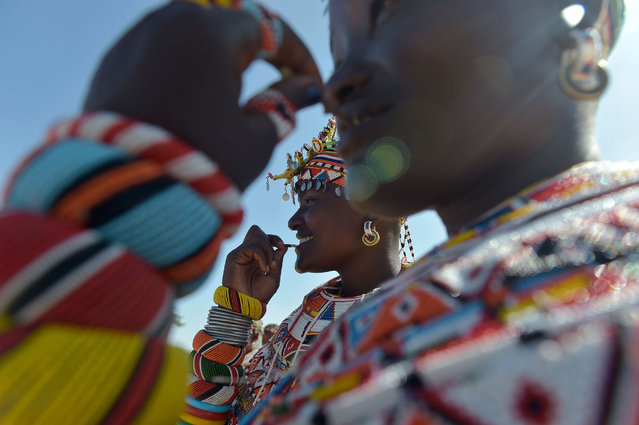
Samburu women of the Lorubai traditional dance group are seen wearing traditional beaded necklaces during a Peace Marathon for pastoralist communities at the Archers post in Isiolo, Kenya on April 26, 2018. The aim of the event is to bring the warring pastoralist communities of Samburu, Turkana, Borana and others together, and end the rivalry due to scarcity of pasture and water in the region. The peace marathon is organized by Kenya's Northern Rangeland Trust. (Photo by Simon Maina/AFP Photo)

Samburu women of the Lorubai traditional dance group are seen wearing traditional beaded necklaces during a Peace Marathon for pastoralist communities at the Archers post in Isiolo, Kenya on April 26, 2018. The aim of the event is to bring the warring pastoralist communities of Samburu, Turkana, Borana and others together, and end the rivalry due to scarcity of pasture and water in the region. The peace marathon is organized by Kenya's Northern Rangeland Trust. (Photo by Simon Maina/AFP Photo)
Details
21 Jun 2018 00:05:00