Loading...
Done
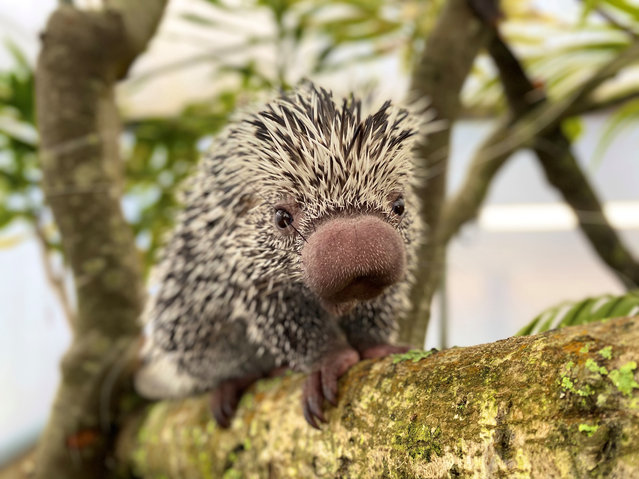
Runner-up, Heart and Minds: Nifty nose, by Samantha Allworthy at Longleat. Species: prehensile tailed porcupines. (Photo by Samantha Allworthy/BIAZA 2020 Photography Competition)

The British and Irish Association of Zoos and Aquariums (BIAZA) has announced the winning images in its annual photography competition. The 2020 winners show the important work of zoos and aquariums at an immensely challenging time. After months of closures, these conservation organisations are reeling from the financial impacts of the coronavirus pandemic. Here: Runner-up, Heart and Minds: Nifty nose, by Samantha Allworthy at Longleat. Species: prehensile tailed porcupines. (Photo by Samantha Allworthy/BIAZA 2020 Photography Competition)
Details
24 Jul 2020 00:03:00
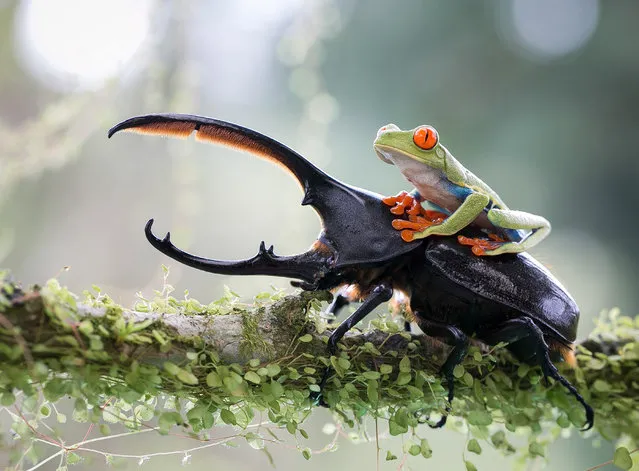
“The knight and his steed”. This picture was taken in a natural but controlled environment. There are pictures that can not be done in nature or that would imply a very high cost of both time and money, thats why photography workshops are run conducted at strategic locations and bringing EVERYONE who is interested, the basic notions (lighting, camera handling, composition, etc...) or the specimens, and afford them the opportunity to take pictures like this. (Photo and caption by Nicolas Reusens Boden (Sweden)/2014 Sony World Photography Awards)

“The knight and his steed”. This picture was taken in a natural but controlled environment. There are pictures that can not be done in nature or that would imply a very high cost of both time and money, thats why photography workshops are run conducted at strategic locations and bringing EVERYONE who is interested, the basic notions (lighting, camera handling, composition, etc...) or the specimens, and afford them the opportunity to take pictures like this. Although controlled, this shot was not prepared at all, I was performing a workshop with the agalychnis callidryas treefrog from Costa Rica when the frog managed to jump to the branch where this huge titan was sleeping... I had my gear ready so I only had to change a few settings and shoot... the rest is history. (Photo and caption by Nicolas Reusens Boden (Sweden)/2014 Sony World Photography Awards)
Details
10 Dec 2013 07:23:00
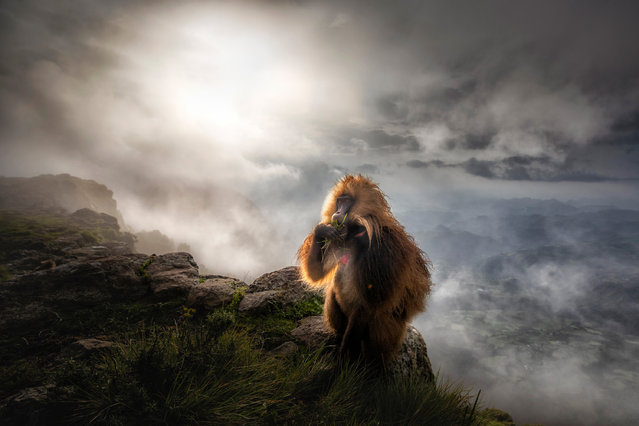
Highly commended, mammals: Gelada after the storm – Marco Gaiotti (Italy). “Gelada baboons are the only monkey species in the world that feed on grasses. They are native to the tableland of Ethiopia. Every morning large family groups wander from their sleeping places in the steep rock face, up to 1,000 metres high, to the feeding grounds at the tablelands. This image clearly depicts their feeding strategy: they pull out bunches of grass, sort the stalks and then lift them to their mouth. This shot was taken towards the end of the rainy season after a heavy storm”. (Photo by Marco Gaiotti/2019 GDT European Wildlife Photographer of the Year)

Highly commended, mammals: Gelada after the storm – Marco Gaiotti (Italy). “Gelada baboons are the only monkey species in the world that feed on grasses. They are native to the tableland of Ethiopia. Every morning large family groups wander from their sleeping places in the steep rock face, up to 1,000 metres high, to the feeding grounds at the tablelands. This image clearly depicts their feeding strategy: they pull out bunches of grass, sort the stalks and then lift them to their mouth. This shot was taken towards the end of the rainy season after a heavy storm”. (Photo by Marco Gaiotti/2019 GDT European Wildlife Photographer of the Year)
Details
31 Oct 2019 00:03:00
“This Way Up”. Photographic section portfolio, first prize. A Chinook CH-47 weapon systems operator prepares his aircraft during a training exercise in June 2018. (Photo bu SAC Ed Wright/RAF)

“This Way Up”. Photographic section portfolio, first prize. A Chinook CH-47 weapon systems operator prepares his aircraft during a training exercise in June 2018. (Photo bu SAC Ed Wright/RAF)
Details
31 Aug 2018 00:01:00
Is it a leaf? Is it tree bark? No, it’s the Satanic leaf-tailed gecko. Cleverly disguised as a rotting leaf, Madagascar’s camouflage king has red eyes, pointy horns and a taste for night hunting: it’s nature’s most devilish deceiver. (Photo by Thomas Marent/ARDEA)

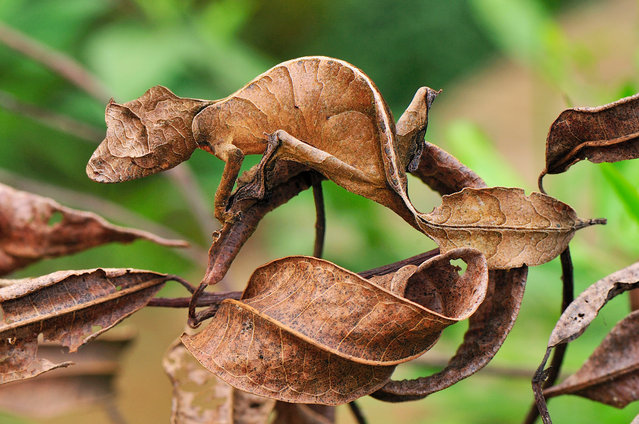
Is it a leaf? Is it tree bark? No, it’s the Satanic leaf-tailed gecko. Cleverly disguised as a rotting leaf, Madagascar’s camouflage king has red eyes, pointy horns and a taste for night hunting: it’s nature’s most devilish deceiver. The twisted body and veiny skin echo the detail of a dry leaf, which ensures the gecko blends in with its forest home. The mottled tail appears to have sections missing, as though it has withered over time. This mini-monster epitomises survival of the fittest, having adapted gradually to become today’s extraordinary leaf impersonator. (Photo by Thomas Marent/ARDEA)
Details
20 Nov 2015 08:03:00
When wedding photographer Katie Yeaton saw that one of her dogs had white fur and the other had black-and-white fur, she did what only a wedding photographer could do: she threw them a backyard wedding complete with professional photography to remember the day. (Photo by Katie Yeaton)

When wedding photographer Katie Yeaton saw that one of her dogs had white fur and the other had black-and-white fur, she did what only a wedding photographer could do: she threw them a backyard wedding complete with professional photography to remember the day. (Photo by Katie Yeaton)
Details
27 Aug 2014 09:40:00
The galactic core of the milky way occupied by two small wooden boats on July 2, 2014, in Isle of Wight, UK. The Milky Way shines in mesmerizing colourful patterns above the Isle of Wight in stunning photographs. (Photo by Chad Powell/Barcroft Media)

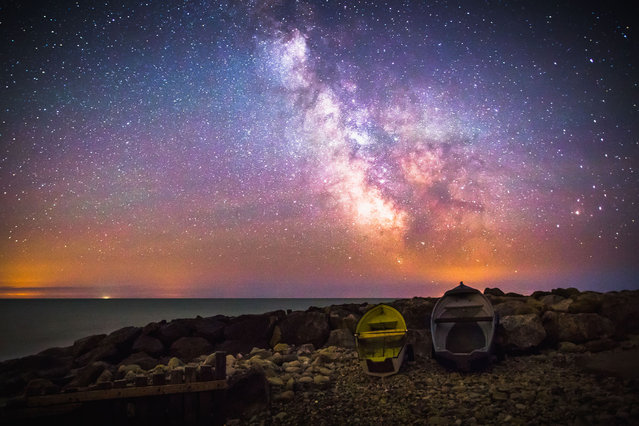
The galactic core of the milky way occupied by two small wooden boats on July 2, 2014, in Isle of Wight, UK. The Milky Way shines in mesmerizing colourful patterns above the Isle of Wight in stunning photographs. Chad Powell used a DSLR camera to capture images of the spectacular constellation above the familiar beach scenes of England's largest island. The 22-year-old, who shot the pictures over a year of stargazing on the island, often stayed up until dawn to catch the most dramatic sky-scapes. Chad, a graphic designer from Ventnor, Isle of Wight, used foregrounds of abandoned theme parks, harbors and lighthouses against the illuminated sky. Minor adjustments were made to bring out the contrast and whites in the images. (Photo by Chad Powell/Barcroft Media)
Details
28 Jul 2014 11:31:00
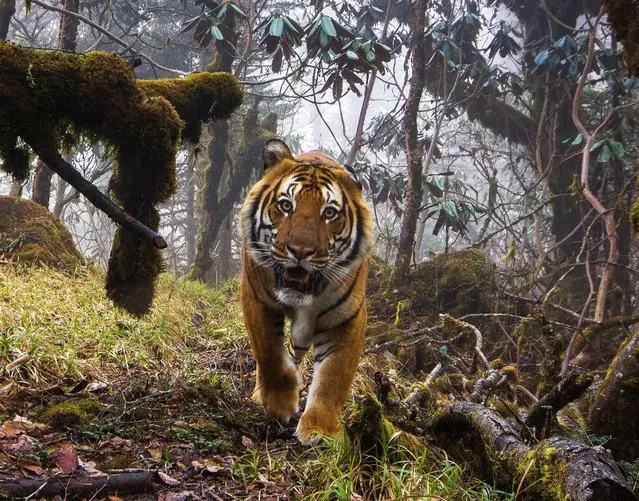
Rare images of wild tigers in Bhutan, captured by camera traps, show tigers and other animals using high-altitude wildlife corridors which are lifelines to isolated tiger populations and critical to genetic diversity, conservation and growth. Here: A wild Bengal tiger (Panthera tigris tigris) captured on a camera trap in corridor eight at an altitude of 3,540 metres in Trongsa, Bhutan. (Photo by Emmanuel Rondeau/WWF UK/The Guardian)

Rare images of wild tigers in Bhutan, captured by camera traps, show tigers and other animals using high-altitude wildlife corridors which are lifelines to isolated tiger populations and critical to genetic diversity, conservation and growth. Here: A wild Bengal tiger (Panthera tigris tigris) captured on a camera trap in corridor eight at an altitude of 3,540 metres in Trongsa, Bhutan. (Photo by Emmanuel Rondeau/WWF UK/The Guardian)


Details
02 Aug 2017 06:49:00