Loading...
Done
“Cassowaries are large, flightless birds related to emus and (more distantly) to ostriches, rheas, and kiwis”, writes Olivia Judson in the September issue of National Geographic magazine. (Photo by Christian Ziegler/National Geographic)

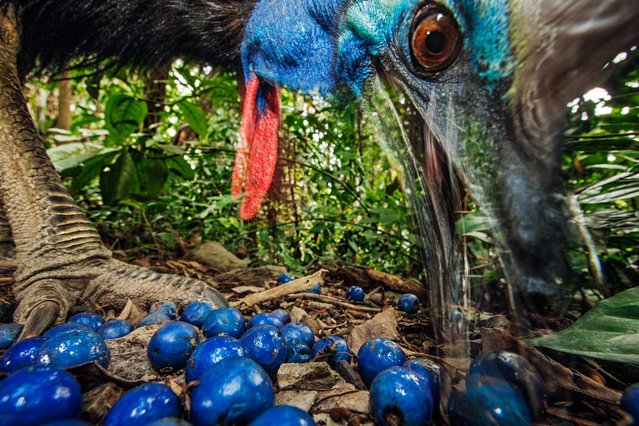
“Cassowaries are large, flightless birds related to emus and (more distantly) to ostriches, rheas, and kiwis”, writes Olivia Judson in the September issue of National Geographic magazine. How large? People-size: Adult males stand well over five foot five and top 110 pounds. Females are even taller, and can weigh more than 160 pounds. Dangerous when roused, they’re shy and peaceable when left alone. But even birds this big and tough are prey to habitat loss. The dense New Guinea and Australia rain forests where they live have dwindled. Today cassowaries might number 1,500 to 2,000. And because they help shape those same forests – by moving seeds from one place to another – “if they vanish”, Judson writes, “the structure of the forest would gradually change” too. (Photo by Christian Ziegler/National Geographic)
Details
06 Jan 2014 12:21:00
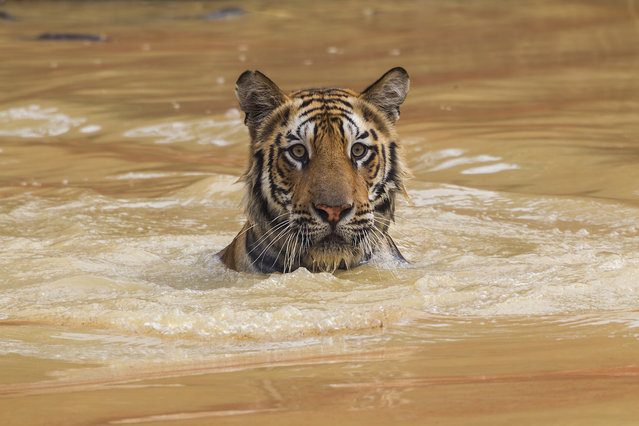
A 14-month-old cub, cooling off in a pond, is riveted by a deer that appeared near the shore. Tigers are powerful swimmers; they can easily cross rivers four to five miles wide and have been known to swim distances of up to 18 miles. (Photo by Steve Winter/National Geographic)

National Geographic photographer Steve Winter has spent most of his adult life shooting wild cats. Photo: A 14-month-old cub, cooling off in a pond, is riveted by a deer that appeared near the shore. Tigers are powerful swimmers; they can easily cross rivers four to five miles wide and have been known to swim distances of up to 18 miles. (Photo by Steve Winter/National Geographic)
Details
08 Apr 2014 11:52:00
Switzerland's cyclist Marlen Reusser reacts after placing second in the women' elite time trial race of the UCI World Championships Road Cycling Flanders 2021, in Bruges, on September 20, 2021. UCI World Championships Road Cycling Flanders 2021 takes place from September 19 until September 26, 2021, in several cities in the Belgian region of Flanders. (Photo by Simon Wilkinson/BELGA via AFP Photo)

Switzerland's cyclist Marlen Reusser reacts after placing second in the women' elite time trial race of the UCI World Championships Road Cycling Flanders 2021, in Bruges, on September 20, 2021. UCI World Championships Road Cycling Flanders 2021 takes place from September 19 until September 26, 2021, in several cities in the Belgian region of Flanders. (Photo by Simon Wilkinson/BELGA via AFP Photo)
Details
29 Sep 2021 08:08:00
The players of Denmark huddle prior to the FIFA Women's World Cup qualifier match between Denmark and Sweden at Viborg Stadion on September 4, 2018 in Viborg, Denmark. (Photo by Lars Ronbog/FrontZoneSport via Getty Images)

The players of Denmark huddle prior to the FIFA Women's World Cup qualifier match between Denmark and Sweden at Viborg Stadion on September 4, 2018 in Viborg, Denmark. (Photo by Lars Ronbog/FrontZoneSport via Getty Images)
Details
24 Dec 2018 05:14:00
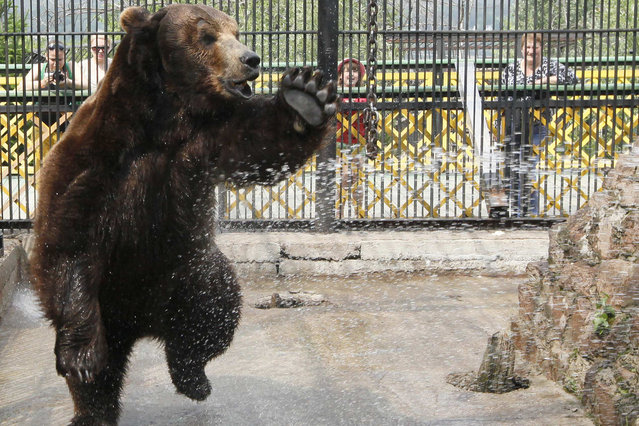
Buyan, a male Siberian brown bear, is given a shower by a zoo employee in his enclosure at the Royev Ruchey zoo in Russia's Siberian city of Krasnoyarsk June 24, 2014. The Siberian city has been experiencing temperatures of around 30 degrees Celsius over the last week. (Photo by Ilya Naymushin/Reuters)

Buyan, a male Siberian brown bear, is given a shower by a zoo employee in his enclosure at the Royev Ruchey zoo in Russia's Siberian city of Krasnoyarsk June 24, 2014. The Siberian city has been experiencing temperatures of around 30 degrees Celsius over the last week. (Photo by Ilya Naymushin/Reuters)
Details
28 Jun 2014 14:01:00
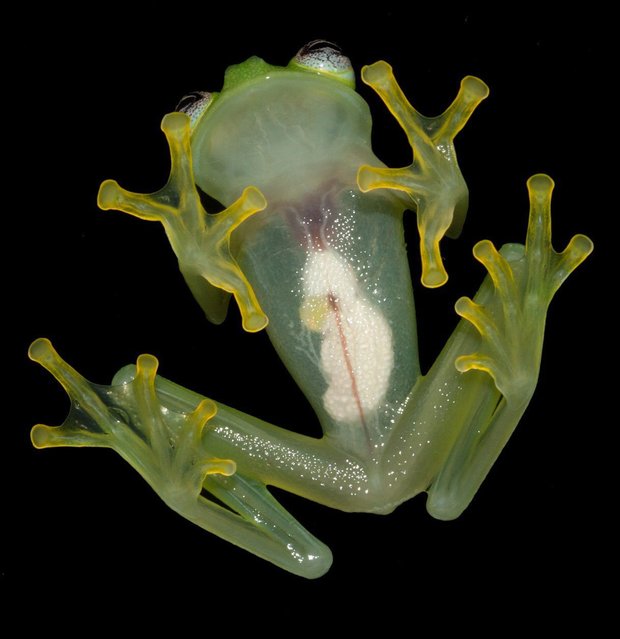
A handout photograph provided by Brian Kubicki of Costa Rican Amphibian Research Center on 26 April 2016 shows a “Crystal frog”, Hyalinobatrachium dianae (H. diane). This frog was discovered by US biologist Brian Kubicki and Costa Ricans Stanley Salazar and Robert Puschendorf in a rainy forest of Costa Rican caribbean after 40 years without notice of any new example of this kind. (Photo by Brian Kubicki/EPA/Costa Rican Amphibian Research Center)

A handout photograph provided by Brian Kubicki of Costa Rican Amphibian Research Center on 26 April 2016 shows a “Crystal frog”, Hyalinobatrachium dianae (H. diane). This frog was discovered by US biologist Brian Kubicki and Costa Ricans Stanley Salazar and Robert Puschendorf in a rainy forest of Costa Rican caribbean after 40 years without notice of any new example of this kind. (Photo by Brian Kubicki/EPA/Costa Rican Amphibian Research Center)
Details
02 May 2015 15:23:00
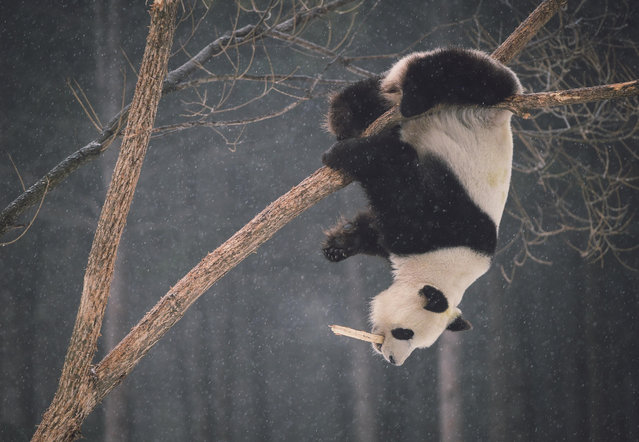
Giant panda Meng Meng plays on a tree at a Siberian tiger-breeding base in Changchun, China on December 10, 2015. (Photo by Xu Chang/Xinhua Press/Corbis)

Giant panda Meng Meng plays on a tree at a Siberian tiger-breeding base in Changchun, China on December 10, 2015. (Photo by Xu Chang/Xinhua Press/Corbis)
Details
16 Dec 2015 08:01:00
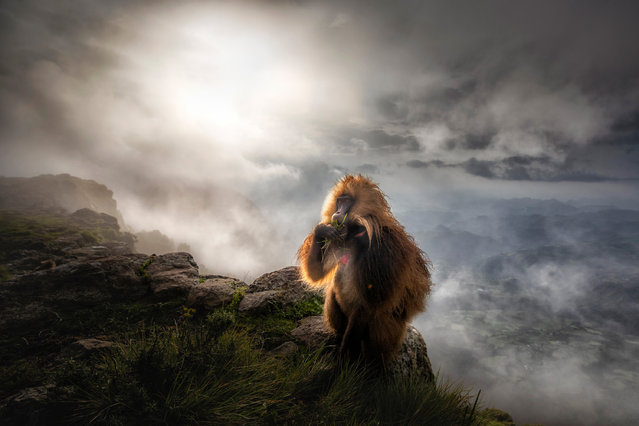
Highly commended, mammals: Gelada after the storm – Marco Gaiotti (Italy). “Gelada baboons are the only monkey species in the world that feed on grasses. They are native to the tableland of Ethiopia. Every morning large family groups wander from their sleeping places in the steep rock face, up to 1,000 metres high, to the feeding grounds at the tablelands. This image clearly depicts their feeding strategy: they pull out bunches of grass, sort the stalks and then lift them to their mouth. This shot was taken towards the end of the rainy season after a heavy storm”. (Photo by Marco Gaiotti/2019 GDT European Wildlife Photographer of the Year)

Highly commended, mammals: Gelada after the storm – Marco Gaiotti (Italy). “Gelada baboons are the only monkey species in the world that feed on grasses. They are native to the tableland of Ethiopia. Every morning large family groups wander from their sleeping places in the steep rock face, up to 1,000 metres high, to the feeding grounds at the tablelands. This image clearly depicts their feeding strategy: they pull out bunches of grass, sort the stalks and then lift them to their mouth. This shot was taken towards the end of the rainy season after a heavy storm”. (Photo by Marco Gaiotti/2019 GDT European Wildlife Photographer of the Year)
Details
31 Oct 2019 00:03:00