Loading...
Done
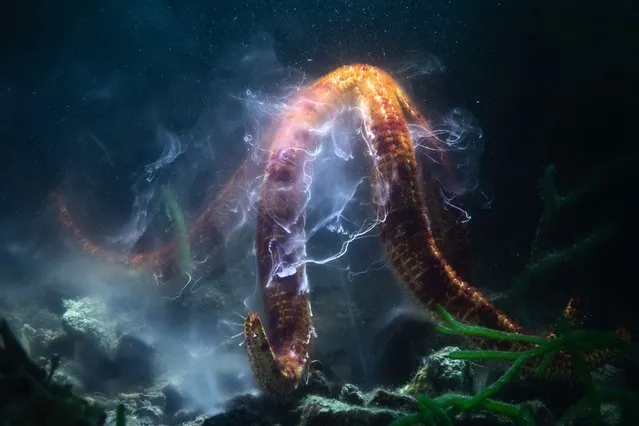
Shooting star by Tony Wu, US/Japan. Winner, underwater. The electrifying reproductive dance of a giant sea star. As the surrounding water filled with sperm and eggs from spawning sea stars, Wu faced several challenges. Stuck in a small, enclosed bay with only a macro lens for photographing small subjects, he backed up to squeeze the undulating sea star into his field of view. The dancing posture of spawning sea stars rising and swaying may help release eggs and sperm, or may help sweep the eggs and sperm into the currents where they fertilise together in the water. Kinko Bay, Japan. (Photo by Tony Wu/Wildlife Photographer of the Year)

Shooting star by Tony Wu, US/Japan. Winner, underwater. The electrifying reproductive dance of a giant sea star. As the surrounding water filled with sperm and eggs from spawning sea stars, Wu faced several challenges. Stuck in a small, enclosed bay with only a macro lens for photographing small subjects, he backed up to squeeze the undulating sea star into his field of view. The dancing posture of spawning sea stars rising and swaying may help release eggs and sperm, or may help sweep the eggs and sperm into the currents where they fertilise together in the water. Kinko Bay, Japan. (Photo by Tony Wu/Wildlife Photographer of the Year)
Details
15 Oct 2022 03:50:00
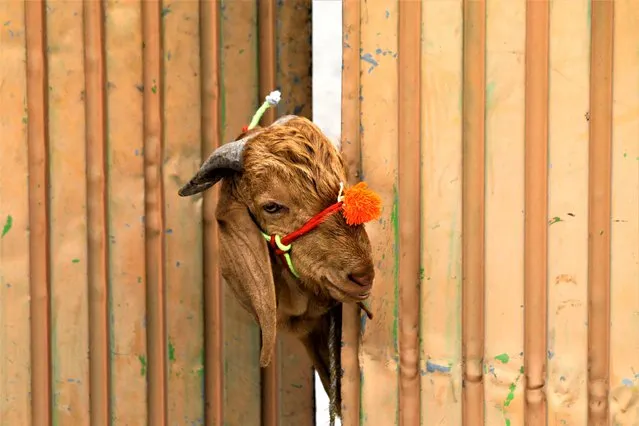
A sacrificial goat peeks through the entrance gate of a house, ahead of the Eid al-Adha festival in Peshawar, Pakistan on June 28, 2023. (Photo by Fayaz Aziz/Reuters)

A sacrificial goat peeks through the entrance gate of a house, ahead of the Eid al-Adha festival in Peshawar, Pakistan on June 28, 2023. (Photo by Fayaz Aziz/Reuters)
Details
27 Jul 2023 03:25:00
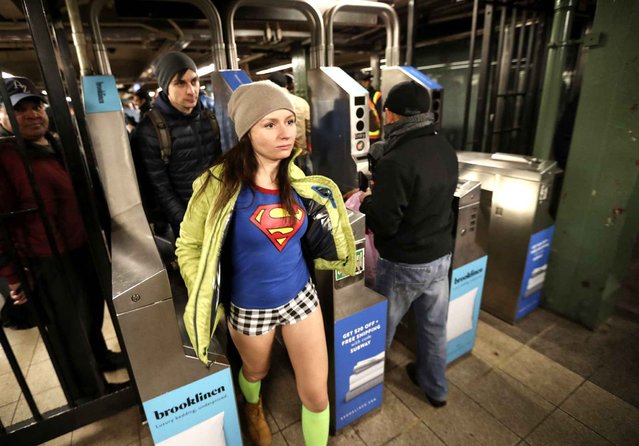
A dressed up participant without trousers takes part in the 2017 No Pants Subway Ride in New York, the United States, on January 8, 2017. (Photo by Zou Zheng/Xinhua/Sipa USA)

A dressed up participant without trousers takes part in the 2017 No Pants Subway Ride in New York, the United States, on January 8, 2017. The event, which first took place in New York in 2002, has become a yearly event attended by people in more than 60 cities across the globe. (Photo by Zou Zheng/Xinhua/Sipa USA)
Details
10 Jan 2017 13:53:00
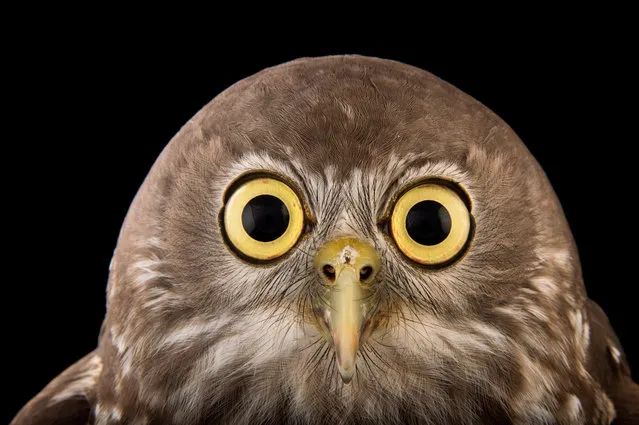
The National Geographic Photo Ark is a travelling exhibition of photographer Joel Sartore’s quest to create a photo archive of biodiversity around the world. So far, Sartore has captured studio portraits of more than 6,000 species – a number that he hopes to double. On 1 July, the ark will open at Melbourne zoo – the first time it has been exhibited in the southern hemisphere. More than 50 portraits will be on display, including many of Australian endangered animals being protected by programs at the zoo itself. These captions have been edited from text supplied by Melbourne zoo. Here: Barking owl. So-named because its call sounds like a barking dog, these birds are native to Australia, Indonesia and Papua New Guinea. In Victoria they are listed as an endangered species, and in 2003 there were estimated to be fewer than 50 breeding pairs. The main threat to the species in Victoria is loss of habitat, especially large trees with hollows in which they can nest and on which many of their prey depend. Apart from a bark, they may utter a chilling scream when they feel threatened. (Photo by Joel Sartore/National Geographic Photo Ark/The Guardian)

The National Geographic Photo Ark is a travelling exhibition of photographer Joel Sartore’s quest to create a photo archive of biodiversity around the world. So far, Sartore has captured studio portraits of more than 6,000 species – a number that he hopes to double. On 1 July, the ark will open at Melbourne zoo – the first time it has been exhibited in the southern hemisphere. More than 50 portraits will be on display, including many of Australian endangered animals being protected by programs at the zoo itself. These captions have been edited from text supplied by Melbourne zoo. Here: Barking owl. (Photo by Joel Sartore/National Geographic Photo Ark/The Guardian)
Details
01 Jul 2017 07:45:00
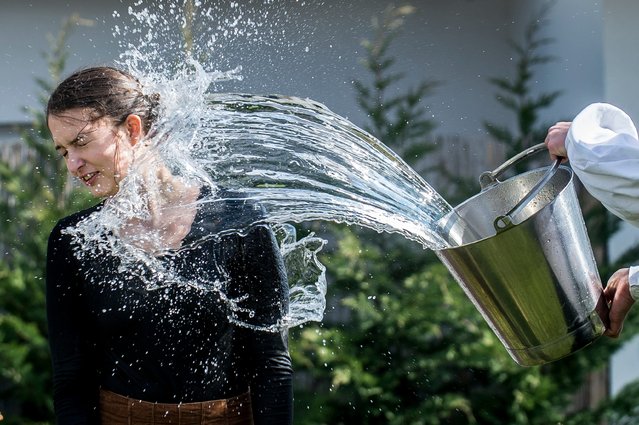
Members of the Mayossa folk dance group pour water on a young woman in Kiskunmajsa, Hungary on April 2, 2018. According to an old Hungarian tradition, celebrated for several hundred years, young men pour water on young women, who in exchange present their sprinklers with beautifully colored eggs on Easter Monday. (Photo by Sandor Ujvari/EPA/EFE/Rex Features/Shutterstock)

Members of the Mayossa folk dance group pour water on a young woman in Kiskunmajsa, Hungary on April 2, 2018. According to an old Hungarian tradition, celebrated for several hundred years, young men pour water on young women, who in exchange present their sprinklers with beautifully colored eggs on Easter Monday. (Photo by Sandor Ujvari/EPA/EFE/Rex Features/Shutterstock)
Details
08 Apr 2018 07:48:00
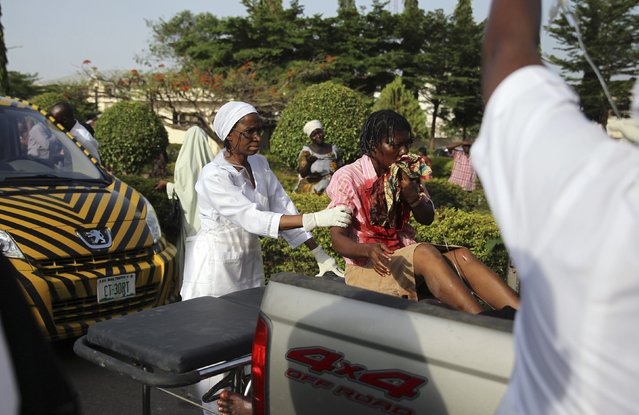
A nurse helps an injured bomb victim sitting at the back of a pickup truck at the Asokoro General Hospital in Abuja, April 14, 2014. A morning rush-hour bomb killed at least 35 people at a Nigerian bus station near the capital on Monday, raising concerns about the spread of an Islamist insurgency after the first such attack on Abuja for two years. (Photo by Afolabi Sotunde/Reuters)

A nurse helps an injured bomb victim sitting at the back of a pickup truck at the Asokoro General Hospital in Abuja, April 14, 2014. A morning rush-hour bomb killed at least 35 people at a Nigerian bus station near the capital on Monday, raising concerns about the spread of an Islamist insurgency after the first such attack on Abuja for two years. Suspicion fell on Boko Haram, though there was no immediate claim of responsibility from the Islamist group mainly active in the northeast. Five hours after the blast, officials had given no death toll. Reuters journalists counted at least 35 bodies. (Photo by Afolabi Sotunde/Reuters)
Details
16 Apr 2014 10:05:00
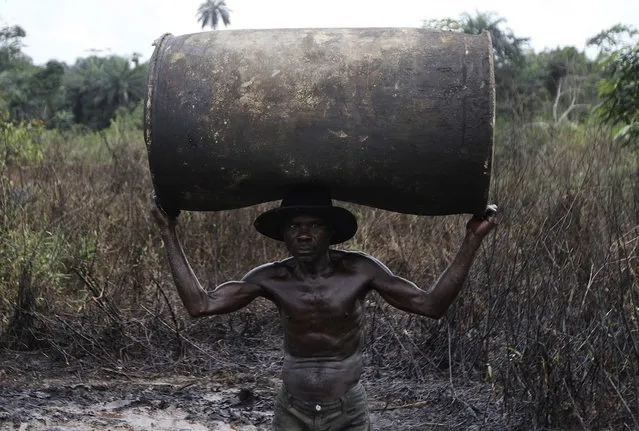
Ebiowei, 48, carries an empty oil container on his head to a place where it would be filled with refined fuel at an illegal refinery site near river Nun in Nigeria's oil state of Bayelsa November 27, 2012. (Photo by Akintunde Akinleye/Reuters)

Ebiowei, 48, carries an empty oil container on his head to a place where it would be filled with refined fuel at an illegal refinery site near river Nun in Nigeria's oil state of Bayelsa November 27, 2012. Locals in the industry say workers can earn $50 to $60 a day. Thousands of people in Nigeria engage in a practice known locally as “oil bunkering” – hacking into pipelines to steal crude then refining it or selling it abroad. The practice, which leaves oil spewing from pipelines for miles around, managed to lift around a fifth of Nigeria's two million barrel a day production last year according to the finance ministry. (Photo by Akintunde Akinleye/Reuters)
Details
18 Jan 2013 14:29:00
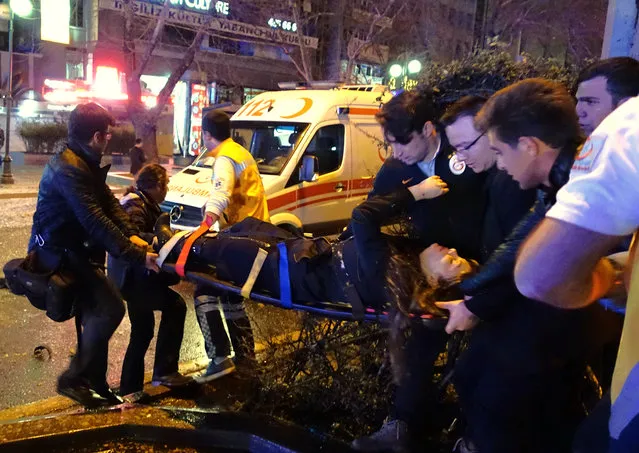
Medics carry an injured at the explosion site in the busy center of Turkish capital, Ankara, Turkey, Sunday, March 13, 2016. The explosion is believed to have been caused by a car bomb that went off close to bus stops. News reports say the large explosion in the capital has caused several deaths and many casualties. (Photo by AP Photo)

Medics carry an injured at the explosion site in the busy center of Turkish capital, Ankara, Turkey, Sunday, March 13, 2016. The explosion is believed to have been caused by a car bomb that went off close to bus stops. News reports say the large explosion in the capital has caused several deaths and many casualties. (Photo by AP Photo)
Details
14 Mar 2016 09:46:00