Loading...
Done
A performer in traditional costume waits for her turn to go on stage at Longtan park as the Chinese Lunar New Year, which welcomes the Year of the Rooster, is celebrated in Beijing, China January 29, 2017. (Photo by Damir Sagolj/Reuters)

A performer in traditional costume waits for her turn to go on stage at Longtan park as the Chinese Lunar New Year, which welcomes the Year of the Rooster, is celebrated in Beijing, China January 29, 2017. (Photo by Damir Sagolj/Reuters)
Details
31 Jan 2017 09:49:00
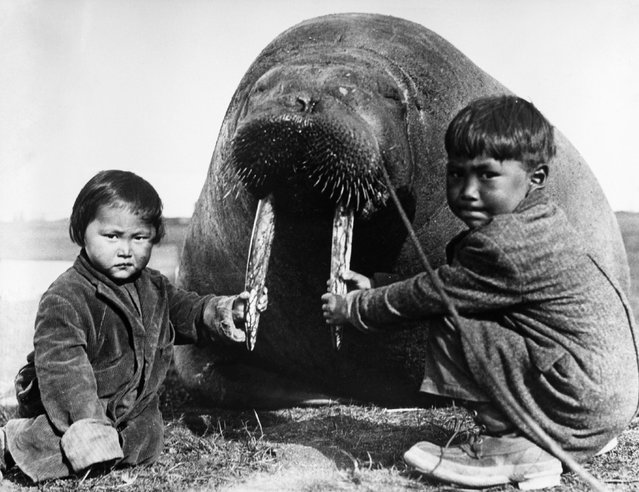
Two Inuit children at Point Barrow, Alaska, holding the tusks of a large walrus, probably killed for food, circa 1930. (Photo by General Photographic Agency/Getty Images)

Two Inuit children at Point Barrow, Alaska, holding the tusks of a large walrus, probably killed for food, circa 1930. (Photo by General Photographic Agency/Getty Images)
Details
04 Feb 2017 01:02:00
Tibetan men get ready to perform a traditional dance during a special prayer ceremony on the third day of the Tibetan New Year celebrations in Kathmandu, Nepal, Wednesday, March 1, 2017. Tibetans follow this ritual called “sangtsol” to ask for good luck in the new year. (Photo by Niranjan Shrestha/AP Photo)

Tibetan men get ready to perform a traditional dance during a special prayer ceremony on the third day of the Tibetan New Year celebrations in Kathmandu, Nepal, Wednesday, March 1, 2017. Tibetans follow this ritual called “sangtsol” to ask for good luck in the new year. (Photo by Niranjan Shrestha/AP Photo)
Details
03 Mar 2017 00:01:00
Young women flash the victory sign in front of a bonfire as Turkish Kurds gather during Newroz celebrations for the new year in Diyarbakir, southeastern Turkey, on March 21, 2017. Newroz (also known as Nawroz or Nowruz) is an ancient Persian festival, which is also celebrated by Kurdish people, marking the first day of spring, which falls on March 21. (Photo by Ilyas Akengin/AFP Photo)

Young women flash the victory sign in front of a bonfire as Turkish Kurds gather during Newroz celebrations for the new year in Diyarbakir, southeastern Turkey, on March 21, 2017. Newroz (also known as Nawroz or Nowruz) is an ancient Persian festival, which is also celebrated by Kurdish people, marking the first day of spring, which falls on March 21. (Photo by Ilyas Akengin/AFP Photo)
Details
22 Mar 2017 09:51:00
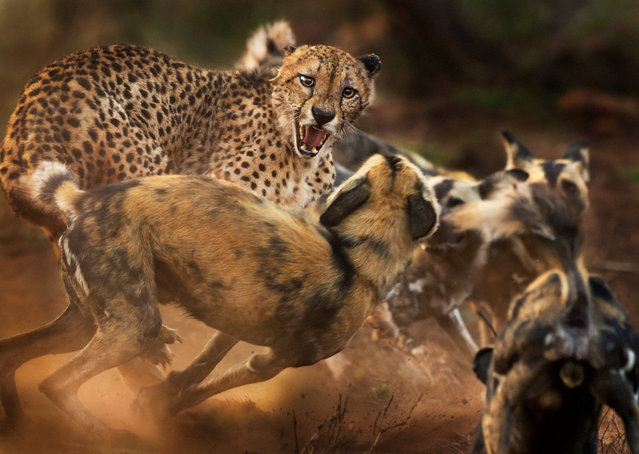
A lone male cheetah is set upon by a pack of African wild dogs. Peter Haygarth had been following the dogs as they hunted in Zimanga Private Game Reserve in KwaZulu-Natal, South Africa. On first encountering the cheetah, the dogs were wary, but as the rest of the pack arrived, their confidence grew and they began to encircle the cat. Peter kept his focus on the cat’s face. In a few minutes the spat was over as the cheetah fled. (Behaviour: mammals category). (Photo by Peter Haygarth)

A lone male cheetah is set upon by a pack of African wild dogs. Peter Haygarth had been following the dogs as they hunted in Zimanga Private Game Reserve in KwaZulu-Natal, South Africa. On first encountering the cheetah, the dogs were wary, but as the rest of the pack arrived, their confidence grew and they began to encircle the cat. Peter kept his focus on the cat’s face. In a few minutes the spat was over as the cheetah fled. (Behaviour: mammals category). (Photo by Peter Haygarth)
Details
10 Sep 2019 00:03:00
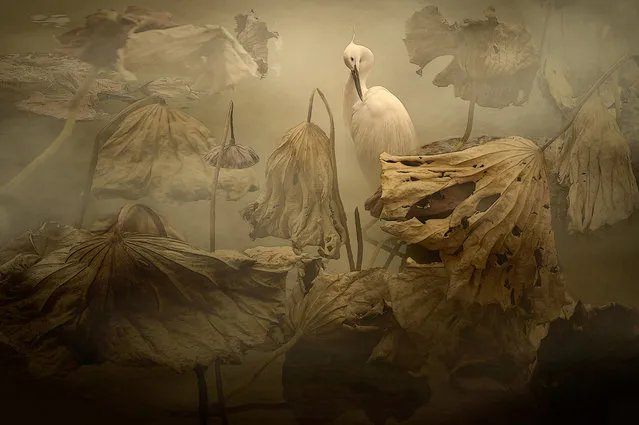
Creative imagery bronze winner. Make-up by Chengbo Sun, China. (Photo by BPOTY/Cover Images)

Creative imagery bronze winner. Make-up by Chengbo Sun, China. (Photo by BPOTY/Cover Images)
Details
22 Aug 2020 00:03:00
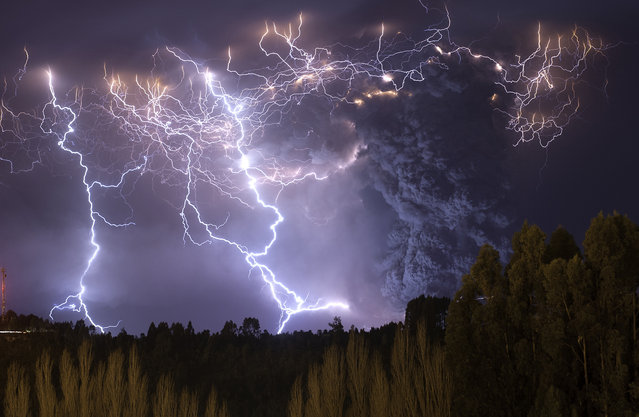
The eruption of Cordon Caulle began on June 4, 2011, located in the Region of Los Rios in Chile. For about 12 months, people and animals became accustomed to living with the daily fall of ash, which also caused problems in the air traffic in South America. The explosions and lightning during first days of the eruption could be seen from hundreds of miles around. This photograph was taken on the second night of eruption from the town of Lago Ranco. (Photo and caption by Francisco Negroni/National Geographic Traveler Photo Contest)

The eruption of Cordon Caulle began on June 4, 2011, located in the Region of Los Rios in Chile. For about 12 months, people and animals became accustomed to living with the daily fall of ash, which also caused problems in the air traffic in South America. The explosions and lightning during first days of the eruption could be seen from hundreds of miles around. This photograph was taken on the second night of eruption from the town of Lago Ranco. (Photo and caption by Francisco Negroni/National Geographic Traveler Photo Contest)

ATTENTION! All pictures are presented in high resolution. To see Hi-Res images – just TWICE click on any picture. In other words, click small picture – opens the BIG picture. Click BIG picture – opens VERY BIG picture.
Details
23 Jun 2013 11:24:00
Triston surfs a wave as his father, Todd, watches in Morro Bay. “Hes the most coordinated 3-year-old I've ever seen”, says the 35-year-old captain/paramedic with the Morro Bay Fire Department. (Photo by Joe Johnston/The Tribune of San Luis Obispo)

Triston surfs a wave as his father, Todd, watches in Morro Bay. “Hes the most coordinated 3-year-old I've ever seen”, says the 35-year-old captain/paramedic with the Morro Bay Fire Department. (Photo by Joe Johnston/The Tribune of San Luis Obispo)
Details
06 Sep 2013 09:59:00