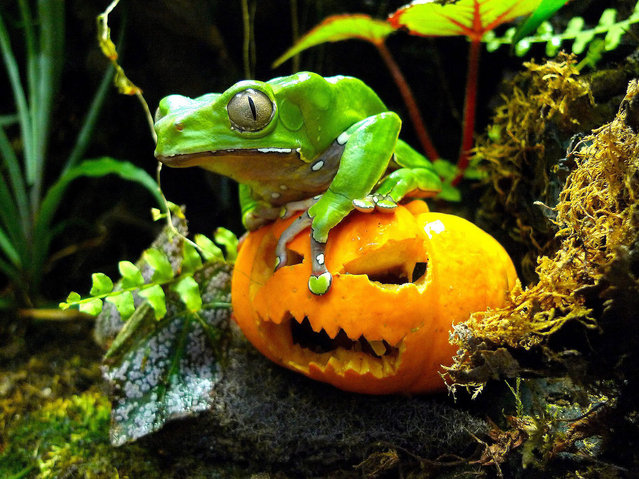
Alfred the frog looks almost as scary as the pumpkin he is perched on at London Zoo 26 October 2011. Keepers at the zoo have joined in the Halloween tradition by supplying pumpkin lunches to some of their animals, including the giant waxy monkey frog. However Alfred is not quite the giant figure his species name suggests – he actually measures up at around 4 inches (10 centimeters). (Photo by EPA/Zoological Society of London)
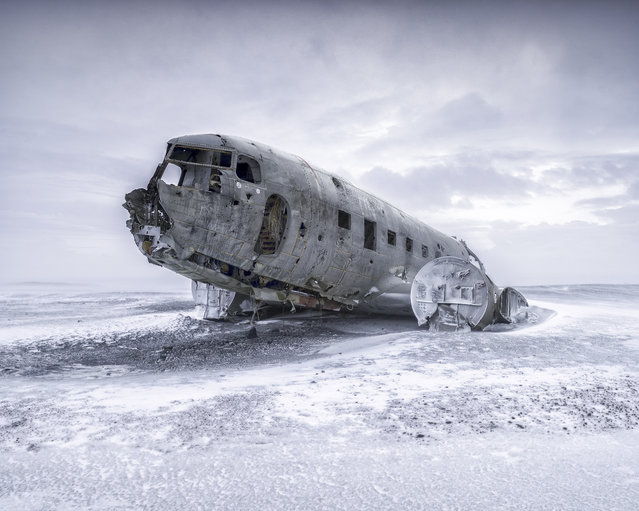
“DC3 Wreck”. A capture of a US military DC3 plane wreck at the southern black beach in Iceland. Photo location: Iceland. (Photo and caption by Naian Feng/National Geographic Photo Contest)
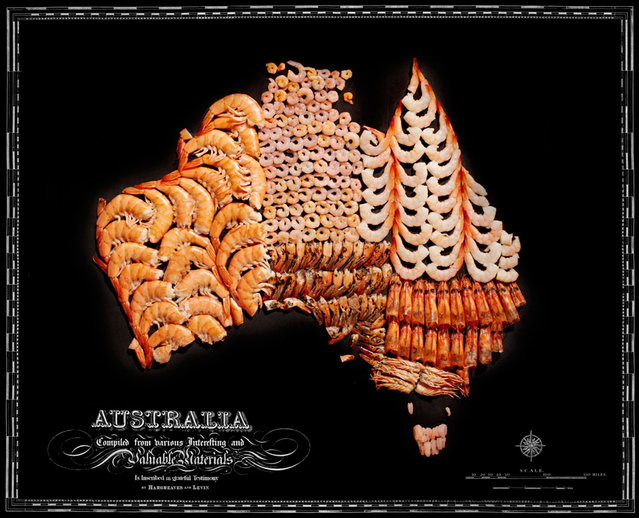
Photographer Henry Hargreaves and artist Caitlin Levin have been working together for about decade. Their shared love for “food, photography, travel, and art” has found an outlet in a series of maps that they have illustrated with food.
Artist Tsuneo Sanda was born in Osaka, Japan. He first came to Tokyo at age 23, and has been there ever since. He lives in a rural, residential town about 20km west of Tokyo with his wife, Sachicko, two sons, Kensaku and Sohei, and Vivian, their American Shorthair cat.
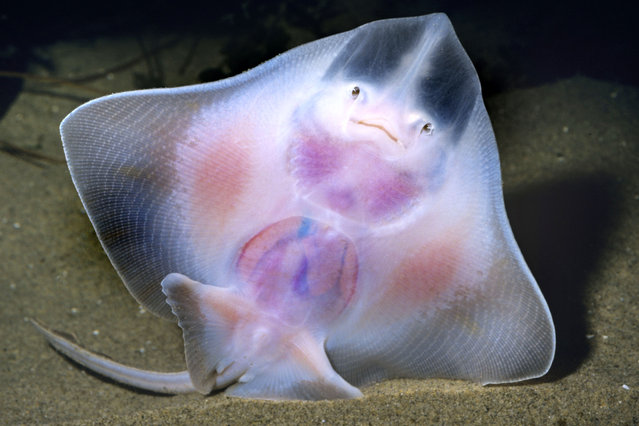
“They're some of the most intriguing and complex creatures on the planet but they really do have nothing to hide – because theyre totally see-through. Transparent animals – creatures with clear glass-like skin – can be found all over the world but their very existence is still shrouded in mystery. The fascinating organisms verge on the invisible and their translucent skin often helps them elude predators”. – Caters News. Photo: Thornback Skate. (Photo by Ken Lucas/Caters News)
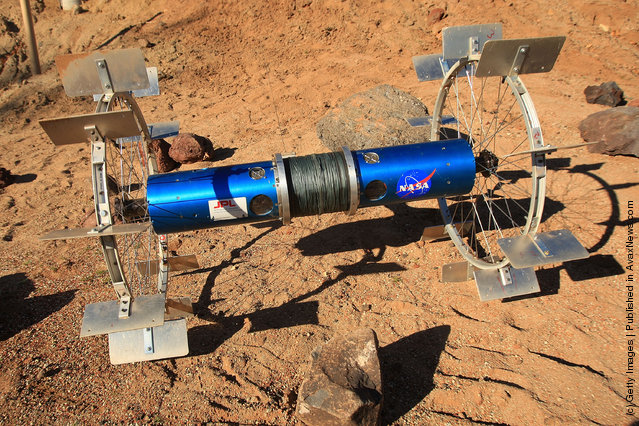
Axel, a research prototype rover for exploring the Moon, Mars and other planets, is remotely driven over rocks as engineers from Jet Propulsion (JPL) and grad students from Caltech (California Institute of Technology) demonstrate its mobile over the steep and rocky grounds of the JPL Mars Yard on January 14, 2009 in Pasadena, California. The rover is capable of descending cliffs or into craters and returning by a cable tethered to its starting point. Development of the Axel rover is a point effort funded by NASA Exploration Systems Mission Directorate (ESMD) and lead by Principal Investigator Issa Newnas and Co-Investigator and Caltech professor of mechanical engineering bio engineering Joel Burdick. (Photo by David McNew/Getty Images)